Tag: AI Automation

  • AI Conversation Personalization: A Trend for Enhancing Customer Experience

    AI Conversation Personalization: A Trend for Enhancing Customer Experience

    In the digital era, customers expect more than just fast responses. They also expect businesses to understand what they actually need. A response may be accurate, but without the right context, the conversation can feel robotic and result in missed opportunities to connect with customers.

    That is why AI conversation personalization is becoming increasingly important for businesses. Instead of using a fixed script for every user, AI can analyze conversations, understand context and customer needs, and adjust its responses accordingly. As a result, each interaction becomes more natural, relevant, and closer to a genuine human-to-human conversation.

    What Is AI Conversation Personalization?
    Cá nhân hóa hội thoại AI là gì và cách AI điều chỉnh phản hồi theo nhu cầu khách hàng

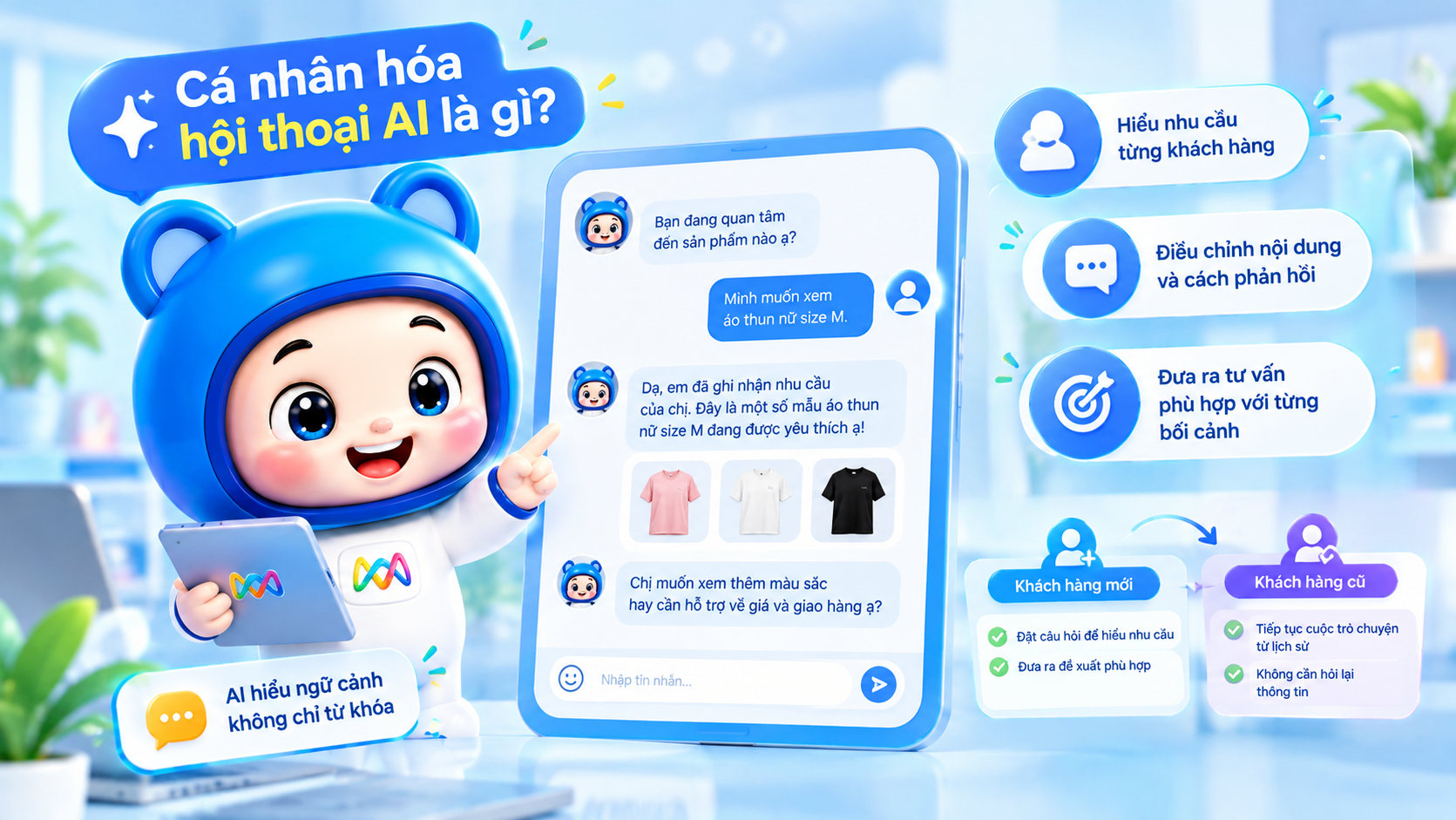
    AI conversation personalization is the use of artificial intelligence to tailor content, responses and recommendations based on each customer’s information, needs, or context.

    For example, when a customer has previously asked about a particular product, an AI chatbot can continue the conversation based on that information instead of asking the customer to repeat everything from the beginning. For new customers, AI can ask relevant questions to identify their needs before making recommendations.

    The key difference lies in AI’s ability to understand context rather than simply responding to specific keywords. This makes conversations more flexible and creates a more natural interaction between customers and businesses.

    Why Should Businesses Upgrade Their Customer Interaction Experience?

    Today’s consumers are increasingly impatient with generic and repetitive responses. When an answer fails to address their actual concerns, they may quickly turn to a competitor.

    • Speed must come with understanding: Customers want immediate solutions to their specific problems, not generic links that simply redirect them to a homepage.
    • Customer service costs continue to rise: Support teams can become overwhelmed by answering hundreds of repetitive questions every day, especially during peak hours.
    • Improve sales performance: Relevant recommendations delivered at the right moment can reduce hesitation and encourage customers to make purchasing decisions faster.

    How Does an Intelligent Response System Work?

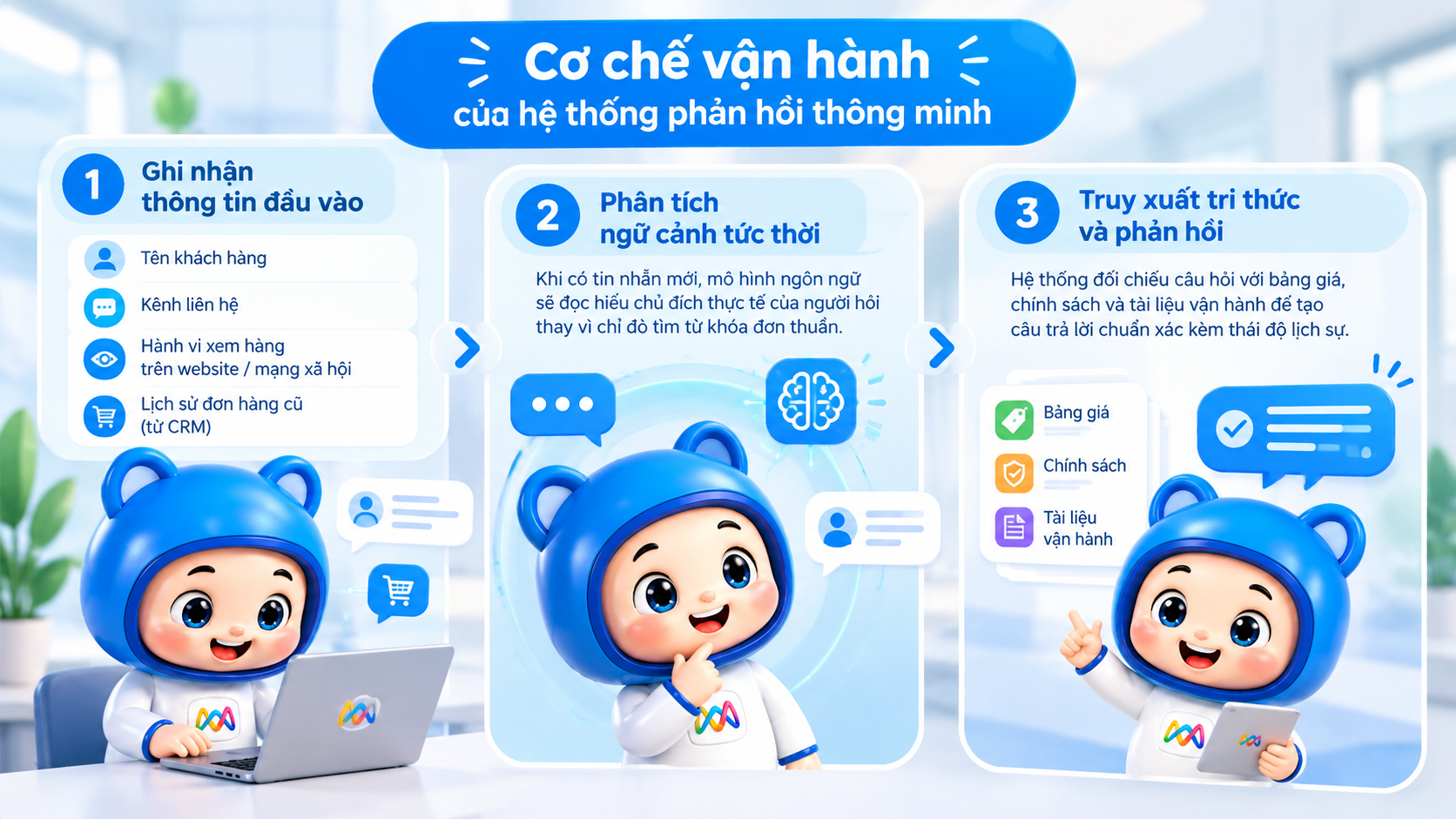
    This process combines large language models with a brand’s internal knowledge base. The system typically operates through three key steps:
    Cơ chế vận hành của hệ thống phản hồi thông minh qua ba bước xử lý dữ liệu và hội thoại AI

    1. Collecting customer information: The system can store information such as names, contact channels, website browsing behavior, or previous order history from a customer relationship management (CRM) system.
    2. Analyzing context in real time: When a new message arrives, the language model identifies the customer’s actual intent instead of relying solely on keyword matching.
    3. Retrieving knowledge and generating a response: The system compares the customer’s request with product information, pricing, policies, and operational documents to generate an accurate and appropriate response.

    Benefits of AI Conversation Personalization for Businesses
    Bốn lợi ích của cá nhân hóa hội thoại AI gồm nâng cao trải nghiệm, tối ưu chăm sóc, tăng chuyển đổi và giảm tải nhân viên

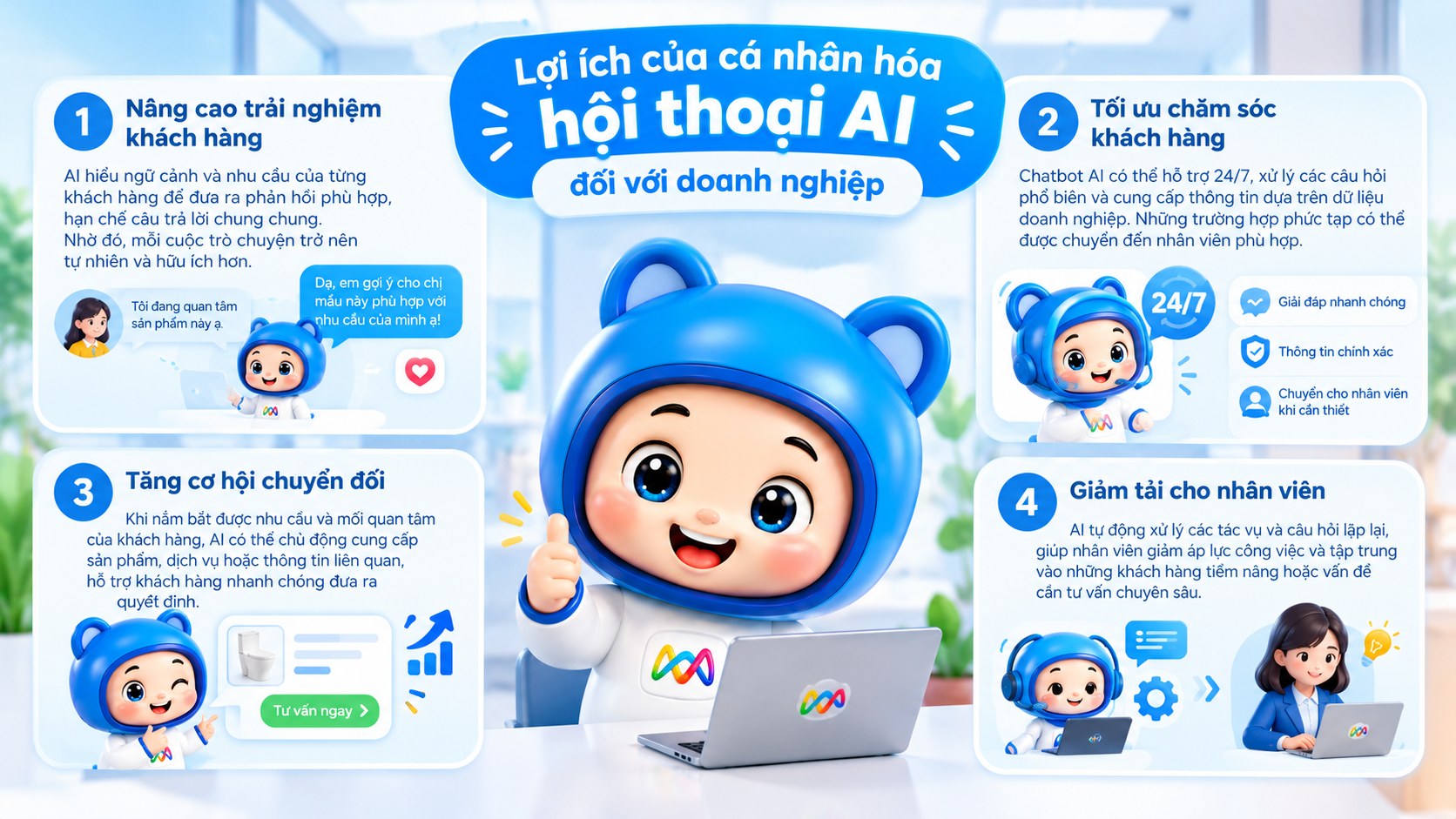
    Enhance the Customer Experience

    AI can understand each customer’s context and needs to provide more relevant responses while reducing generic answers. As a result, conversations become more natural, useful, and engaging.

    Optimize Customer Service

    AI chatbots can provide 24/7 support, handle frequently asked questions and deliver information based on the business’s own data. More complex cases can be transferred to the appropriate staff member.

    Increase Conversion Opportunities

    By understanding customer needs and interests, AI can proactively recommend relevant products, services or information, helping customers make decisions more quickly.

    Reduce the Workload for Employees

    AI can automatically handle repetitive questions and routine tasks, allowing employees to reduce their workload and focus on high-potential customers or issues that require more in-depth consultation.

    Practical Applications Across Different Industries

    Different industries can leverage AI-powered interactions in different ways to improve both customer experience and operational efficiency:

    • Retail and E-commerce: Automatically remind customers about abandoned carts while recommending suitable discounts for products they are considering.
    • Healthcare and Beauty: Send follow-up appointment reminders based on previous treatment records and provide personalized at-home care instructions after a service.
    • Real Estate and Education: Identify preferences such as location, budget, or areas of interest, then categorize customer data and route qualified leads to the appropriate consultant.

    How to Implement an Intelligent Conversation Solution

    To ensure accurate and consistent performance, preparing high-quality business data is essential. Businesses can start with the following steps:

    • Clean and organize source materials: Gather product pages, warranty policies, pricing information, and frequently asked questions to build the AI’s knowledge base.
    • Define communication guidelines: Establish an appropriate tone of voice and communication style that reflects the company’s culture, while clearly defining topics that the AI should not make assumptions about.
    • Set up human handover mechanisms: When the AI encounters questions outside its knowledge base or detects an upset customer, the system should immediately alert or transfer the conversation to a human employee.

    Conclusion

    Implementing AI conversation personalization is a practical approach for businesses looking to build customer trust while improving operational efficiency. Instead of allowing customers to leave without receiving meaningful support, an intelligent AI assistant can ensure that their questions are addressed promptly, accurately, and thoughtfully.
  • AI Chatbot for Automated Appointment Reminders: The Optimal Solution for Customer Care

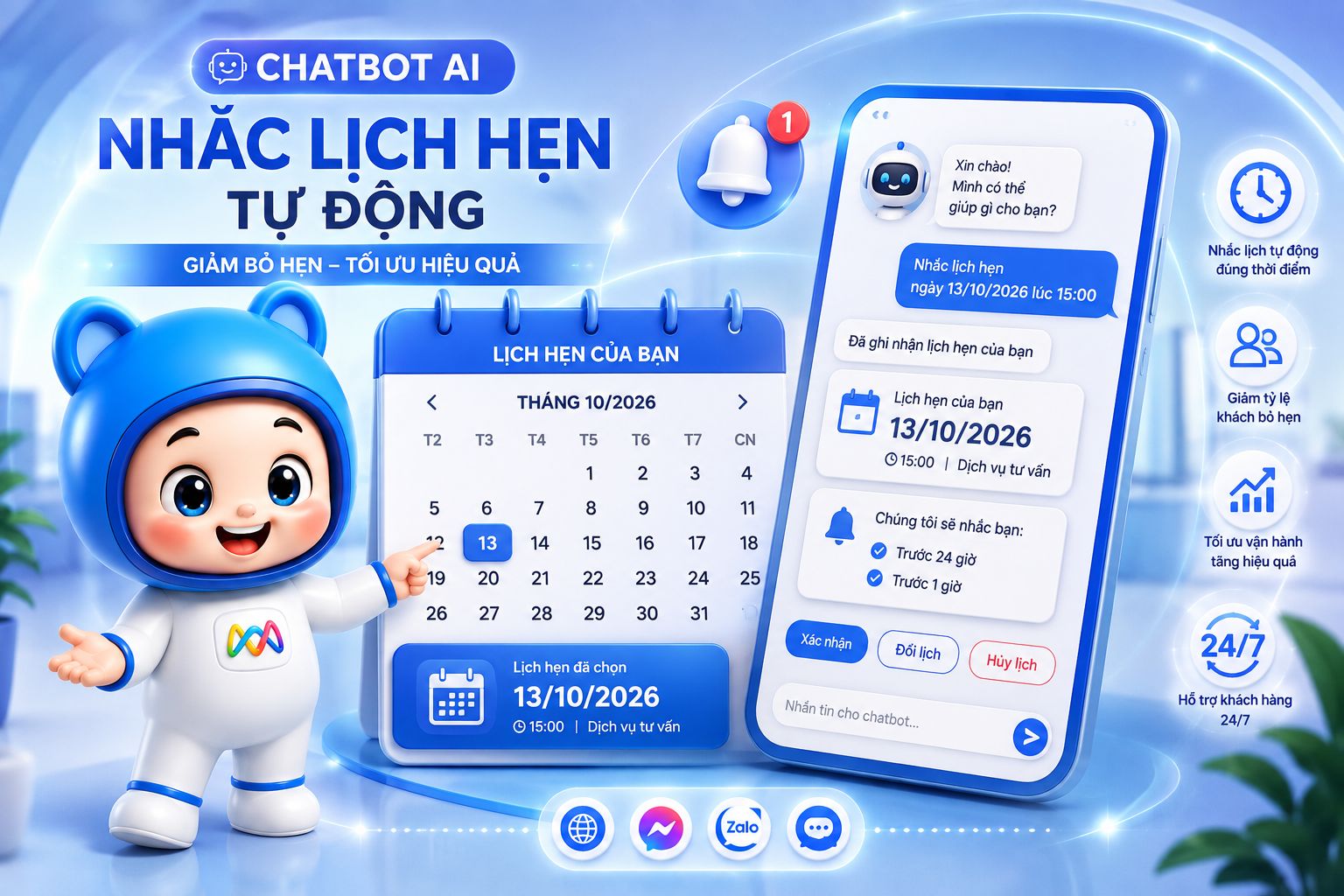
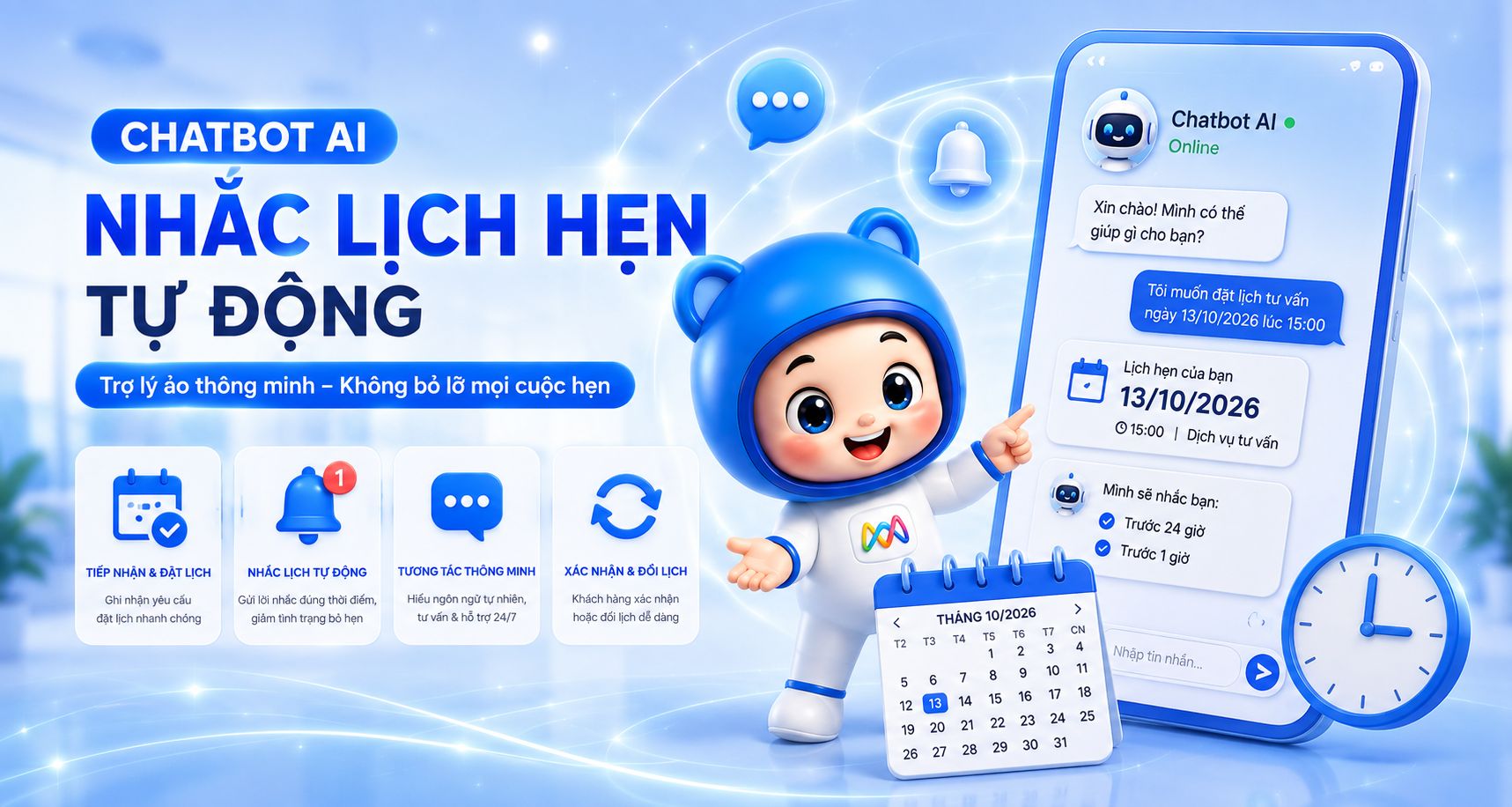
    AI Chatbot for Automated Appointment Reminders: The Optimal Solution for Customer Care

    Customers booking appointments but failing to show up is a common challenge that causes headaches for many service businesses. A missed appointment not only wastes valuable resources but also directly affects revenue and operational efficiency.

    AI chatbot for automated appointment reminders provides a more proactive approach. Instead of having employees manually call or message each customer, AI can automatically record appointments, send reminders, confirm attendance, and assist with rescheduling when needed. This helps businesses reduce the workload for employees while delivering a more professional and convenient customer experience.

    What Is an AI Chatbot for Automated Appointment Reminders?

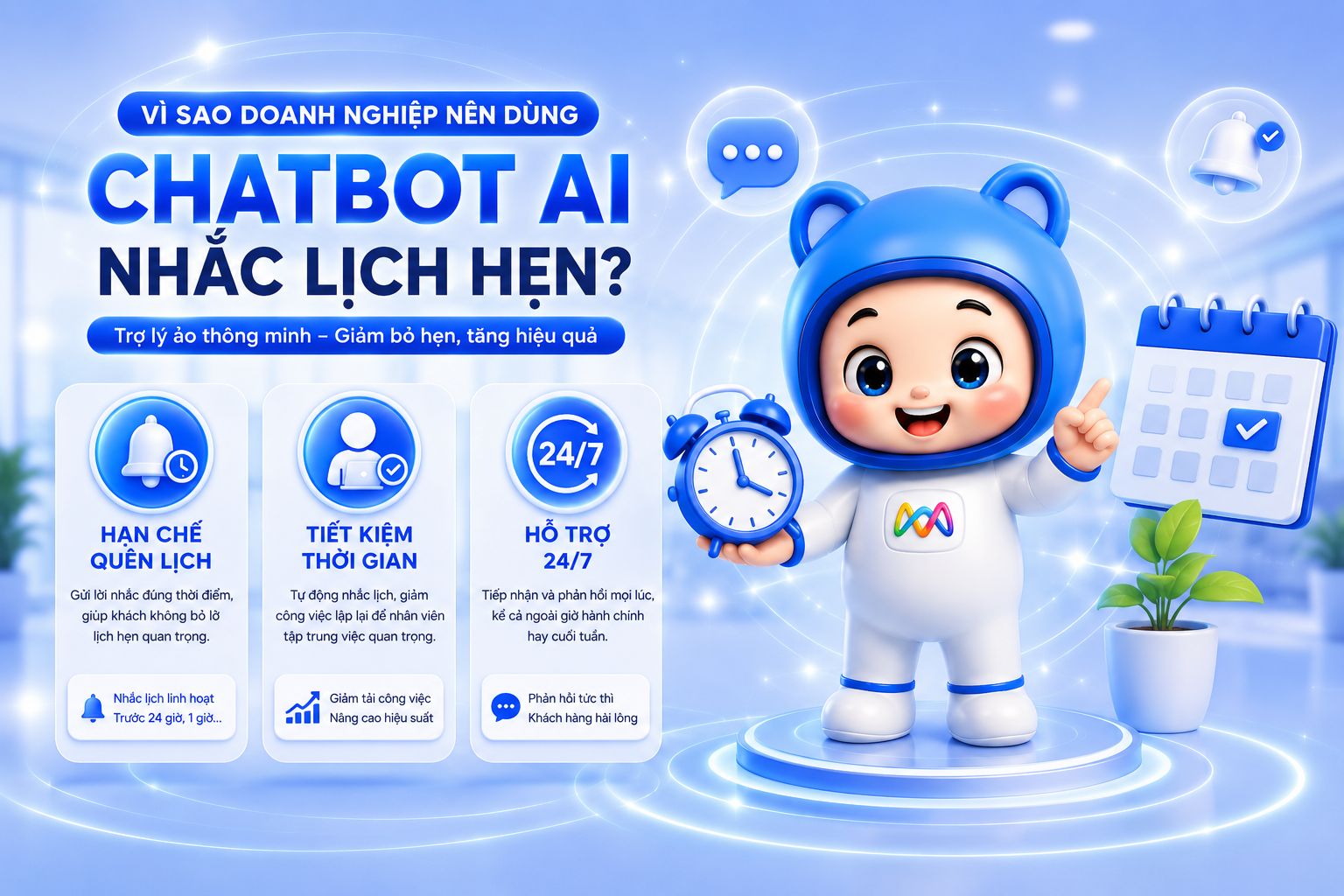
    Chatbot AI tự động nhắc lịch hẹn và hỗ trợ khách hàng

    An AI chatbot for automated appointment reminders is a virtual assistant solution that uses artificial intelligence to help businesses manage appointments and support customers before, during, and after scheduled appointments.

    The system can receive appointment requests, record dates and times, identify the services customers are interested in, send appointment reminders, and handle responses directly through online communication channels.

    Unlike pre-configured reminder messages, AI chatbots can understand natural language and interact more flexibly. Customers can ask for additional information, confirm appointments, or request schedule changes without necessarily having to wait for an employee to assist them.

    Why Should Businesses Use an AI Chatbot for Appointment Reminders?

    Reduce Missed Appointments

    Appointments scheduled several days in advance are easy for customers to forget. Sending reminders at the right time allows customers to arrange their schedules and reduces the risk of cancellations or no-shows without prior notice.

    Businesses can also set multiple reminder intervals, such as 24 hours or a few hours before the appointment, depending on the characteristics of their services.

    Save Employees’ Time

    Instead of spending hours checking appointment lists and calling customers individually, employees can let the chatbot handle routine reminder tasks automatically.

    Staff can then focus on cases that require in-depth consultation or special assistance. This reduces repetitive work and improves team productivity.

    Provide 24/7 Customer Support

    Customers may need to check or change their appointments in the evening, on weekends, or outside business hours. An AI chatbot can receive and respond to these requests immediately, allowing businesses to maintain continuous support without requiring employees to work around the clock.

    How Does an AI Chatbot for Automated Appointment Reminders Work?

    The process can be implemented through several simple steps:

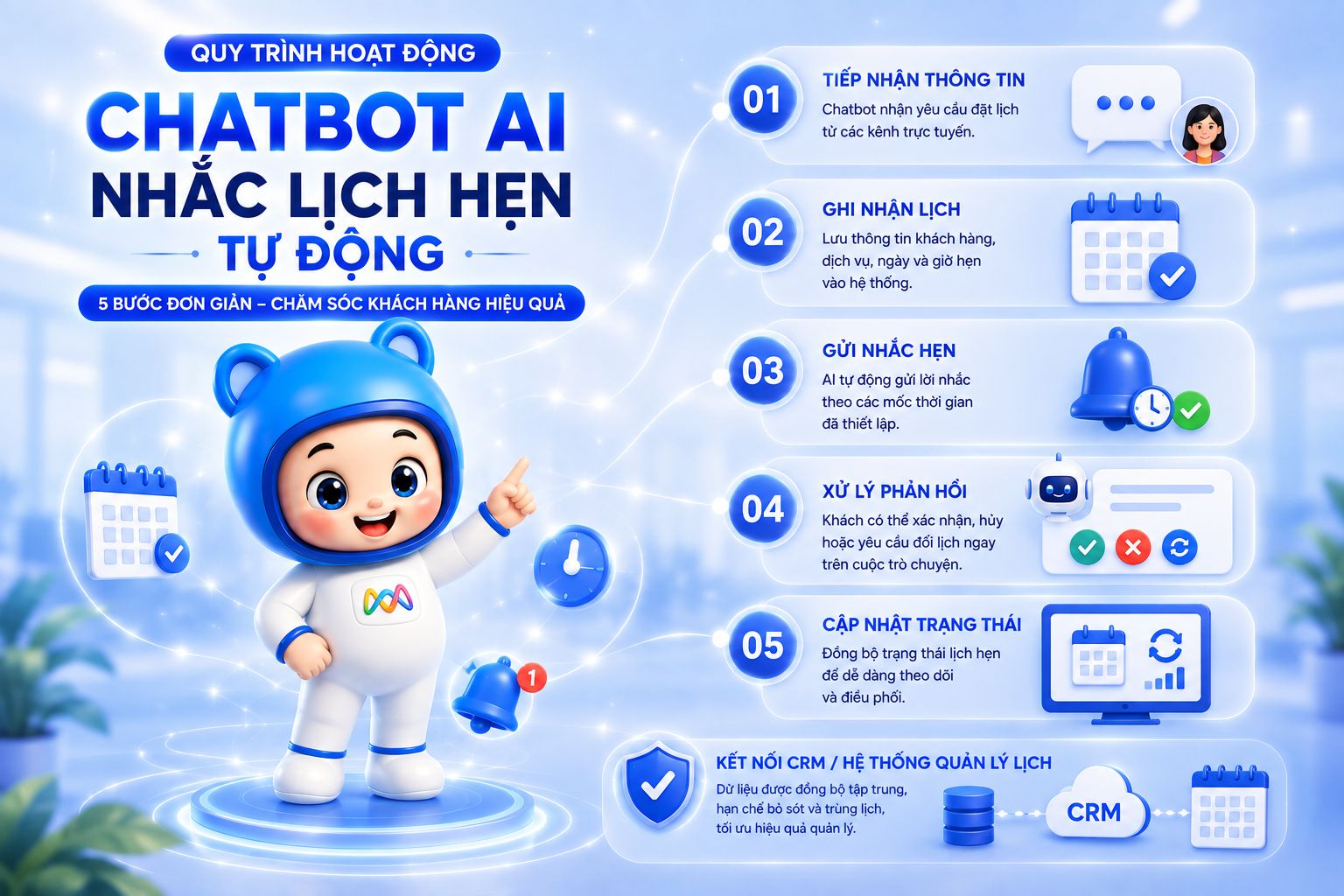
    Quy trình chatbot AI đặt lịch và gửi nhắc hẹn tự động

    Receive Information → Record Appointment → Send Reminder → Process Confirmation → Update Status

    • Step 1 – Receive Information: The chatbot receives appointment requests from websites, social media, or other integrated channels.
    • Step 2 – Record Appointment: Customer information, services, appointment dates, and times are stored in the system.
    • Step 3 – Send Reminders: AI automatically sends notifications according to predefined time intervals.
    • Step 4 – Process Responses: Customers can confirm, cancel, or request a schedule change directly through the conversation.
    • Step 5 – Update Status: Appointment statuses are synchronized so businesses can easily monitor and manage their schedules.

    When integrated with a CRM or appointment management system, all data can be updated centrally, helping minimize missed appointments and scheduling conflicts.

    Key Features of an AI Chatbot for Automated Appointment Reminders

    Automated Appointment Booking

    Customers do not need to go through complicated booking processes. With a simple natural-language message such as “tomorrow afternoon at 3 PM” or “book me for Saturday,” the chatbot can help identify the requested time and guide customers through the established booking process.

    Automated Appointment Reminders

    The chatbot can send notifications at different intervals before an appointment. Messages can include not only the date and time but also the business address, directions, service information, or important preparation instructions.

    Appointment Confirmation and Rescheduling

    Customers can confirm their appointments directly through the chatbot or request a different time. If a request falls outside the chatbot’s capabilities, the conversation can be transferred to an employee for further assistance.

    Data Synchronization and Management

    When integrated with a CRM or appointment management system, booking, rescheduling, and cancellation information can be synchronized automatically. Managers can easily monitor appointment statuses and proactively allocate resources.

    Applications of AI Chatbots for Appointment Reminders Across Industries

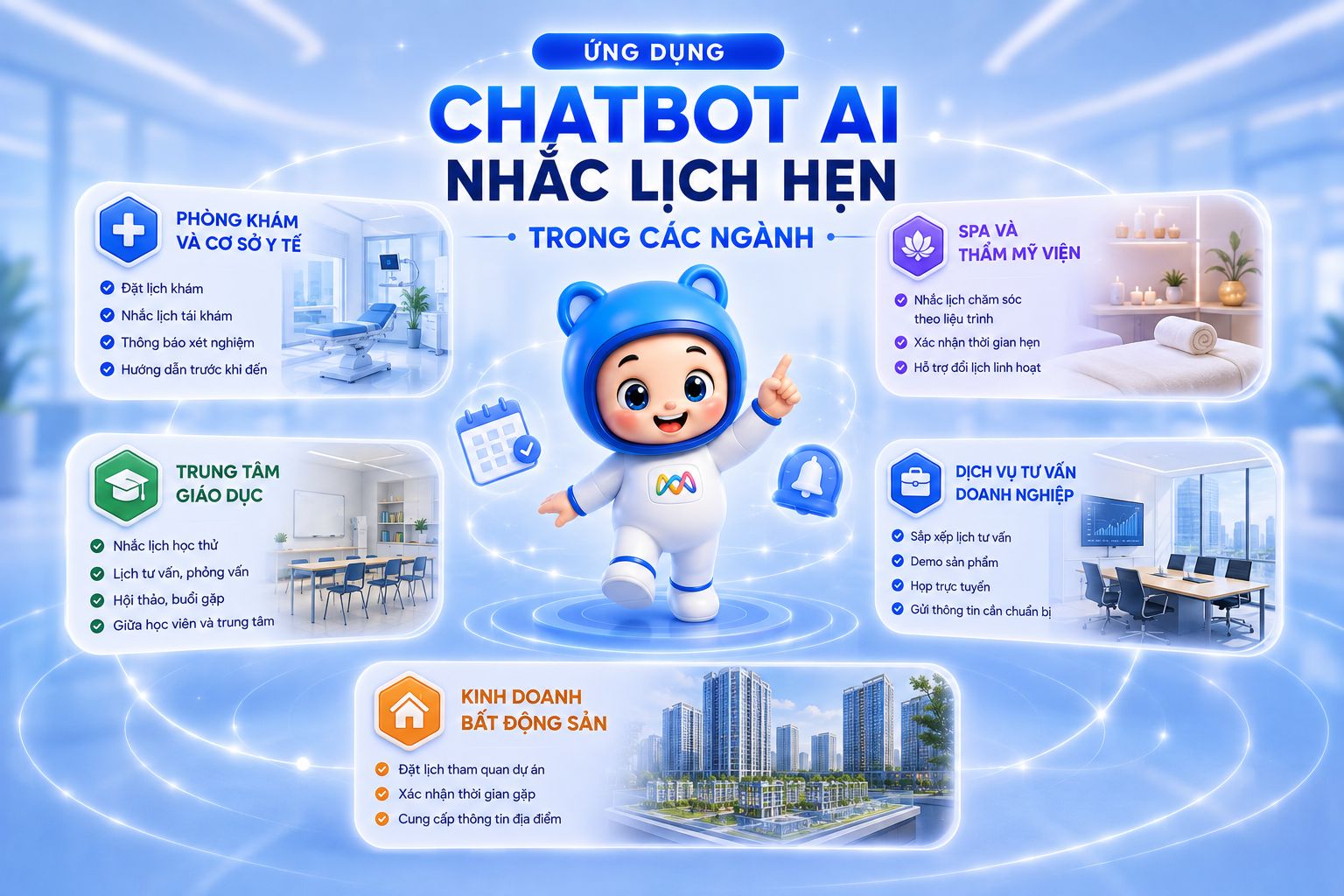
    Chatbot AI nhắc lịch hẹn ứng dụng trong nhiều lĩnh vực

    Clinics and Healthcare Facilities

    Chatbots can assist with appointment booking, follow-up reminders, testing schedules, and provide customers with necessary instructions before their visit.

    Spas and Beauty Clinics

    AI can remind customers about treatment sessions, confirm appointment times, and help customers select a new time when their schedules change.

    Education Centers

    Chatbots can send reminders for trial classes, consultations, entrance interviews, workshops, or meetings between students and education centers.

    Business Consulting Services

    Businesses can use chatbots to schedule consultations, product demonstrations, online meetings, and send customers the information they need to prepare before a meeting.

    Real Estate

    Chatbots can assist with property viewing appointments, confirm meeting times with sales consultants, and provide customers with accurate location information.

    Benefits of Automating Appointment Reminders

    Implementing an AI chatbot allows businesses to move from manual appointment reminders to a more proactive and automated process. Key benefits include:

    • Reducing missed appointments, minimizing unoccupied service slots.
    • Saving employees’ time, especially for businesses handling a large number of appointments.
    • Improving customer experience through fast responses and continuous support.
    • Centralizing appointment management, reducing errors and scheduling conflicts.
    • Improving operational efficiency, allowing employees to focus on higher-value tasks.

    How to Effectively Implement an AI Chatbot for Appointment Reminders?

    For a chatbot to operate accurately, businesses need to prepare reliable data and clear conversation scenarios. Information about services, pricing, business hours, booking procedures, and appointment change policies should be complete and regularly updated.

    Businesses should also deploy chatbots on channels frequently used by customers, such as websites, Zalo, Messenger, or other messaging platforms.

    Finally, businesses should regularly monitor confirmation, rescheduling, and no-show rates to optimize reminder timing and message content. Integrating the chatbot with a CRM can further improve data management and help businesses build a seamless customer care process.

    You can Try Chat Vareno AI for Free to experience natural AI interactions and build an automated appointment reminder workflow for your business.

    Conclusion

    Implementing an AI chatbot for automated appointment reminders is a practical solution that helps businesses reduce no-shows, optimize costs, and improve service quality. By automating appointment management and customer communication, businesses can provide more proactive, professional, and convenient support while allowing employees to focus on tasks that create greater value.

  • AI Logistics Chatbot: The Optimal Solution for Operations and Customer Service

    AI Logistics Chatbot: The Optimal Solution for Operations and Customer Service

    The logistics industry is growing rapidly alongside the increasing demand for fast, accurate, and transparent delivery services. However, logistics businesses also have to handle a large volume of daily inquiries, such as order tracking, shipping quotes, delivery times, warehouse information, and support when issues arise. This is where AI Logistics Chatbot becomes a solution that helps businesses automate communication and improve operational efficiency.

    What Is an AI Chatbot for Logistics?

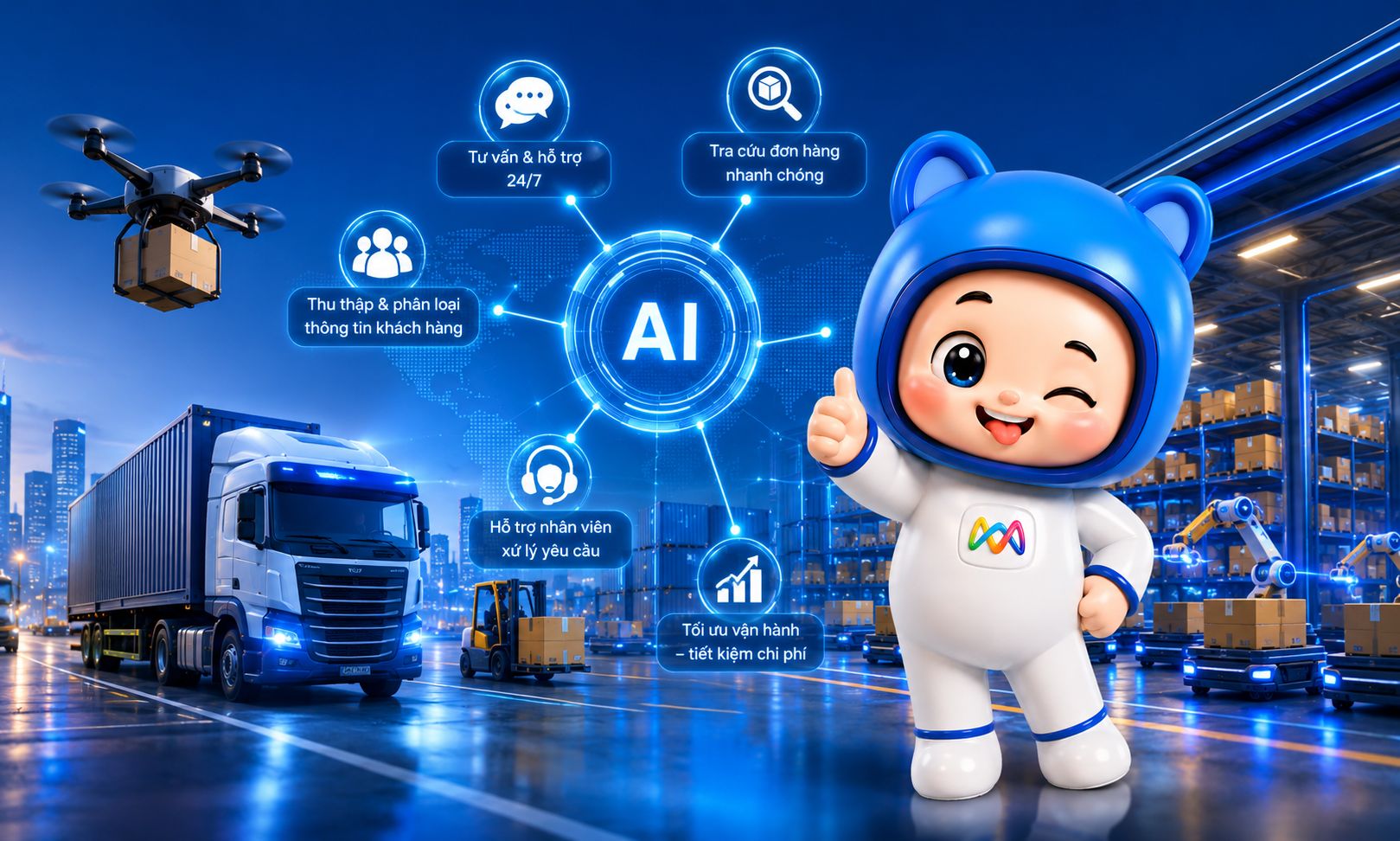
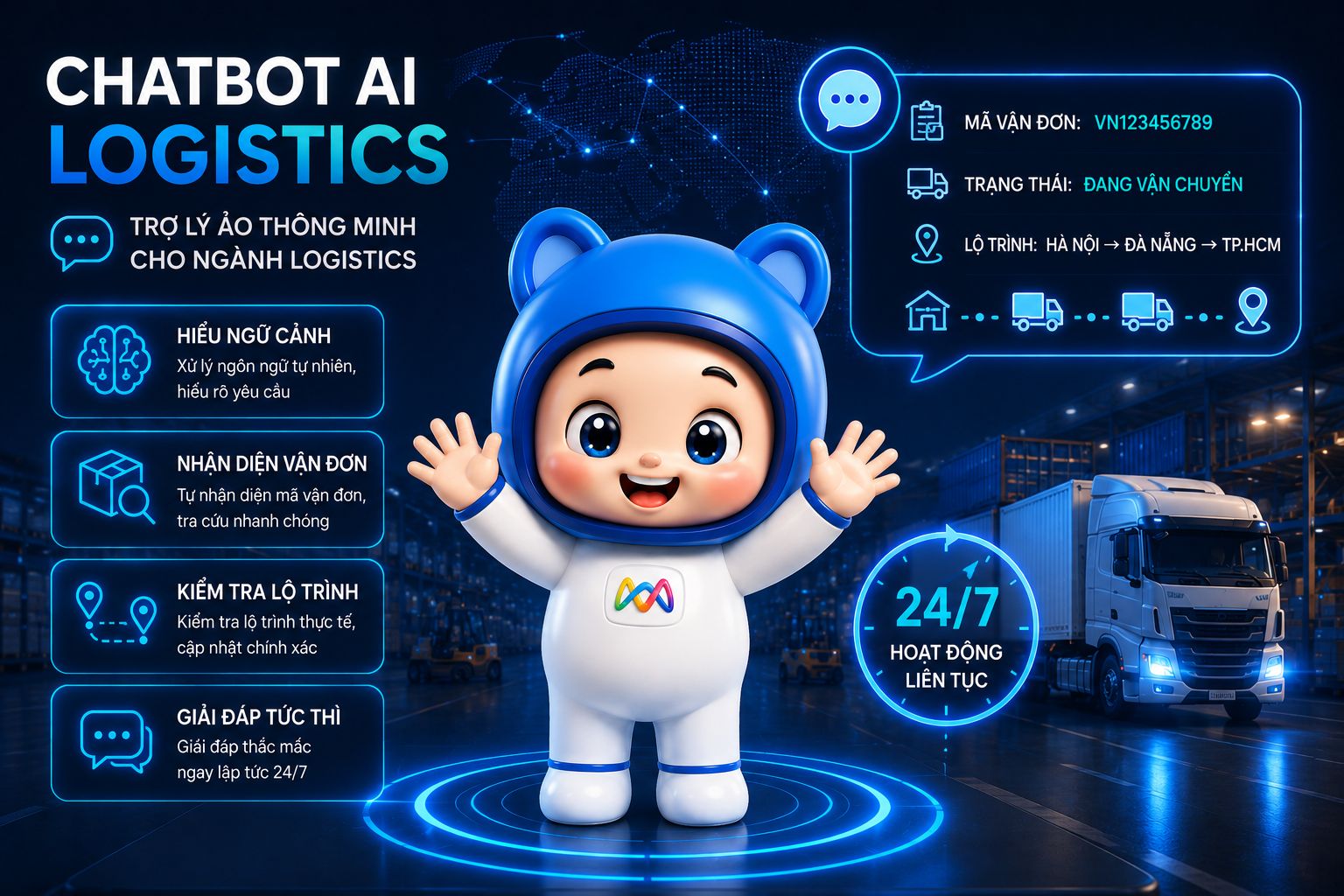
    Chatbot AI logistics là trợ lý ảo hỗ trợ doanh nghiệp vận tải tra cứu đơn hàng và phản hồi khách hàng 24/7.

    An AI chatbot for logistics is a virtual assistant powered by natural language processing and trained specifically on transportation and warehousing data. Unlike rigid rule-based chatbots that rely on button-click scripts, an AI assistant can understand context, recognize tracking numbers, check real-time shipment status, and answer customer questions instantly.

    Why Do Transportation Businesses Need an AI Chatbot?

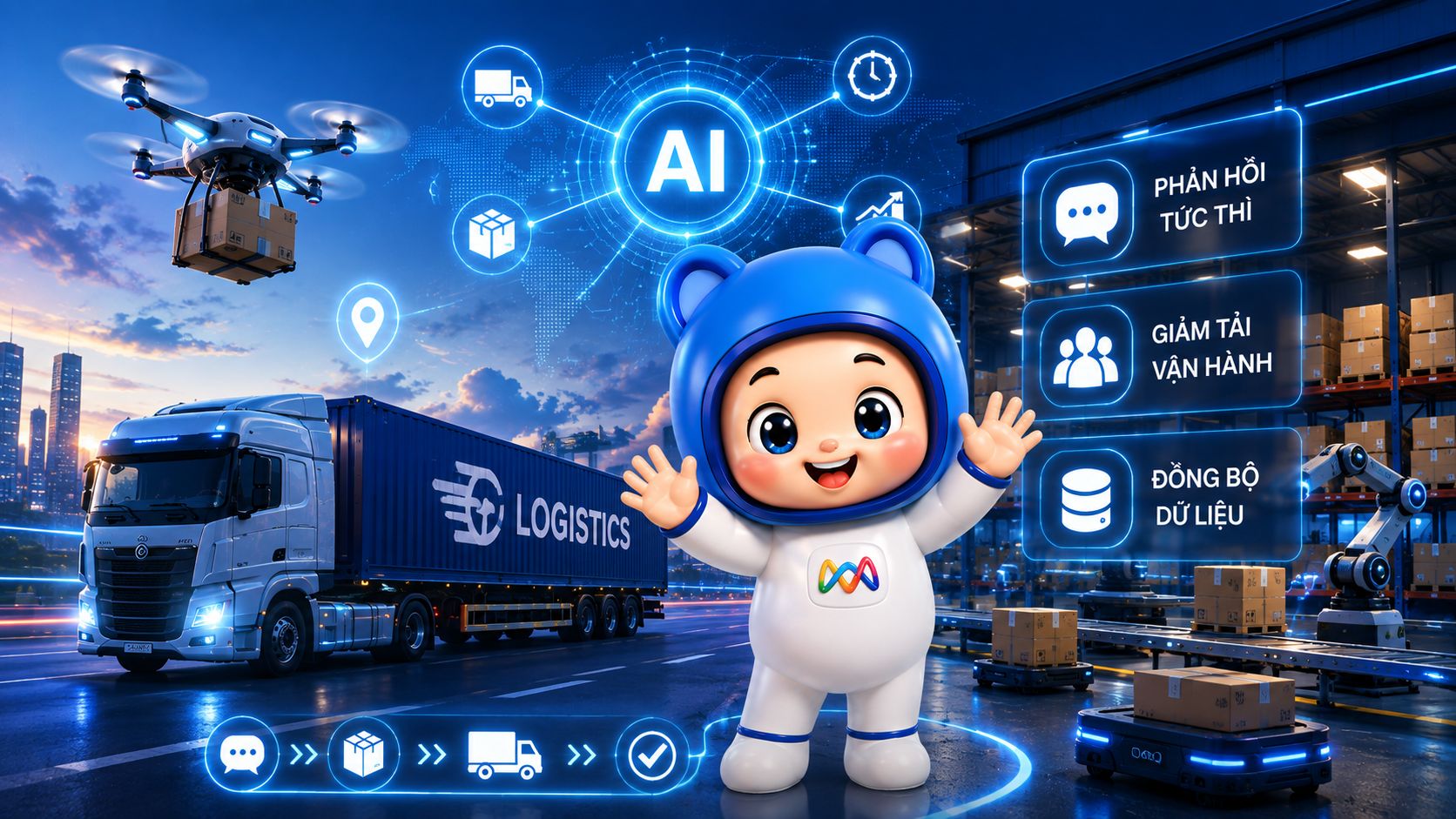
    Chatbot AI logistics hỗ trợ doanh nghiệp vận tải phản hồi khách hàng 24/7

    The logistics industry requires a high level of accuracy and fast response times. The pressure of handling order-tracking requests places a significant burden on customer support teams every day. A virtual assistant helps streamline communication channels, reduce manual workload, and minimize errors caused by manual data entry.

    • Instant responses: Customers who send a tracking number late at night or on holidays can receive an answer within seconds.
    • Reduced operational workload: The system automatically handles repetitive questions about shipping rates, compensation policies, and estimated delivery times.
    • Data synchronization: The assistant can connect directly with warehouse management and transportation management software to retrieve accurate information.

    Key Features of an AI Chatbot for Logistics

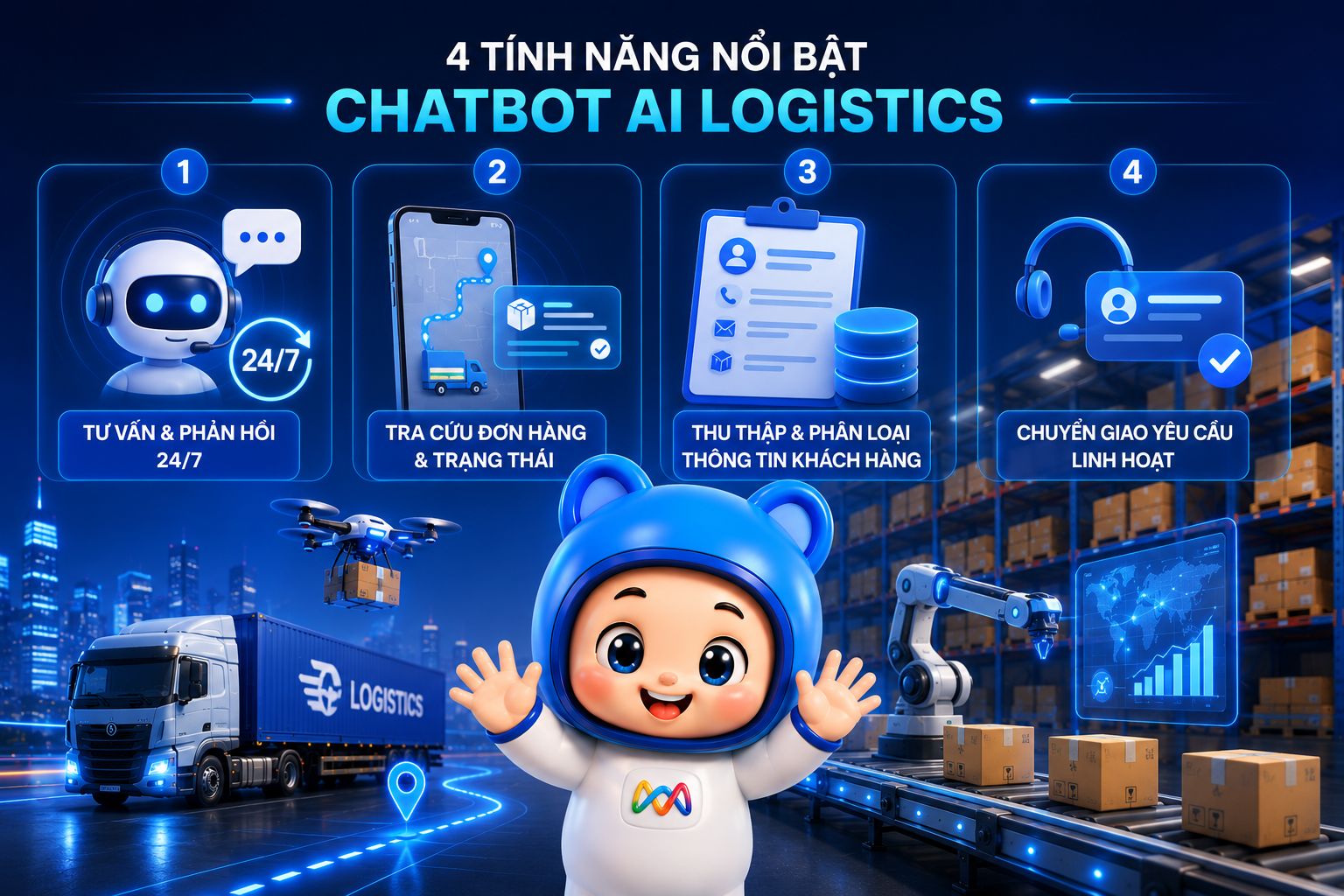
    Today, a transportation virtual assistant can act as an intelligent logistics coordinator.

    Automated 24/7 Consultation and Responses

    The system provides detailed answers about packaging requirements, prohibited items, and interprovincial shipping procedures. Customers can receive consistent responses across familiar channels such as websites, Zalo, and Messenger.

    Order Tracking and Shipment Status Updates

    One of the most common needs of logistics customers is checking their order status.

    When connected to an order management system or relevant data sources, an AI chatbot can quickly help customers find information such as where their shipment is, its current delivery status, and related updates.

    Collecting and Categorizing Customer Information

    A chatbot does more than answer questions. It can also collect essential information such as names, phone numbers, email addresses, shipping requirements, cargo types, and delivery routes.

    This data can be categorized and transferred to a CRM system for the sales team to continue customer follow-up, creating a more seamless logistics automation process.

    Flexible Handover to Human Agents

    When customers have compensation claims or issues such as lost shipments, the system can trigger a handover to the appropriate staff member. Administrators receive a notification along with the complete conversation history. This allows employees to understand the situation quickly without asking customers to repeat their entire case.

    Practical Benefits for Logistics Businesses

    Implementing AI in logistics can deliver numerous benefits, from customer service to operational optimization.

    • Reduce customer service workload: Automatically handle repetitive questions.
    • Faster responses: Customers can receive information almost instantly.
    • 24/7 operation: Provide continuous customer support.
    • Improved data collection: Capture customer needs and behavior.
    • Enhanced customer experience: Deliver consistent information across multiple channels.
    • Optimized operating costs: Reduce manual workloads for employees.
    • Support revenue growth: Better identify and engage customers with logistics needs.

    Trends in AI Adoption in the Transportation Industry

    The market is shifting from simple question-and-answer systems toward multifunctional AI assistants. New trends focus on connecting AI with automated workflows to generate invoices, create vehicle dispatch orders, and provide early warnings about port and warehouse congestion, helping operations teams stay proactive.

    Effective AI Chatbot Deployment Process for Logistics

    To ensure that the virtual assistant operates smoothly, businesses should follow four key steps:

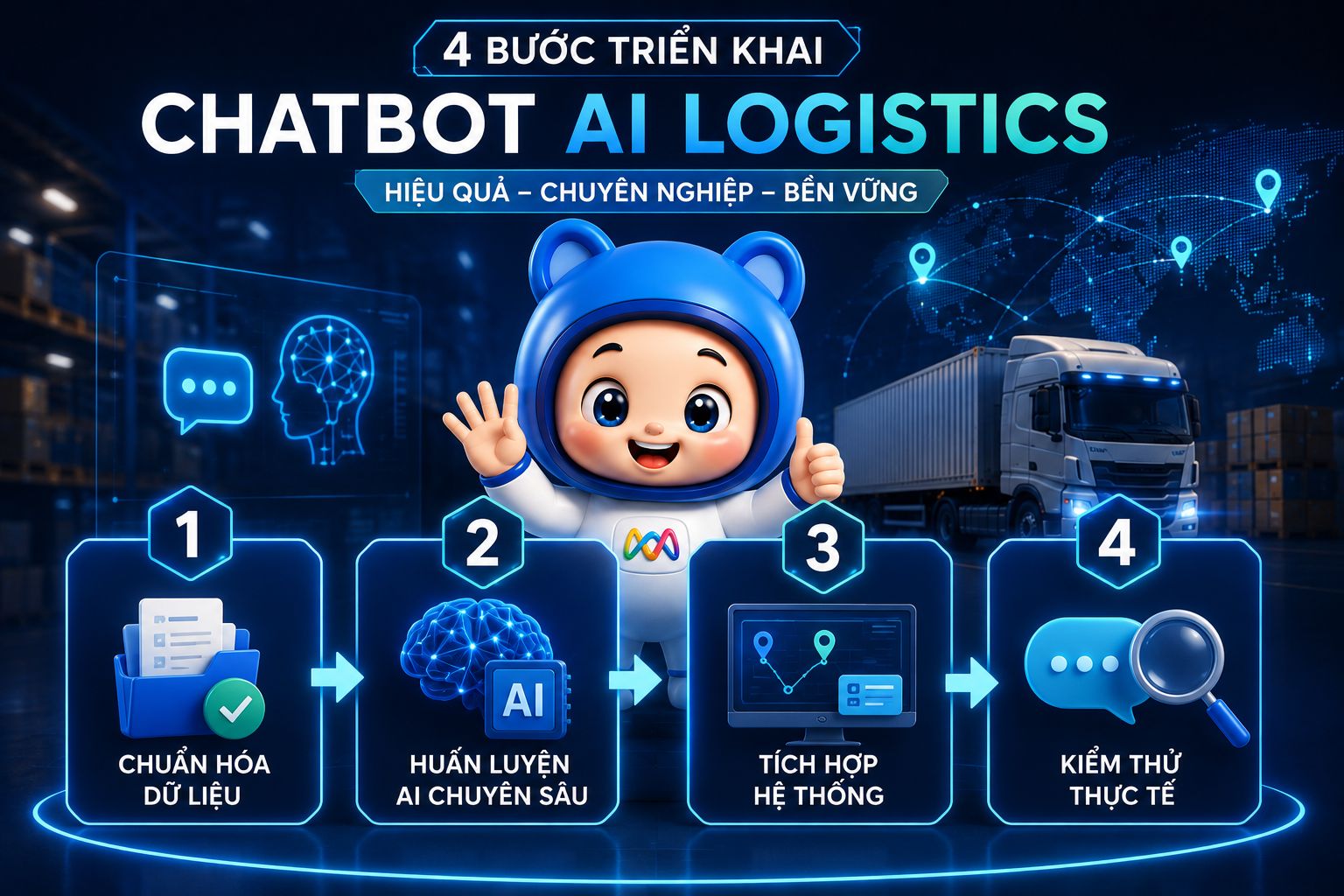
    Quy trình triển khai chatbot AI logistics với 4 bước chính: chuẩn hóa dữ liệu, huấn luyện AI, tích hợp hệ thống và kiểm thử thực tế.

    1. Standardize knowledge data: Consolidate shipping rates, transportation routes, compensation policies, and shipping guidelines into clear and structured documents.
    2. Train the AI: Upload relevant materials to the platform so the model can learn industry-specific terminology and minimize inaccurate responses.
    3. Integrate management systems: Connect the virtual assistant with the existing order management software to synchronize real-time shipment status.
    4. Test real-world scenarios: Test customer inquiries ranging from simple tracking requests to complex situations before officially launching the chatbot.

    Conclusion

    Investing in an AI chatbot for logistics is a strategic step that helps businesses optimize operations, improve customer service, and save resources. Understanding business needs and choosing the right AI solution can help companies deploy the technology effectively and gain a competitive advantage in the logistics industry.

    With Vareno AI, businesses can easily apply AI to customer service and operational processes, moving toward a more modern, automated, and professional logistics system. Contact Vareno AI today to receive a solution tailored to your business needs.

  • AI Chatbot Deployment Costs: A Complete Guide to Investing Effectively

    AI Chatbot Deployment Costs: A Complete Guide to Investing Effectively

    AI Chatbot Deployment Costs play a critical role in determining the success of an AI implementation project. Many businesses are eager to adopt AI Agent Assistants but remain concerned about deployment expenses and return on investment. By understanding the key cost components, organizations can make smarter budgeting decisions and optimize every stage of deployment. At Chat Vareno AI, we provide scalable AI solutions that help businesses improve customer experience, streamline operations, and achieve sustainable growth while maintaining cost efficiency.

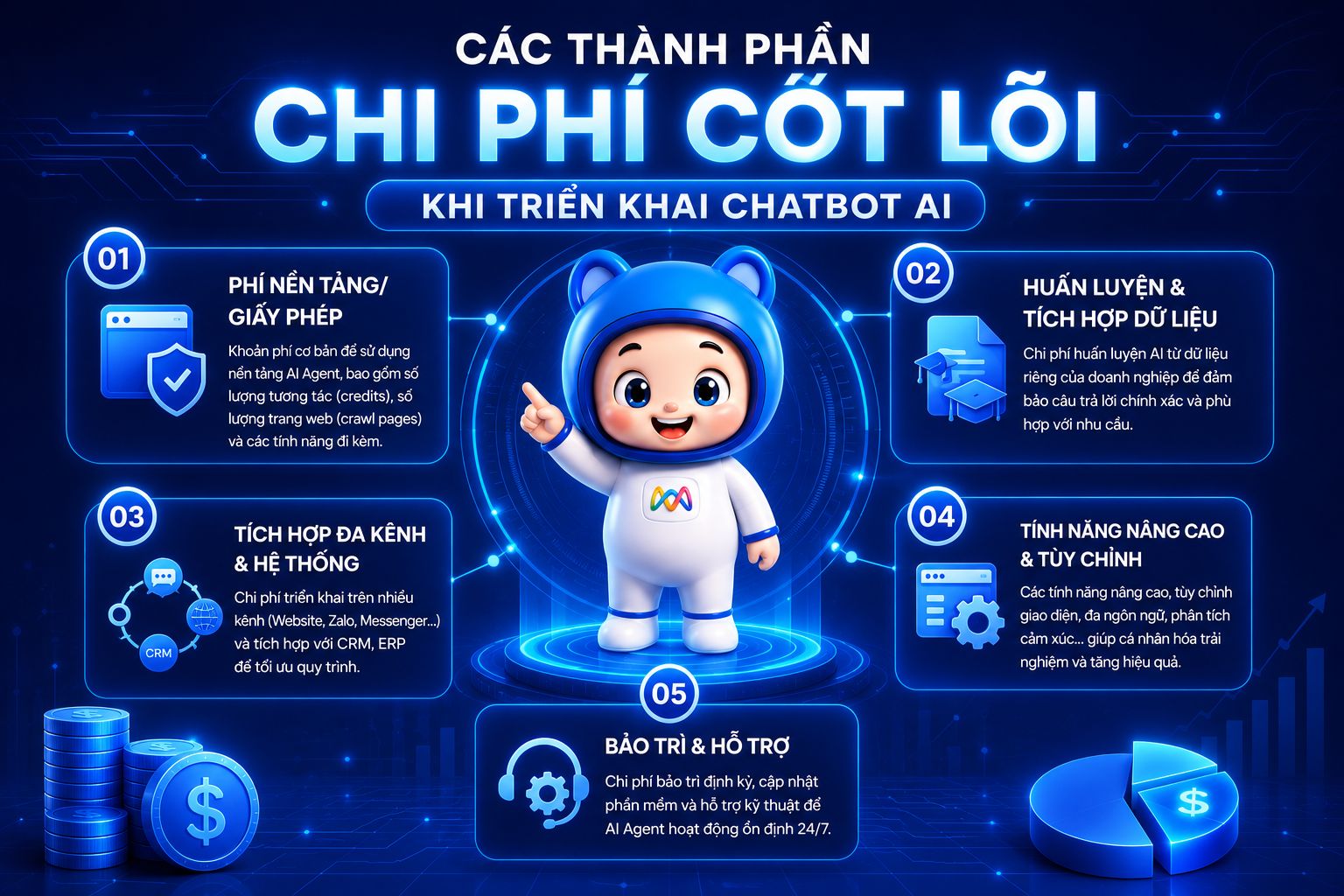
    Core Cost Components of AI Chatbot Deployment

    Các thành phần chi phí cốt lõi khi triển khai Chatbot AI cho doanh nghiệp

    When businesses decide to implement an AI Agent Assistant, the costs extend far beyond the initial setup fee. Modern AI chatbots, especially those powered by advanced Large Language Models (LLMs) like Vareno AI, follow a flexible pricing structure that differs significantly from traditional rule-based chatbots. The main cost components include:

    Platform License / Subscription Fee

    This is the basic cost of using an AI chatbot platform. Service plans typically vary based on the number of interaction credits, website crawl pages, and advanced features. For example, an entry-level package may include 50 credits per month, making it suitable for small businesses starting their AI journey.

    AI Training and Data Integration

    To deliver accurate responses, an AI Agent must be trained using your company’s proprietary data, including websites, PDFs, FAQs, and internal documents. The cost depends on the volume and complexity of the data. Well-trained AI provides significantly higher response accuracy from day one.

    Omnichannel and System Integration

    Deploying AI across multiple channels such as Websites, Zalo OA, Messenger, or integrating with existing CRM and ERP systems will incur additional costs. These integrations automate workflows, improve conversion rates, and ensure seamless data synchronization.

    Advanced Features and Customization

    Premium capabilities such as Human Handoff, sentiment analysis, multilingual support, and customized interface design increase the overall chatbot development cost. These features provide a more personalized customer experience and improve operational efficiency.

    Maintenance and Technical Support

    To ensure the AI Agent operates reliably 24/7, businesses should budget for regular maintenance, software updates, and technical support. These services are typically charged as a fixed monthly fee, providing long-term operational stability.

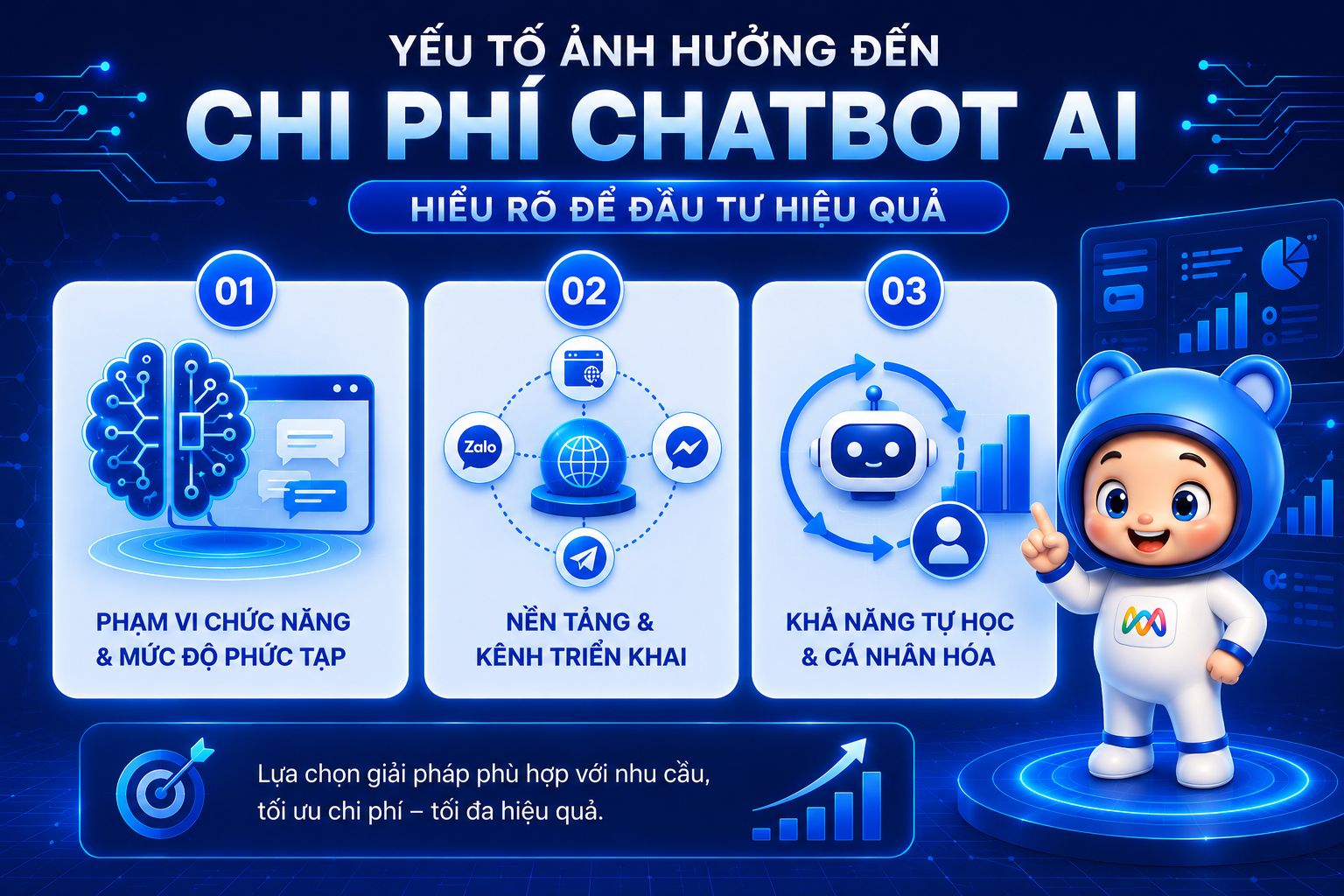
    Factors That Influence AI Chatbot Deployment Costs

    Các yếu tố ảnh hưởng đến chi phí triển khai Chatbot AI cho doanh nghiệp

    AI chatbot pricing is not fixed. It varies depending on each business’s specific requirements. Understanding these factors allows organizations to estimate their budgets more accurately. Three key elements determine the final deployment cost.

    Functionality and Complexity

    A simple chatbot with around ten predefined conversation flows is considerably less expensive than an AI Agent capable of self-learning, understanding natural language (NLP), and handling unlimited conversation scenarios. Businesses requiring advanced AI-powered data analysis and strategic insights should expect higher development costs.

    Deployment Platforms and Channels

    Deploying an AI Agent exclusively on a website is generally more affordable than implementing an omnichannel solution across Websites, Zalo OA, Messenger, and Telegram. Every additional platform requires separate configuration, testing, and maintenance.

    Self-Learning and Personalization

    Vareno AI Agent features powerful self-learning capabilities instead of relying on rigid scripted conversations. It continuously improves response quality based on user interactions. More intelligent and highly personalized AI solutions require stronger infrastructure and advanced technologies, resulting in higher implementation costs.

    Chat Vareno AI offers flexible service plans ranging from a Free package for first-time users to Standard, Pro, and Enterprise plans designed to meet the needs of businesses of all sizes.

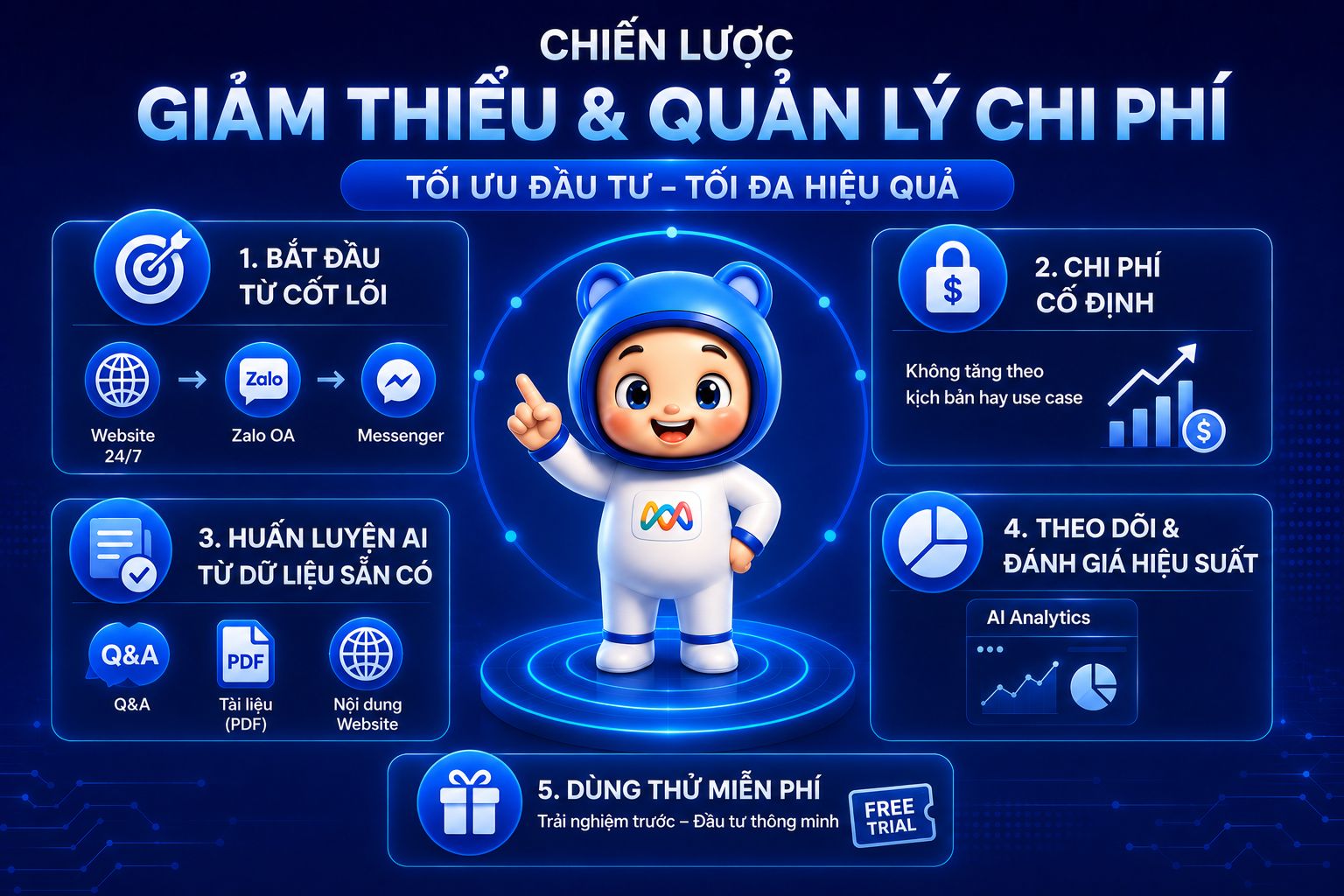
    Strategies to Reduce and Manage AI Chatbot Costs Effectively

    To maximize the return on your AI investment, businesses need a well-defined cost management strategy. At Vareno AI, we help customers achieve outstanding results through our “The Power of Less” philosophy.

    Chiến lược giảm thiểu và quản lý chi phí triển khai Chatbot AI cho doanh nghiệp

    Start with Core Features

    Instead of implementing every feature at once, focus on the capabilities that solve your most urgent business challenges. For example, begin with 24/7 AI customer support on your website, then gradually expand to Zalo OA and Messenger.

    Choose a Platform with Fixed Pricing

    Select an AI chatbot platform that offers predictable monthly pricing rather than charging based on conversation scenarios or use cases, as traditional chatbots often do. This approach makes budgeting easier while allowing AI capabilities to scale without unexpected expenses.

    Train AI Using Existing Business Data

    Leverage your existing knowledge base—including FAQs, product documentation (PDFs), and website content—to train your AI. This significantly reduces the time and effort required to build an effective AI knowledge base.

    Monitor and Optimize Performance

    Utilize AI Analytics to analyze customer behavior and conversation data. These insights help refine your AI strategy, improve issue resolution rates, and maximize long-term ROI.

    Take Advantage of Free Trials

    Many AI platforms, including Chat Vareno AI Agent, offer free trials or limited-feature plans. These options allow businesses to evaluate the solution before committing to a larger investment.

    Conclusion

    Investing in an AI Agent Assistant is a strategic decision that delivers significant business value—from streamlining operations to increasing sales conversion rates. Understanding the core cost components and the factors affecting AI chatbot deployment costs enables businesses to make smarter investment decisions.

    With Chat Vareno AI, you gain more than a powerful AI solution—you gain a trusted technology partner dedicated to making AI deployment simple, efficient, and cost-effective. Contact us today to discover the AI chatbot solution that best fits your business goals and budget.