Tag: Customer Service Automation

  • Vietnamese AI Chatbot: A Smarter Solution for Better Customer Experience

    Vietnamese AI Chatbot: A Smarter Solution for Better Customer Experience

    Many online stores have experienced the same frustrating situation: a customer sends a message asking for the price in the middle of the night, but leaves because no one responds. By the next morning, when employees check the inbox, the customer has already purchased from another provider. To solve this problem, a properly configured Vietnamese AI chatbot can act like an overnight customer service representative, engaging potential buyers precisely when their purchase intent is at its highest.

    What Is a Vietnamese AI Chatbot?
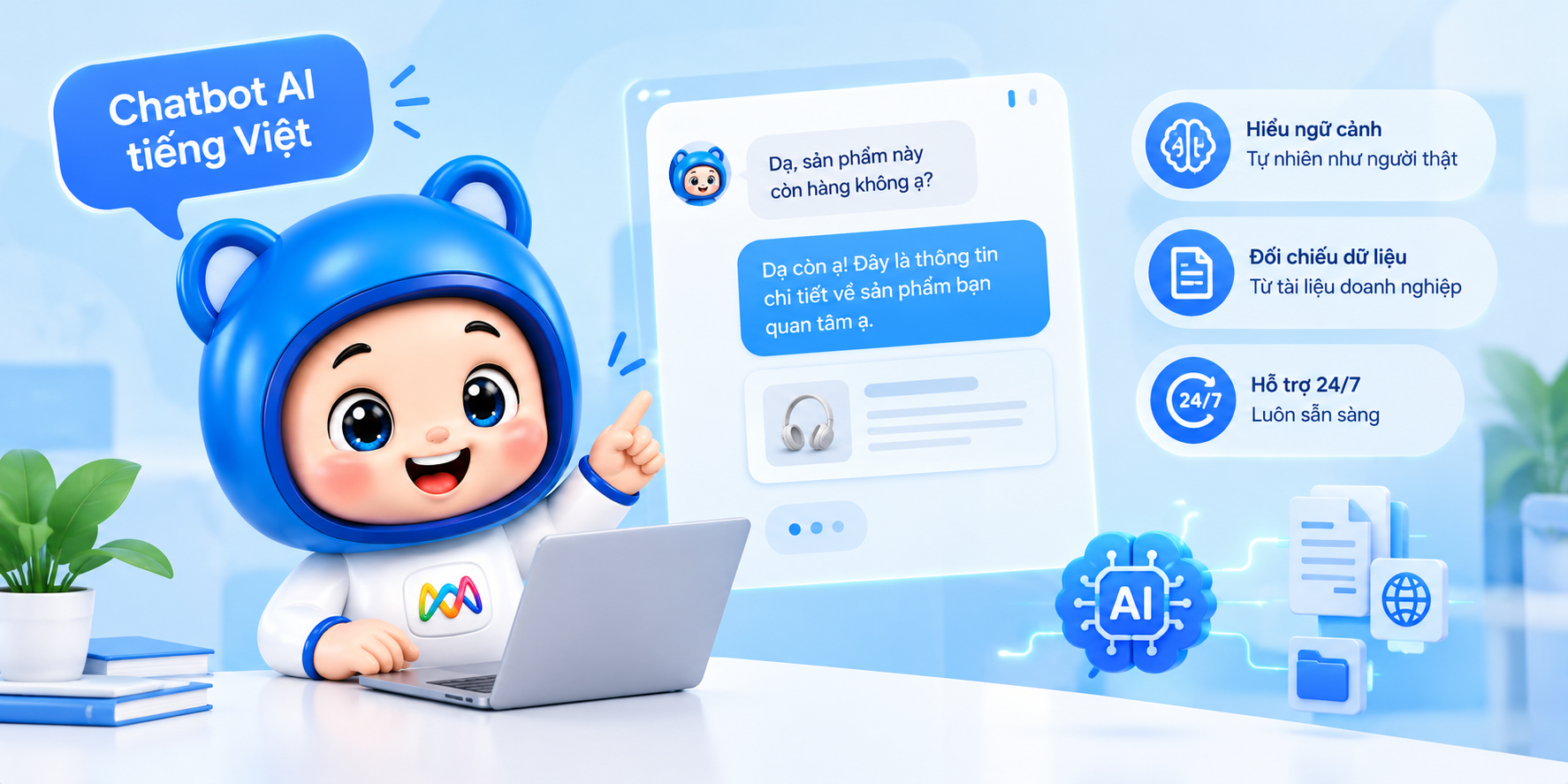
    Chatbot AI tiếng Việt hiểu ngữ cảnh và dữ liệu doanh nghiệp

    Unlike traditional chatbot systems based on rigid decision trees and button-based interactions, modern technology operates on large language models such as GPT-4 and Gemini. These platforms can understand the context of questions and handle Vietnamese slang, abbreviations, and different forms of address commonly used in everyday conversations.

    Instead of simply following pre-written response templates, the virtual assistant can directly reference data provided by the business to give customers detailed and relevant answers. As a result, conversations feel more natural and friendly, much like chatting with an experienced consultant.

    Practical Benefits of a Vietnamese AI Chatbot

    Applying artificial intelligence to customer messaging goes beyond simply sending automated replies. This technology can improve the shopping experience while reducing the amount of repetitive work employees have to handle every day.
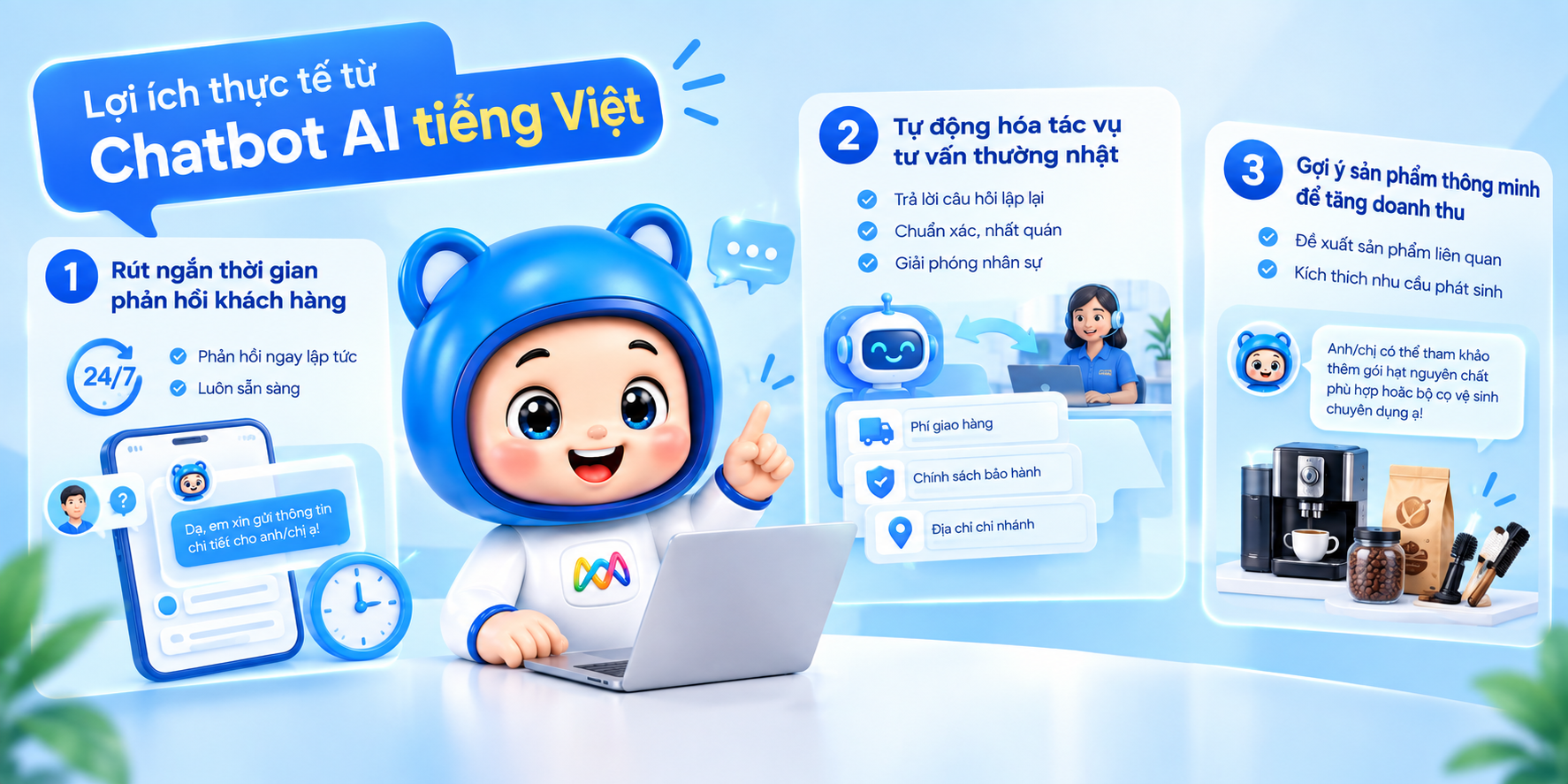
    Lợi ích của chatbot AI tiếng Việt trong chăm sóc khách hàng

    Faster Customer Response Times

    Online shoppers are often unwilling to wait long for answers to their questions. If they do not receive a response within a few minutes, they may turn to another provider. An AI assistant can respond instantly and operate 24/7, including weekends and holidays, creating a professional experience from the very first customer interaction.

    Automating Routine Consultation Tasks

    Every day, customer service employees spend hours answering repetitive questions about shipping fees, warranty policies, branch locations, and other basic information. A virtual assistant can handle these recurring inquiries accurately and consistently. This allows employees to focus on VIP customers or more complex complaints and support cases.

    Smart Product Recommendations to Increase Revenue

    When properly configured, the system can also act as a skilled sales assistant. For example, when a customer asks about buying a home coffee machine, the virtual assistant can recommend suitable coffee beans or a specialized cleaning brush. This subtle approach can encourage additional purchases without making customers feel pressured.

    How AI Chatbots Can Be Applied in Business
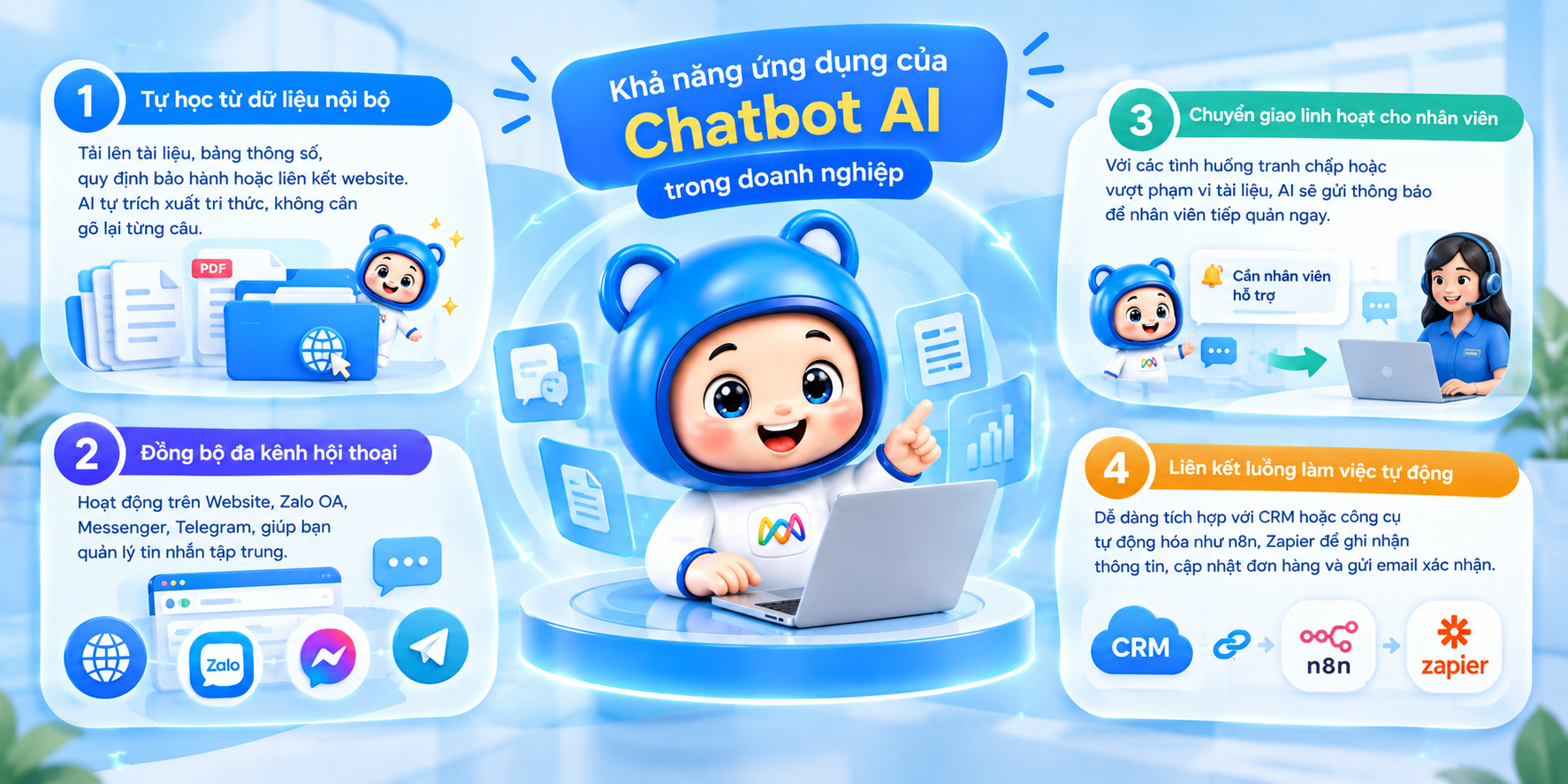
    Khả năng ứng dụng chatbot AI trong doanh nghiệp đa kênh

    Depending on your business needs, an AI assistant can take on a variety of roles:

    • Learn from internal business data: Upload user manuals, technical specifications, warranty policies, or website links. The system can extract relevant knowledge without requiring you to manually write every instruction.
    • Omnichannel conversation management: The assistant can operate across websites, Zalo Official Account, Messenger, and Telegram, allowing businesses to manage conversations from a centralized dashboard.
    • Flexible human handoff: When a conversation involves a dispute or a question outside the available knowledge base, AI can immediately notify a human employee to take over.
    • Connect automated workflows: The platform can integrate with CRM systems and automation tools such as n8n and Zapier to capture contact information, update order statuses and send confirmation emails.

    4 Steps to Implement an Accurate AI Chatbot

    To ensure the chatbot operates smoothly and minimizes inaccurate responses, businesses should follow these four steps:
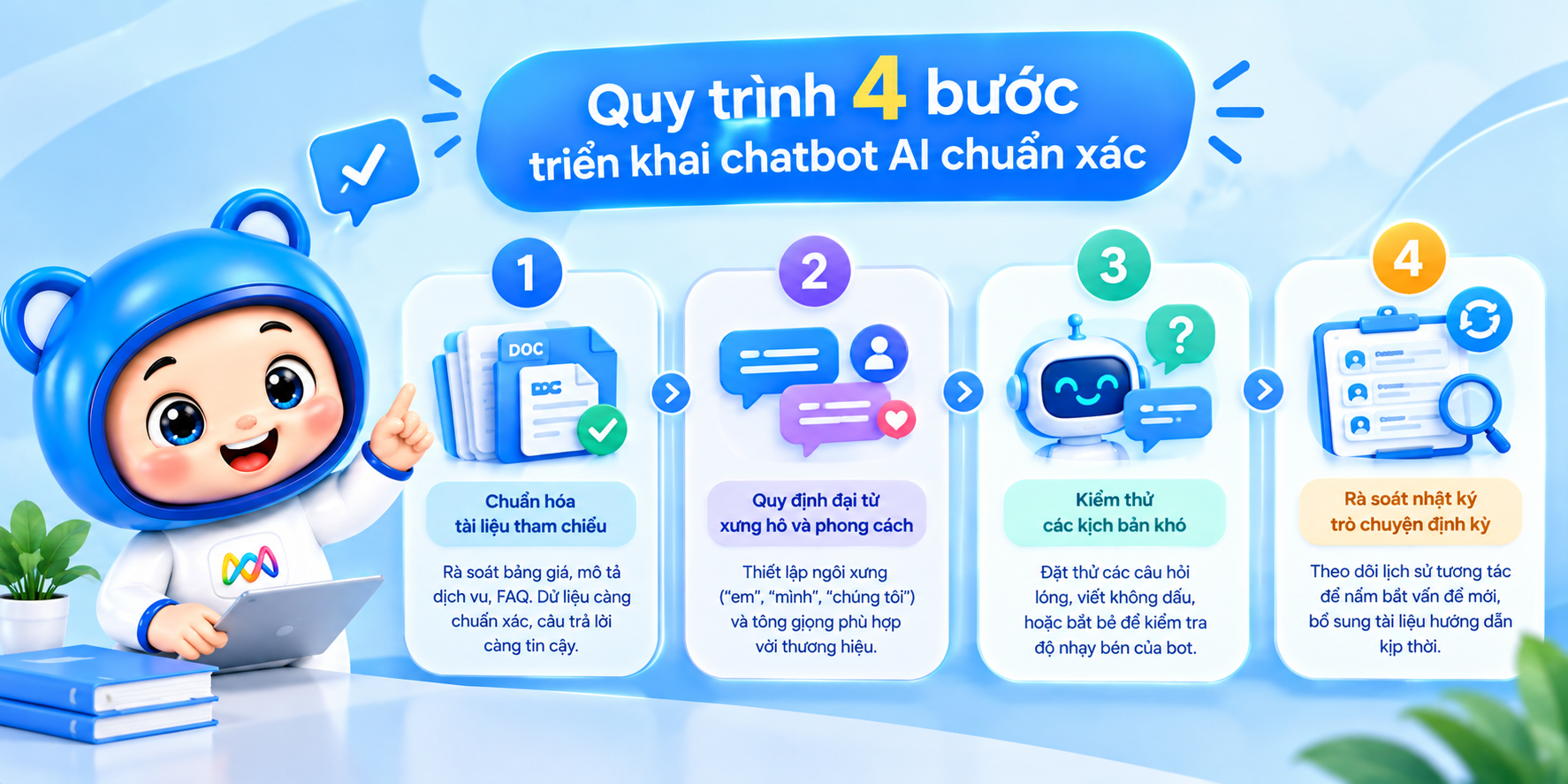
    Quy trình 4 bước triển khai chatbot AI chuẩn xác

    1. Standardize reference materials: Review current pricing, service descriptions and frequently asked questions. The more accurate the data, the more reliable the chatbot’s responses will be.
    2. Define communication style and pronouns: Establish how the chatbot should address customers, such as using “I” “we” or other appropriate forms, along with a formal or friendly tone that matches the brand.
    3. Test challenging scenarios: Have internal employees test the chatbot with local slang, unaccented Vietnamese, ambiguous questions or deliberately tricky requests to evaluate its ability before launch.
    4. Regularly review conversation logs: Analyze chat histories to identify new customer questions and pain points, then continuously update the knowledge base with relevant information.

    Chat Vareno AI – An Intelligent Assistant Solution for Businesses

    Chat Vareno AI provides an AI Agent Assistant solution that helps businesses build chatbots based on their specific needs. The system can leverage information from websites, documents, FAQs and other supported data sources.

    With Vietnamese language support, the chatbot helps businesses automate consultation, customer service and lead collection across relevant communication channels.

    Implementing a Vietnamese AI chatbot not only helps businesses improve response times but also creates a foundation for optimizing operations, enhancing customer experience and supporting business growth in the digital era.

    Conclusion

    More than just an automated response tool, a Vietnamese AI chatbot is changing how businesses communicate with customers making interactions faster, more natural, and more flexible. From consultation and answering questions to after-sales support, AI can assist across multiple stages while allowing human teams to remain in control.

    With Vareno AI, businesses can turn everyday conversations into opportunities to provide better service, respond faster and operate more intelligently.
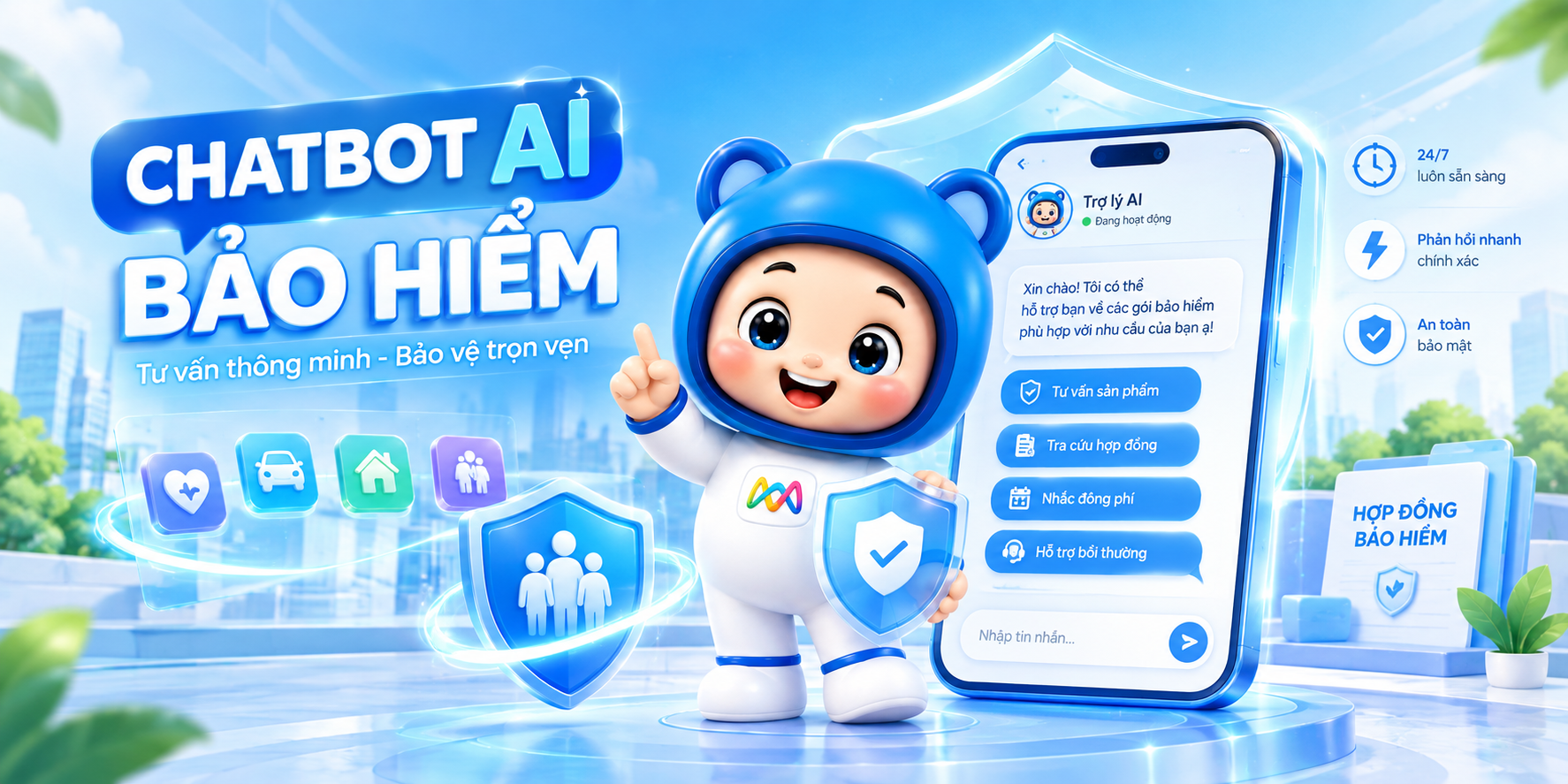
  • AI Insurance Chatbot: A Solution for Automating Consultation and Customer Service

    AI Insurance Chatbot: A Solution for Automating Consultation and Customer Service

    The insurance industry handles a large volume of information related to products, benefits, terms and conditions, premiums, policies, and claims procedures. As customers increasingly expect fast responses, businesses need a solution that can both reduce the workload for employees and maintain high-quality customer service. AI insurance chatbot are becoming an effective approach to automating many customer communication activities.

    What Is an AI Insurance Chatbot?

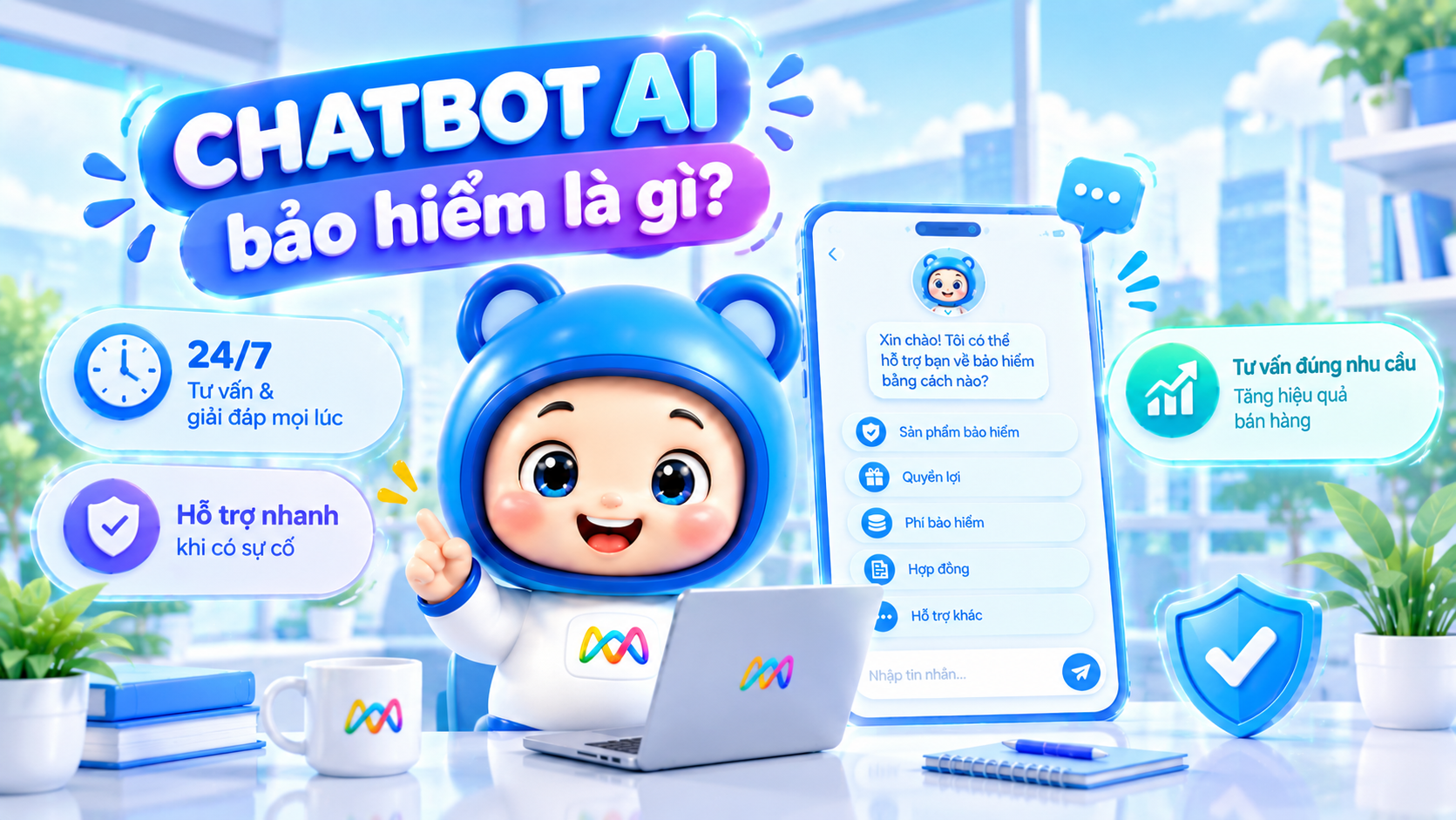
    Chatbot AI bảo hiểm là trợ lý ảo hỗ trợ khách hàng

    An AI insurance chatbot is a virtual assistant powered by artificial intelligence that communicates with customers using natural language. Instead of simply following fixed conversation scripts, the chatbot can analyze questions, understand context, and provide responses based on the data supplied by the business.

    Chatbots can be integrated into websites, fan pages, applications, and messaging channels. Customers can ask questions about products, benefits, premiums, policies, or support procedures without necessarily having to wait for a staff member to respond.

    Why Should Insurance Businesses Use AI Chatbots?

    The finance and insurance industry requires a high level of accuracy in every interaction. Deploying an intelligent virtual assistant helps businesses engage and retain customers effectively from the very first touchpoint.

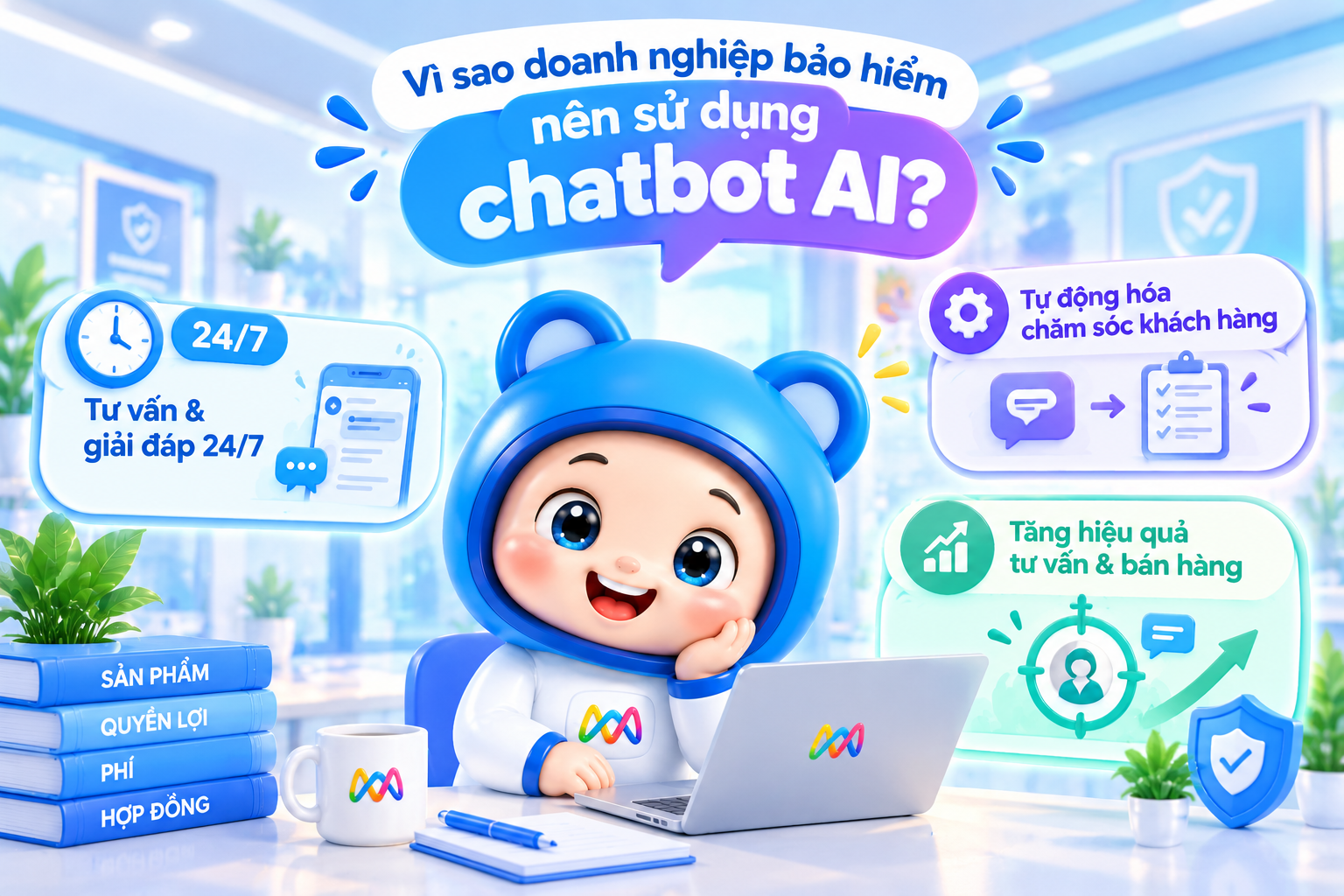
    Lợi ích chatbot AI bảo hiểm cho doanh nghiệp

    24/7 Customer Consultation and Support

    Medical emergencies or accidents can occur outside regular business hours. A virtual assistant can operate around the clock on websites, Zalo OA, or Messenger. When customers encounter an incident, the system can automatically identify the nearest affiliated medical facility. It can also provide detailed guidance on collecting payment receipts to help ensure that claims documentation is complete.

    Automating Customer Service Processes

    Call center agents are often overwhelmed by repetitive questions. Inquiries about premium grace periods or claim submission addresses can take up a significant amount of call center time. AI systems can handle thousands of conversations simultaneously, freeing employees to focus on more specialized tasks such as claims assessment.

    Improving Insurance Consulting and Sales Efficiency

    When users express their needs, the system can analyze factors such as age and budget to recommend suitable insurance products. When a high purchase intent is detected, the Human Handoff feature can immediately notify a consultant. Insurance agents can then take over the conversation at the right time to provide in-depth advice, helping increase conversion rates.

    What Can an AI Insurance Chatbot Do?

    Depending on the available data, a virtual assistant can handle many specific tasks throughout the customer service process:

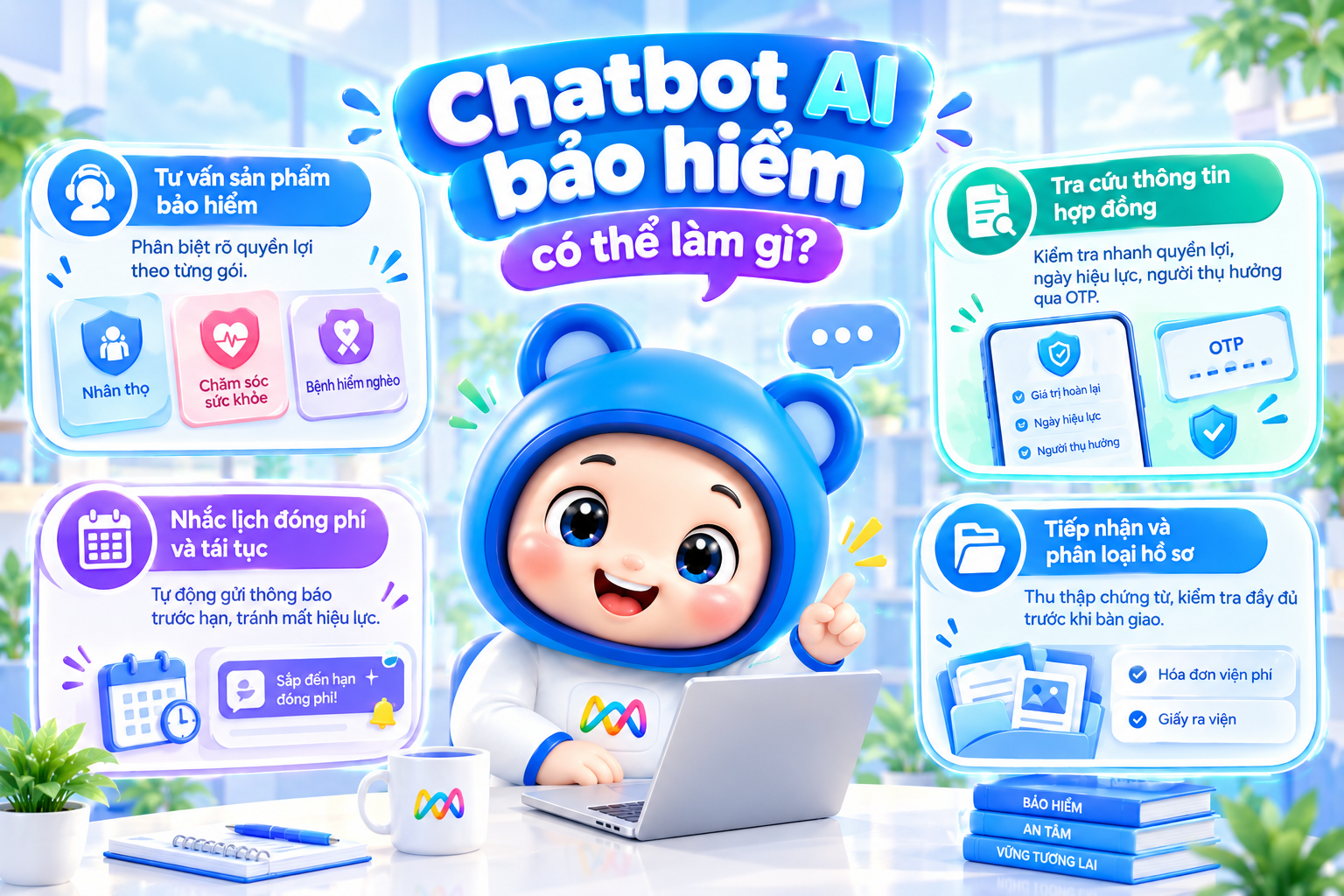
    Các tính năng của chatbot AI bảo hiểm

    • Insurance Product Consultation: Clearly explain the differences in benefits between life insurance, health insurance cards, and critical illness insurance based on the information provided by the customer.
    • Policy Information Lookup: Quickly check the cash surrender value, policy effective date, or beneficiary information through OTP verification sent to the customer’s registered phone number.
    • Premium Payment and Renewal Reminders: Automatically send reminders before recurring premium payment deadlines to help prevent policies from unintentionally lapsing.
    • Document Collection and Classification: Collect images of medical bills and hospital discharge documents, then check whether the required documents are complete before forwarding them to the claims assessment team.

    Applications of AI Chatbots Across Different Types of Insurance

    Each insurance segment has its own operational challenges. Intelligent assistants can be flexibly adapted to the specific characteristics of each product.

    AI life insurance chatbots can support product consultations, explain benefits, and remind customers about premium payment schedules.

    For health insurance, chatbots can guide customers through benefits, service procedures, and the information they need to prepare.

    In auto insurance, chatbots can answer product-related questions, explain support request procedures, and collect initial information from customers.

    Overall, chatbots can be customized based on the data, processes, and specific requirements of each insurance business.

    How to Implement an AI Chatbot for an Insurance Business

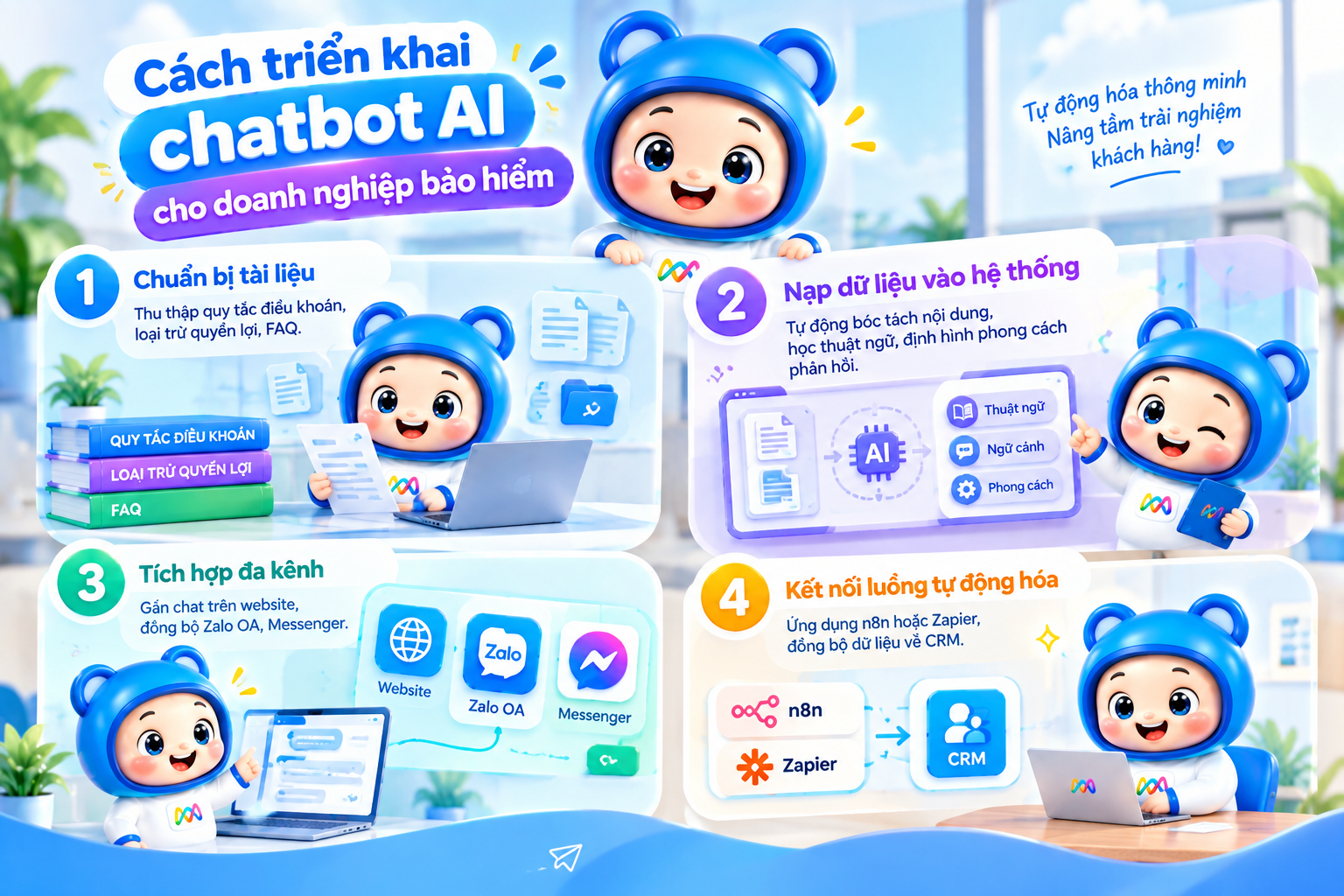
    The integration process can be streamlined and focused on actual business needs:

    1. Prepare Documents: Collect policy terms and conditions, exclusions, and frequently asked questions used during customer consultations.
    2. Upload Data to the System: The platform automatically extracts content, learns industry-specific terminology, and establishes a response style aligned with the company’s standards.
    3. Integrate Across Multiple Channels: Add the chat widget directly to the official website and connect it with popular customer communication channels such as Zalo OA and Messenger.
    4. Connect Automation Workflows: Use workflow automation tools such as n8n or Zapier to synchronize potential customer data with the company’s internal Customer Relationship Management (CRM) system.

    What to Consider When Choosing an AI Insurance Chatbot

    Security is a critical consideration when handling personal financial data. Businesses should choose a platform that applies strict data encryption. The system should also provide clear commitments that customers’ internal data will not be used to train external public models. In addition, the ability to smoothly transfer conversations to human consultants is essential when complex disputes or situations arise.

    To evaluate the chatbot’s accuracy in understanding policy documents, you can try the Chat Vareno AI platform for free using real sample documents.

    Conclusion

    Investing in an AI insurance chatbot enables businesses to automate consulting, customer service, and resource optimization. With Vareno AI, businesses can easily integrate AI into their insurance processes, enhance the customer experience, and move toward more modern and professional operations. Contact Vareno AI to find the solution that best fits your business needs.

  • Best AI Chatbot Platform for SMEs: Selection Criteria and Suitable Solutions

    Best AI Chatbot Platform for SMEs: Selection Criteria and Suitable Solutions

    In today’s competitive business environment, SMEs often face the challenge of optimizing costs while maintaining high-quality customer service. Limited human resources can make it difficult for businesses to respond quickly to customers across multiple channels, especially outside business hours.

    This is why the best AI chatbot platform for SMEs is receiving increasing attention. Beyond simply answering questions automatically, AI chatbots can provide consultation, collect customer information, qualify leads, and connect with a company’s management systems.

    Why Should SMEs Use AI Chatbots?

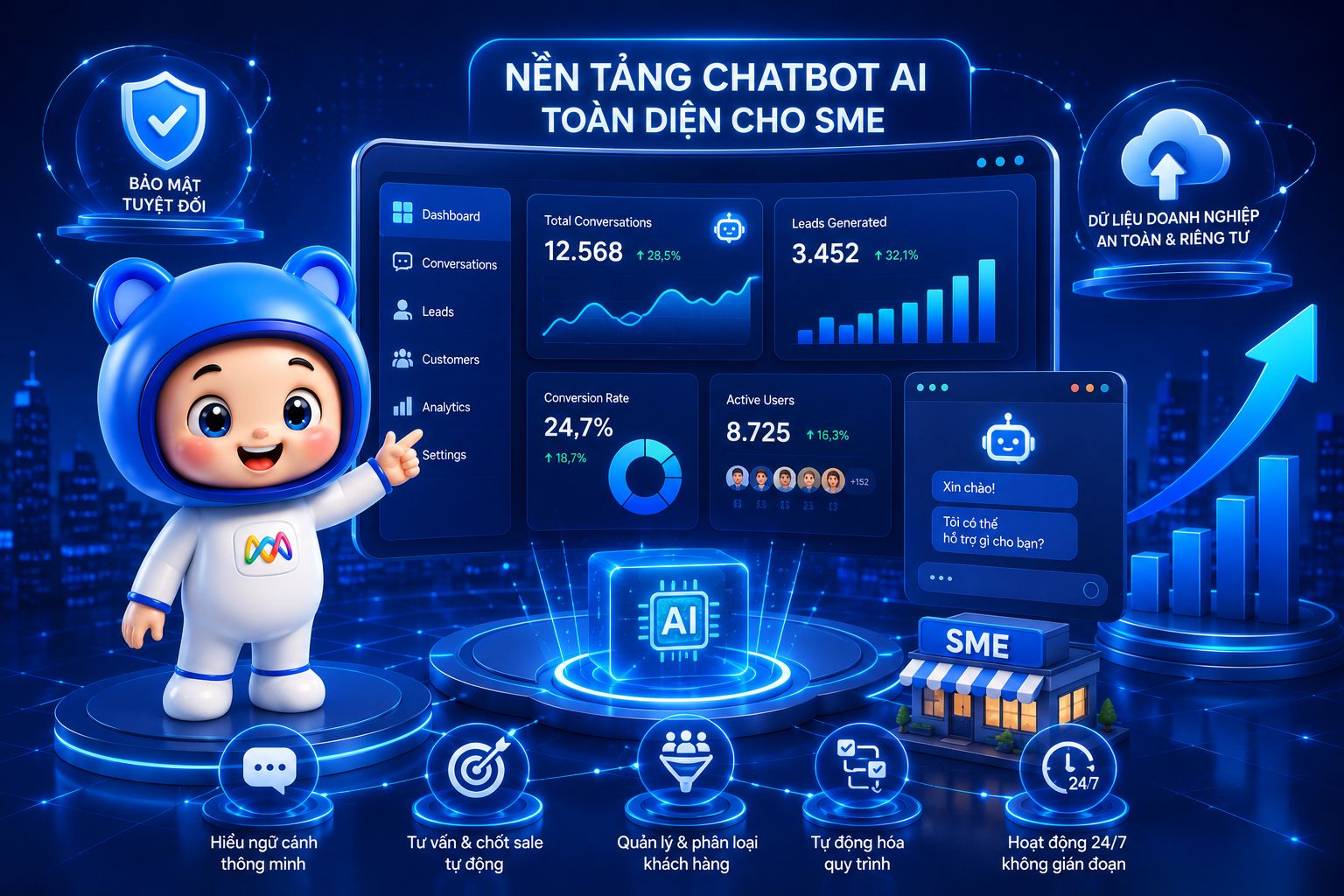
    Chatbot AI hỗ trợ doanh nghiệp SME

    AI chatbot for SMEs

    For small and medium-sized businesses, hiring additional staff to handle messages 24/7 can create significant costs. AI chatbots help address this challenge by automatically handling common questions and customer requests.

    Chatbots can operate continuously, providing customer support even outside business hours. When trained with a company’s own data, an AI chatbot can also provide responses tailored to the brand’s products, services, and policies.

    Some of the key benefits include:

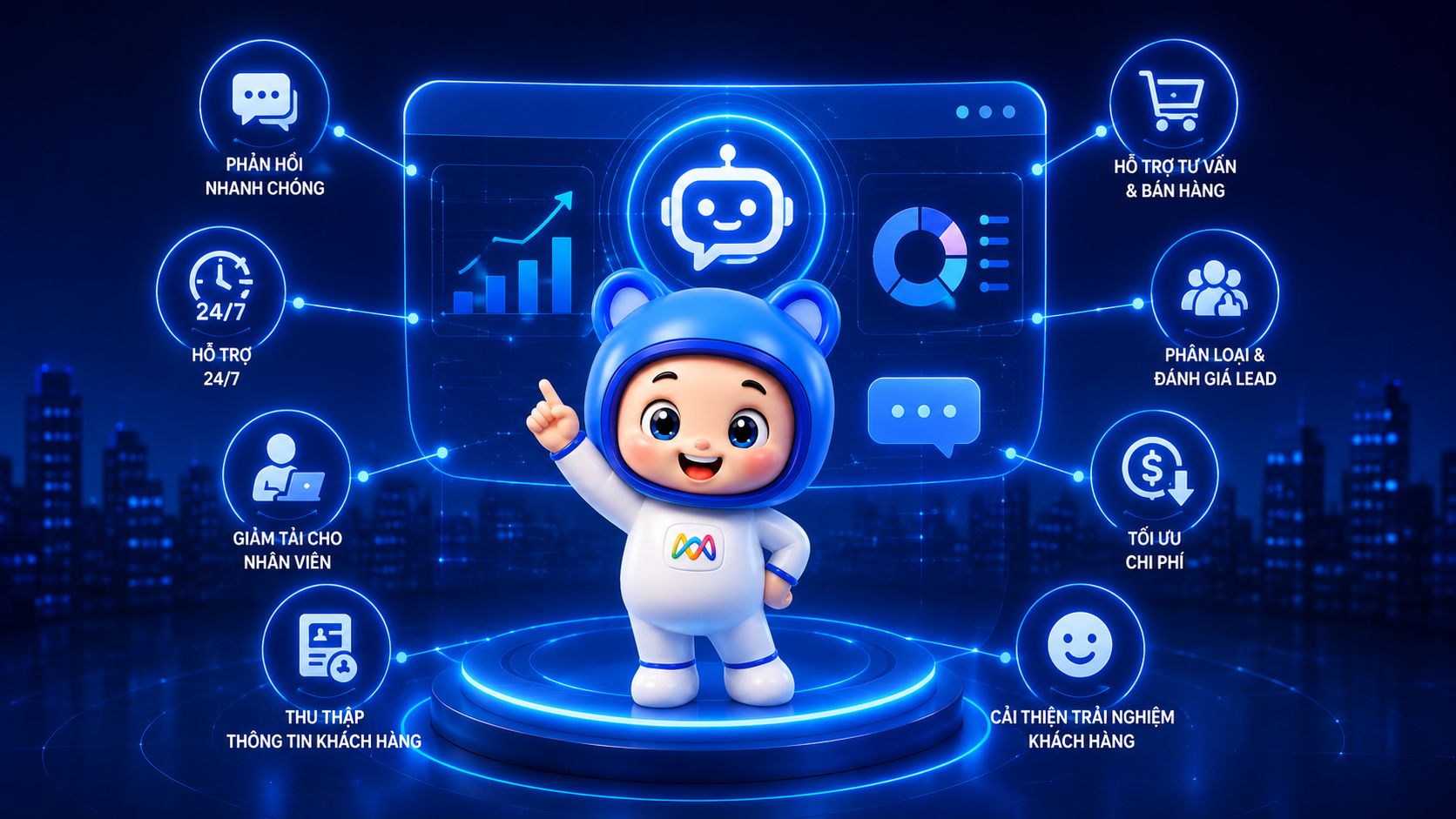
    • Faster customer responses.
    • 24/7 customer support.
    • Reduced workload for employees.
    • Automated customer information collection.
    • Sales consultation and support.
    • Lead qualification and scoring.
    • Optimized operating costs.
    • Improved customer experience.

    Criteria for Choosing the Best AI Chatbot Platform for SMEs

    To find the right platform, you should not rely solely on attractive marketing claims. Instead, carefully evaluate the following core technical criteria:

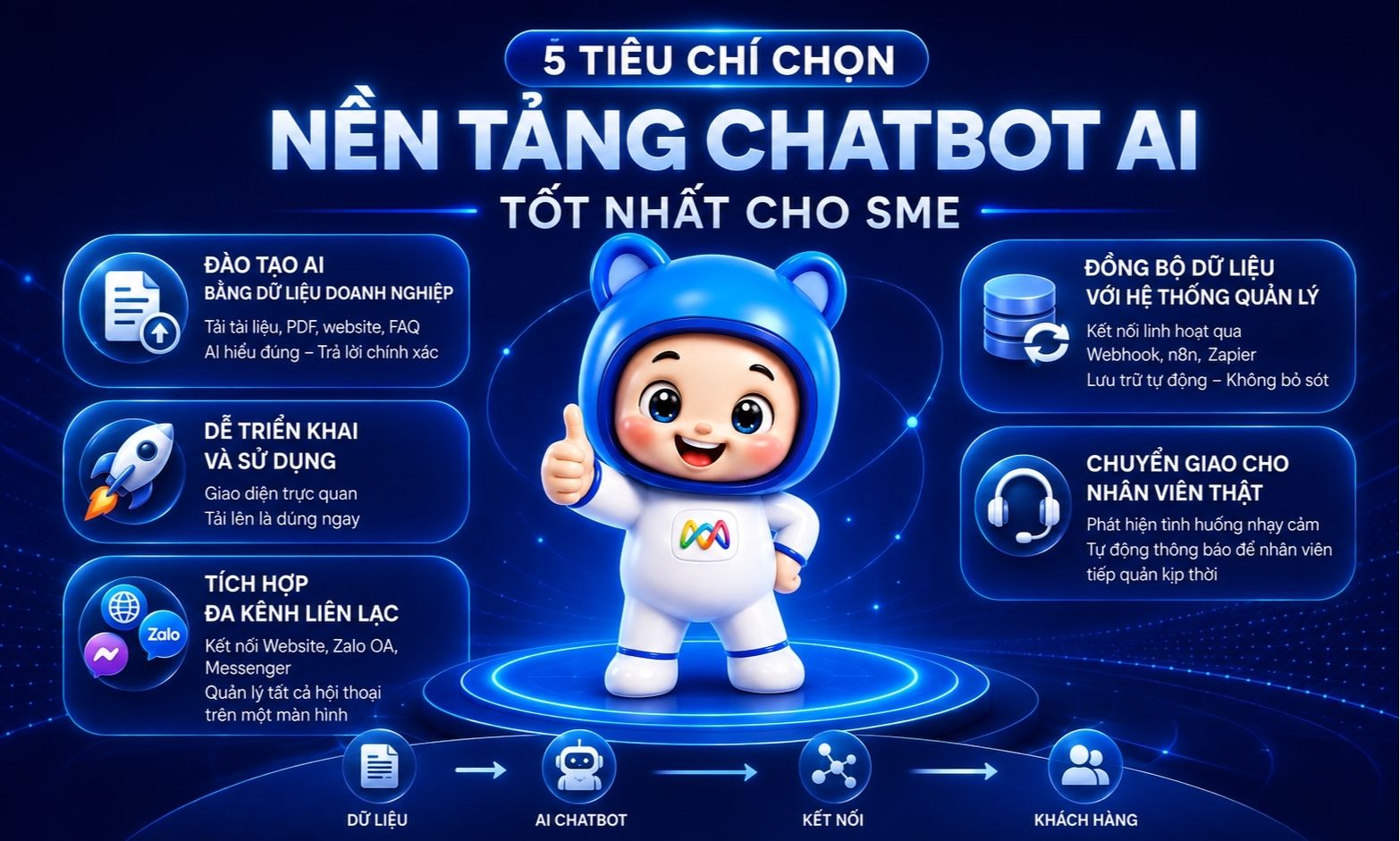
    Tiêu chí lựa chọn nền tảng chatbot AI cho SME

    AI Training with Business Data

    An AI assistant needs to understand the brand’s actual knowledge and information rather than providing generic answers. The platform should support uploading PDF documents, price lists, website URLs, or frequently asked questions directly.

    The clearer and more structured the input data, the more accurate the chatbot’s responses can be, helping minimize the risk of inaccurate or misleading information.

    Easy to Deploy and Use

    Most SMEs do not have dedicated developers to handle complex coding. A good platform should offer an intuitive interface and simple configuration.

    Businesses should be able to upload their documents, configure a welcome message, and launch their AI assistant without requiring complicated technical knowledge.

    Multichannel Communication Integration

    Customers are spread across multiple messaging platforms. Therefore, an AI chatbot platform should support integration with websites, Zalo Official Accounts (Zalo OA), and Messenger.

    Bringing conversations from different channels into a centralized interface makes it easier for employees to manage customer interactions and reduces the risk of missing important messages.

    Data Synchronization with Management Systems

    Information such as customer names, phone numbers, and purchasing needs should be transferred directly to a centralized data system.

    The platform should support flexible integrations through webhooks or automation tools such as n8n and Zapier. This allows businesses to automate lead data collection without requiring employees to manually copy and enter information.

    Human Handoff

    AI cannot completely replace humans in every situation. The system should be able to detect when a customer is angry, making a serious complaint, or looking to purchase a high-value product or service.

    In these situations, the chatbot can notify a human employee so they can quickly take over the conversation and provide personalized assistance.

    What Can AI Chatbots Do for SMEs?

    Next-generation artificial intelligence can handle far more than the rigid, button-based scripts used by traditional chatbots.

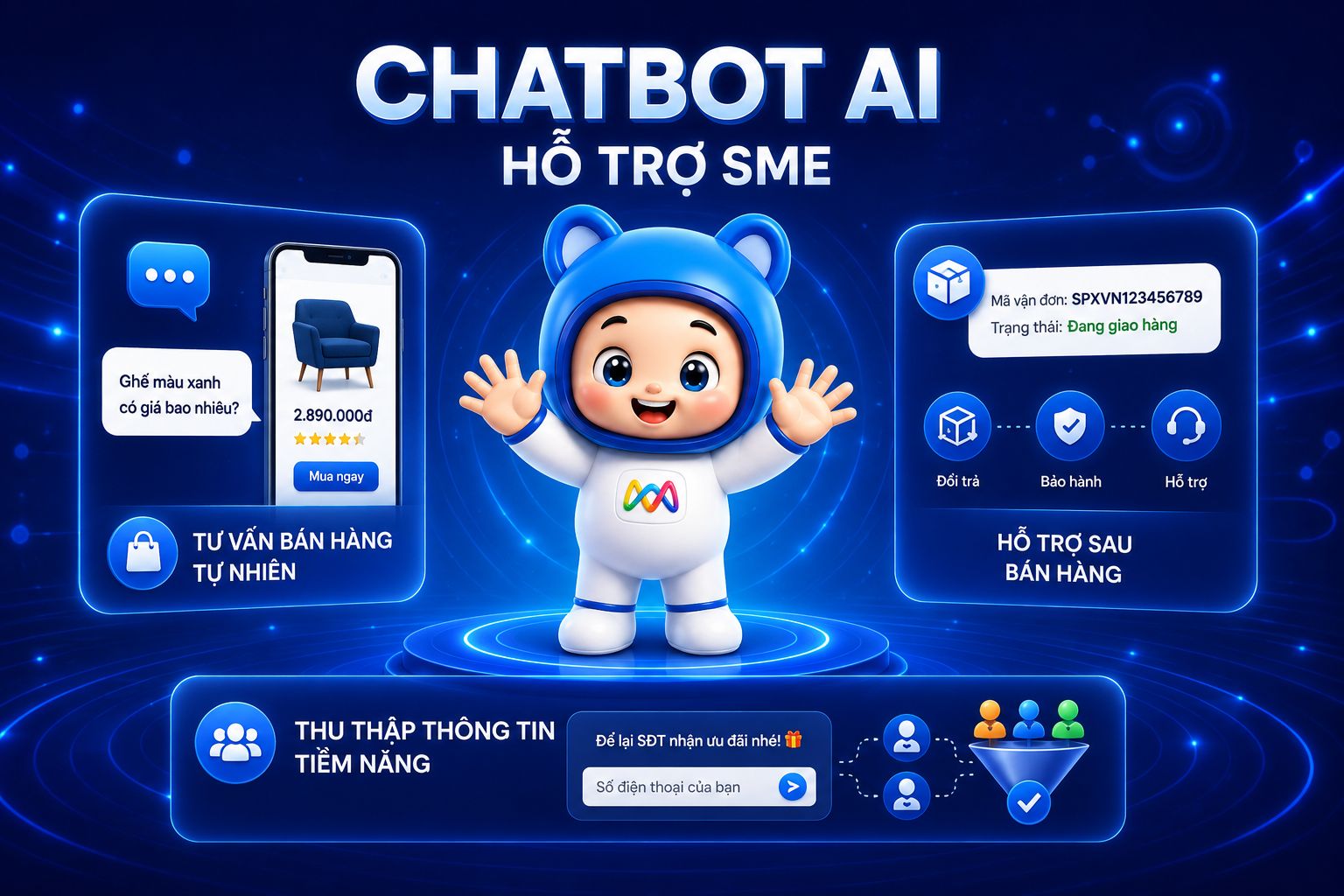
    AI chatbot for sales and customer service

    • Natural sales consultation: AI can understand everyday customer language and recommend suitable products, models, colors, and accurate pricing.
    • After-sales support: Chatbots can automatically check order tracking information, guide customers through return procedures, and explain warranty policies.
    • Lead collection: Chatbots can encourage customers to provide their phone numbers or email addresses to receive promotions, then categorize leads for the sales team to follow up more efficiently.

    Chat Vareno AI Agent – An AI Chatbot Solution for SMEs

    Built around a streamlined approach, Chat Vareno AI Agent makes AI adoption easier for business owners. The system uses large language models such as Google Gemini and GPT-4, customized to deliver natural and effective communication for Vietnamese customers.

    The platform allows businesses to quickly train their chatbot using website content or internal documents while providing a built-in human handoff mechanism for complex situations.

    You can experience the solution firsthand by accessing Free Trial to test its response speed using your own business data.

    How Should SMEs Invest in AI Chatbots?

    Businesses should take a step-by-step approach instead of trying to implement everything at once:

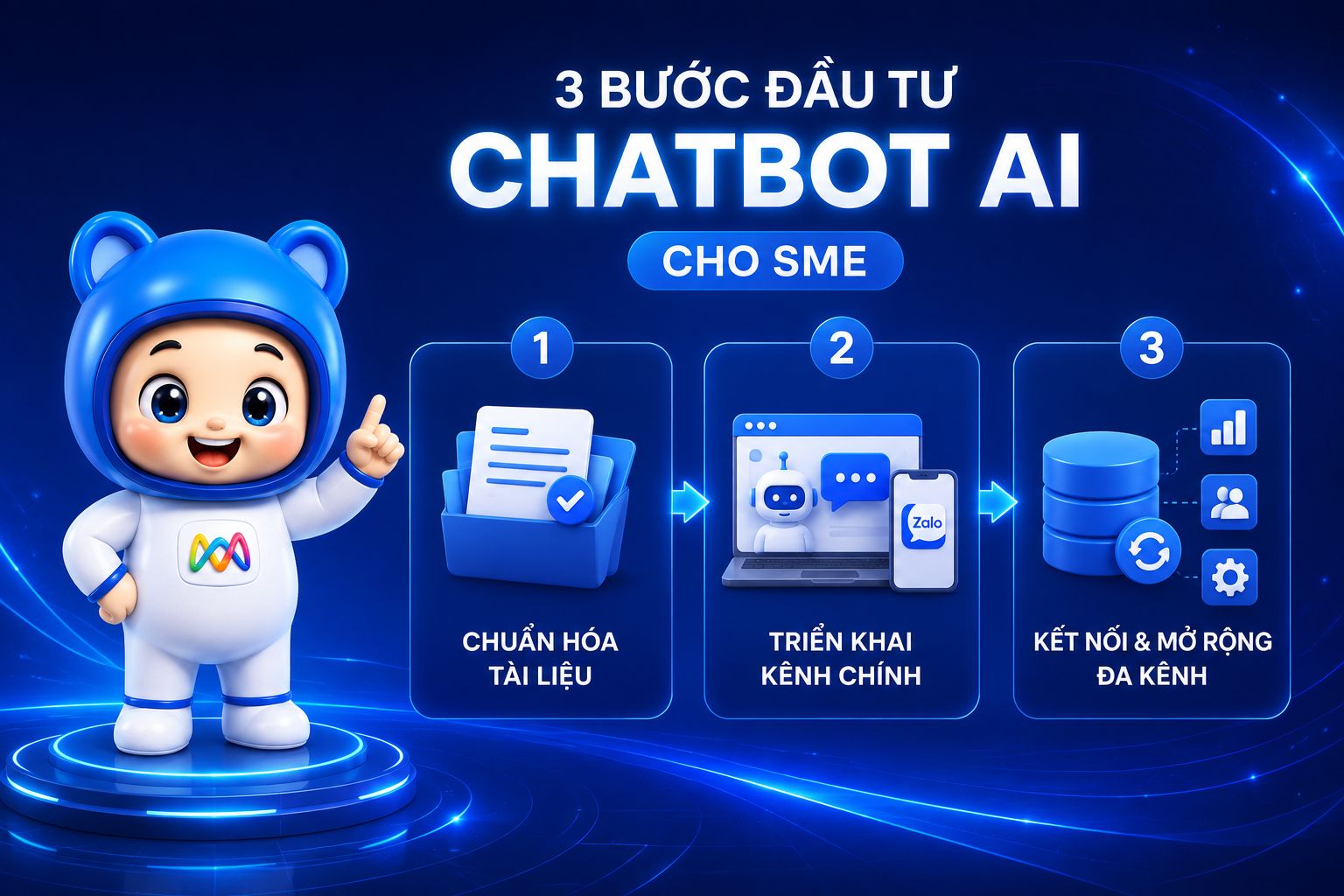
    Giải pháp chatbot AI tối ưu cho SME

    AI chatbot solution optimized for SMEs

    1. Stage 1: Standardize internal knowledge. Gather pricing information, sales policies, and frequently asked customer questions into a clear and structured document.
    2. Stage 2: Deploy the AI assistant on one primary channel. Start with the channel receiving the highest volume of customer inquiries, such as a website or Zalo OA, and monitor real-world performance.
    3. Stage 3: Connect the chatbot with management software. Once the system is stable, integrate it with customer management tools and expand the chatbot to additional communication channels.

    Conclusion

    The best AI chatbot platform for SMEs helps businesses automate customer service, sales consultation, and lead collection 24/7 while optimizing costs and improving operational efficiency. With Chat Vareno AI, SMEs can build an AI assistant based on their own business data and easily deploy it across multiple channels.

    Start using an AI chatbot today to optimize operations and accelerate business growth.

  • AI Logistics Chatbot: The Optimal Solution for Operations and Customer Service

    AI Logistics Chatbot: The Optimal Solution for Operations and Customer Service

    The logistics industry is growing rapidly alongside the increasing demand for fast, accurate, and transparent delivery services. However, logistics businesses also have to handle a large volume of daily inquiries, such as order tracking, shipping quotes, delivery times, warehouse information, and support when issues arise. This is where AI Logistics Chatbot becomes a solution that helps businesses automate communication and improve operational efficiency.

    What Is an AI Chatbot for Logistics?

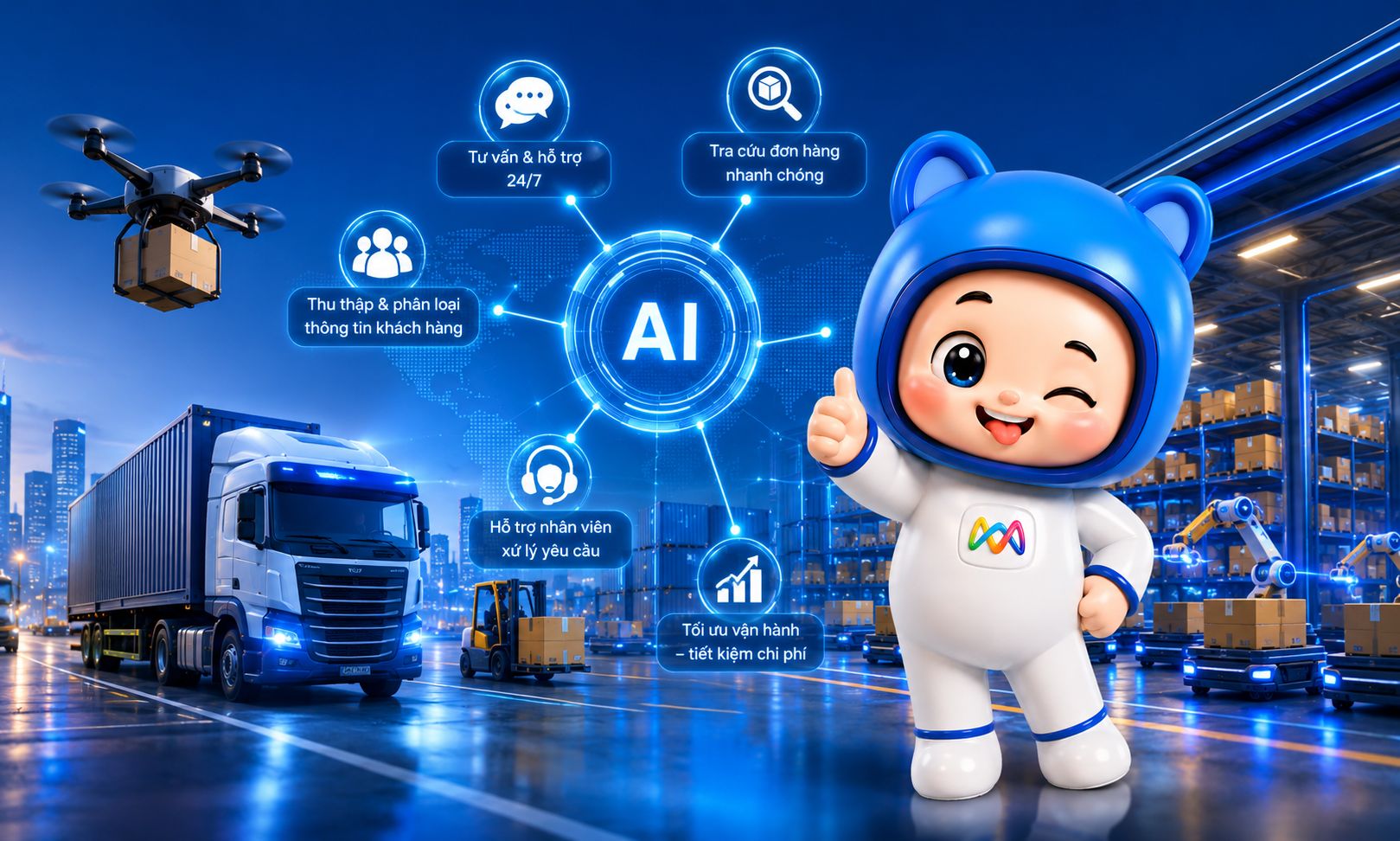
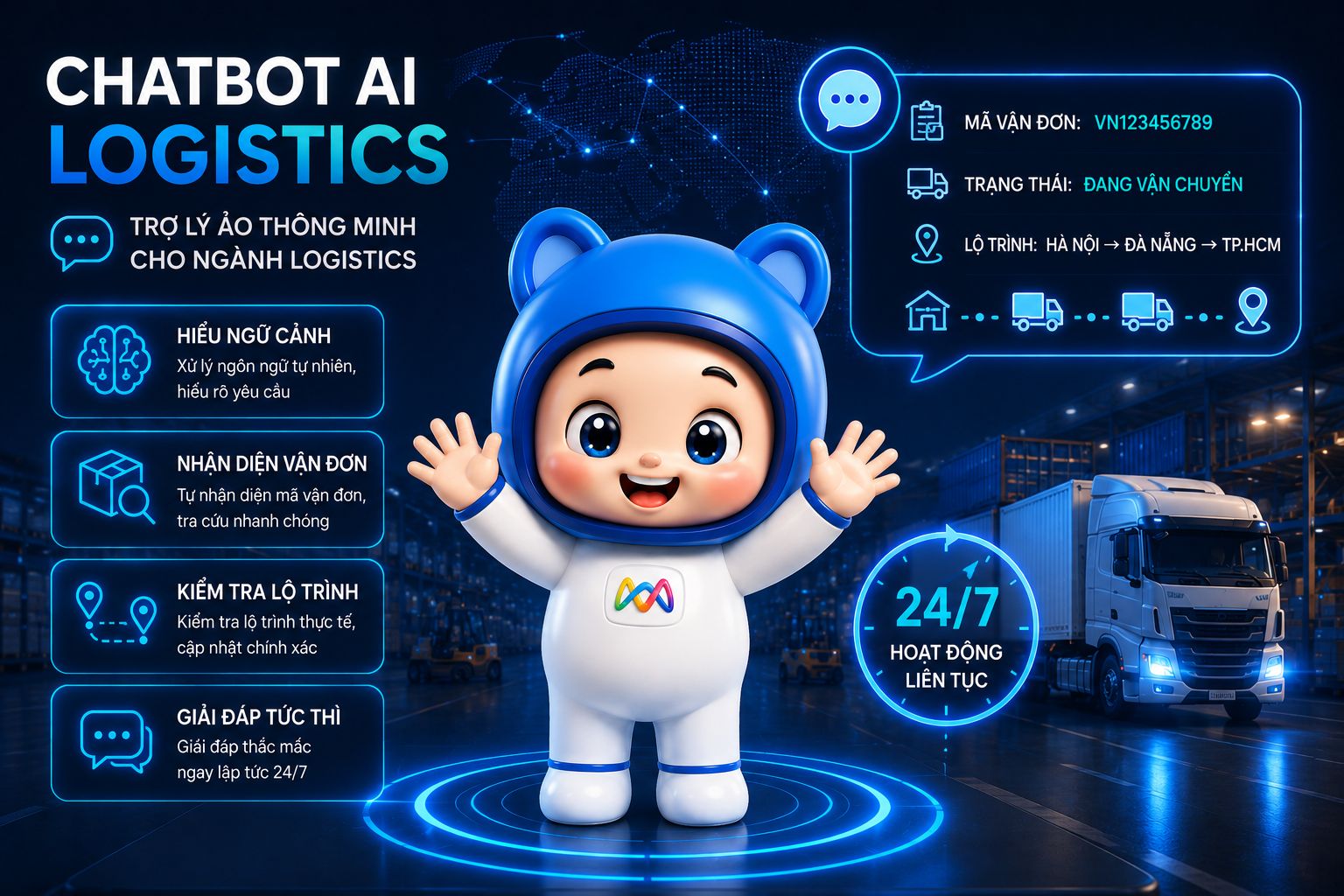
    Chatbot AI logistics là trợ lý ảo hỗ trợ doanh nghiệp vận tải tra cứu đơn hàng và phản hồi khách hàng 24/7.

    An AI chatbot for logistics is a virtual assistant powered by natural language processing and trained specifically on transportation and warehousing data. Unlike rigid rule-based chatbots that rely on button-click scripts, an AI assistant can understand context, recognize tracking numbers, check real-time shipment status, and answer customer questions instantly.

    Why Do Transportation Businesses Need an AI Chatbot?

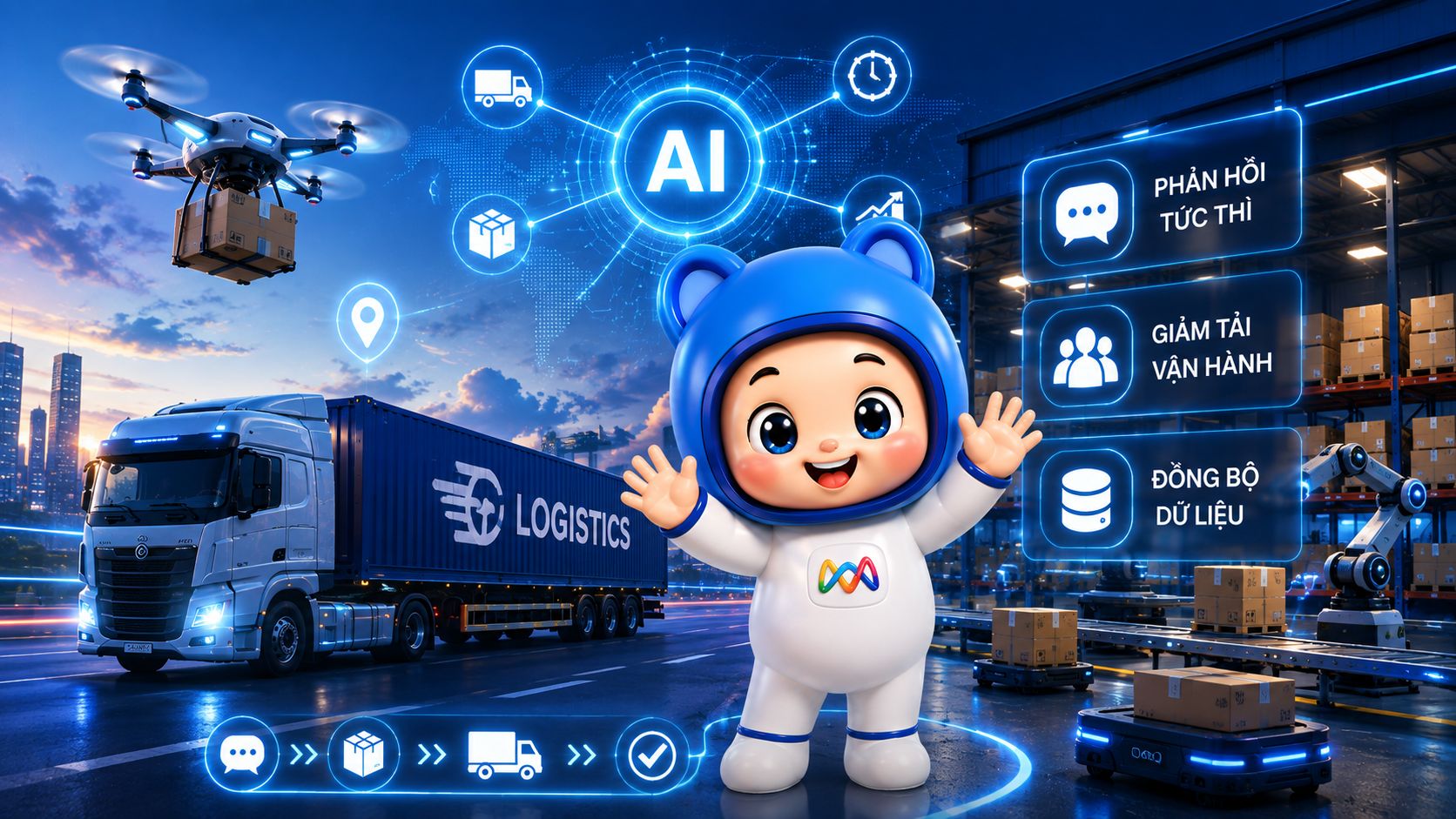
    Chatbot AI logistics hỗ trợ doanh nghiệp vận tải phản hồi khách hàng 24/7

    The logistics industry requires a high level of accuracy and fast response times. The pressure of handling order-tracking requests places a significant burden on customer support teams every day. A virtual assistant helps streamline communication channels, reduce manual workload, and minimize errors caused by manual data entry.

    • Instant responses: Customers who send a tracking number late at night or on holidays can receive an answer within seconds.
    • Reduced operational workload: The system automatically handles repetitive questions about shipping rates, compensation policies, and estimated delivery times.
    • Data synchronization: The assistant can connect directly with warehouse management and transportation management software to retrieve accurate information.

    Key Features of an AI Chatbot for Logistics

    Today, a transportation virtual assistant can act as an intelligent logistics coordinator.

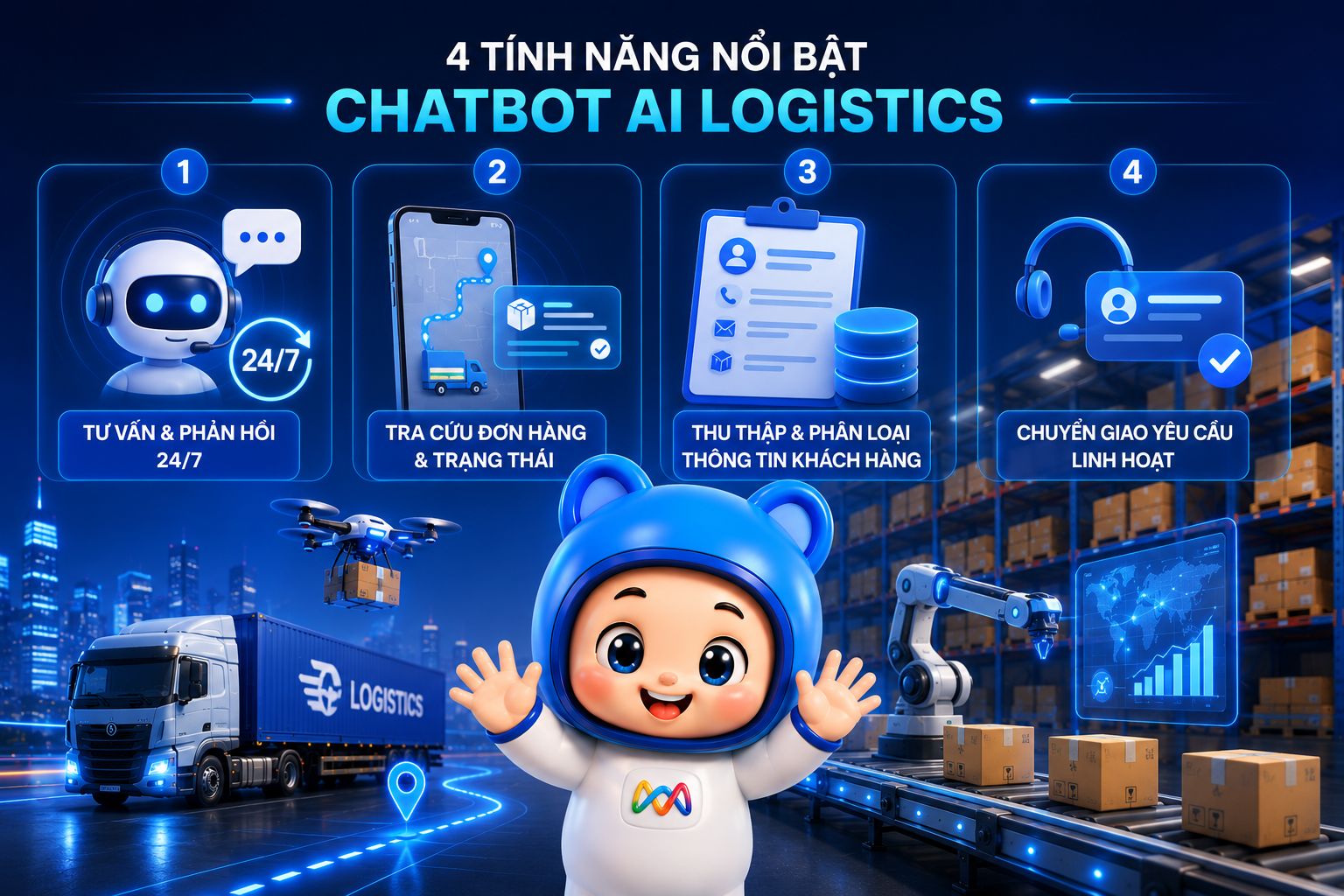
    Automated 24/7 Consultation and Responses

    The system provides detailed answers about packaging requirements, prohibited items, and interprovincial shipping procedures. Customers can receive consistent responses across familiar channels such as websites, Zalo, and Messenger.

    Order Tracking and Shipment Status Updates

    One of the most common needs of logistics customers is checking their order status.

    When connected to an order management system or relevant data sources, an AI chatbot can quickly help customers find information such as where their shipment is, its current delivery status, and related updates.

    Collecting and Categorizing Customer Information

    A chatbot does more than answer questions. It can also collect essential information such as names, phone numbers, email addresses, shipping requirements, cargo types, and delivery routes.

    This data can be categorized and transferred to a CRM system for the sales team to continue customer follow-up, creating a more seamless logistics automation process.

    Flexible Handover to Human Agents

    When customers have compensation claims or issues such as lost shipments, the system can trigger a handover to the appropriate staff member. Administrators receive a notification along with the complete conversation history. This allows employees to understand the situation quickly without asking customers to repeat their entire case.

    Practical Benefits for Logistics Businesses

    Implementing AI in logistics can deliver numerous benefits, from customer service to operational optimization.

    • Reduce customer service workload: Automatically handle repetitive questions.
    • Faster responses: Customers can receive information almost instantly.
    • 24/7 operation: Provide continuous customer support.
    • Improved data collection: Capture customer needs and behavior.
    • Enhanced customer experience: Deliver consistent information across multiple channels.
    • Optimized operating costs: Reduce manual workloads for employees.
    • Support revenue growth: Better identify and engage customers with logistics needs.

    Trends in AI Adoption in the Transportation Industry

    The market is shifting from simple question-and-answer systems toward multifunctional AI assistants. New trends focus on connecting AI with automated workflows to generate invoices, create vehicle dispatch orders, and provide early warnings about port and warehouse congestion, helping operations teams stay proactive.

    Effective AI Chatbot Deployment Process for Logistics

    To ensure that the virtual assistant operates smoothly, businesses should follow four key steps:

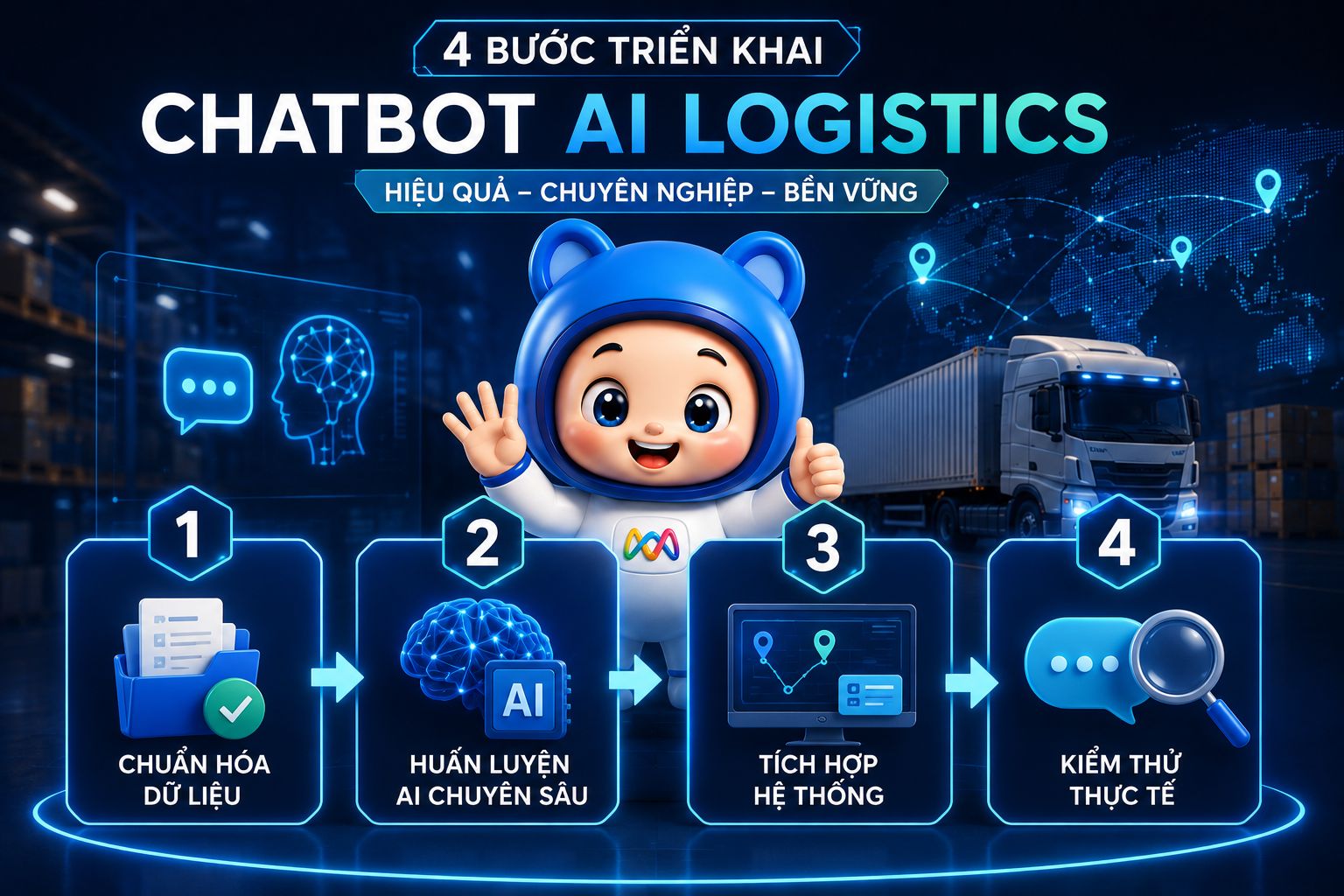
    Quy trình triển khai chatbot AI logistics với 4 bước chính: chuẩn hóa dữ liệu, huấn luyện AI, tích hợp hệ thống và kiểm thử thực tế.

    1. Standardize knowledge data: Consolidate shipping rates, transportation routes, compensation policies, and shipping guidelines into clear and structured documents.
    2. Train the AI: Upload relevant materials to the platform so the model can learn industry-specific terminology and minimize inaccurate responses.
    3. Integrate management systems: Connect the virtual assistant with the existing order management software to synchronize real-time shipment status.
    4. Test real-world scenarios: Test customer inquiries ranging from simple tracking requests to complex situations before officially launching the chatbot.

    Conclusion

    Investing in an AI chatbot for logistics is a strategic step that helps businesses optimize operations, improve customer service, and save resources. Understanding business needs and choosing the right AI solution can help companies deploy the technology effectively and gain a competitive advantage in the logistics industry.

    With Vareno AI, businesses can easily apply AI to customer service and operational processes, moving toward a more modern, automated, and professional logistics system. Contact Vareno AI today to receive a solution tailored to your business needs.

  • 5 Costly Mistakes in AI Applications for Businesses & How to Fix Them

    5 Costly Mistakes in AI Applications for Businesses & How to Fix Them

    Have you decided to invest heavily in technology, only to find the results falling short of your expectations? In reality, the problem rarely lies within the algorithm itself — it is all about the execution. Implementing AI applications for businesses only drives breakthrough growth when you successfully dodge classic operational traps.

    Here are the 5 most common mistakes and concrete solutions to help your business optimize its return on investment (ROI) in Artificial Intelligence.

    1. Poor Data Quality (Garbage In, Garbage Out)

    An AI system is only as smart as the data you feed it. When launching AI applications for businesses in the form of chatbots or virtual assistants, many companies make the mistake of uploading outdated product descriptions, incorrect pricing, or rushed FAQ sheets. Consequently, the AI provides inaccurate answers, shattering customer trust within the very first week.

    • The Fix: Conduct a comprehensive data audit before deployment. Start small by standardizing information for your top 50 best-selling products. Ensure this data is flawless and precise before scaling up. Additionally, assign a dedicated team member to update this knowledge base at least once a week.


    ứng dụng ai cho doanh nghiệp tối ưu dữ liệu kinh doanh

    2. Expecting AI to Solve Everything

    “Buying an AI chatbot means automated sales and zero need for human staff” — this is the most dangerous misconception when approaching the trend of AI applications for businesses.

    AI technology excels at repetitive, structured tasks: answering FAQs, collecting lead information, or scheduling appointments automatically. However, AI cannot replace humans in complex negotiations, handling sensitive complaints that require deep empathy, or building relationships with VIP clients.

    • The Fix: Before hitting the launch button, map out a clear division of labor: tasks that AI handles best (automation) and tasks that strictly require human intervention (high-level consulting).

    3. Ignoring the Real User Experience (UX)

    Setting up a chatbot on your fanpage or website and leaving it on autopilot is a classic blunder. Rigid, scripted flows routinely fail when facing real-world human behavior—ranging from slang, abbreviations, and typos to questions that completely derail from the pre-defined menu. The result? Frustrated customers leave and never return.

    • The Fix: Interview 10 loyal customers with a simple question: “What is the very first message you usually send us?”. Use their actual responses as the foundation for your conversational scripts.

    💡 Tech Solution: To completely eliminate this friction, look into platforms like ChatVareno. This application enables businesses to dynamically optimize conversation scripts in real time. Crucially, it features a built-in “Talk to a Human” trigger at critical touchpoints, automatically handing off the conversation to a live agent whenever the AI encounters a query outside its scope.

    ứng dụng ai cho doanh nghiệp làm chatbot chăm sóc khách hàng tự động

    4. Failing to Train Staff in Parallel with Technology

    When pushing forward with AI applications for businesses without proper internal communication, you will likely face two toxic workplace reactions: Employees resisting out of fear of losing their jobs, or employees blindly relying on AI, assuming the machine will do all the heavy lifting. Both scenarios disrupt and break the system’s efficiency.

    • The Fix: Align your team’s mindset from day one: AI is here to liberate them from mundane, repetitive tasks, not to replace them. Organize collaborative human-to-machine training sessions and appoint an internal “AI Champion” in each department to monitor and continuously refine the system.

    5. Setting and Forgetting (Lack of Optimization)

    Technology is not like an air conditioner—you cannot just install it once and expect it to run perfectly forever. A lack of measurement and continuous updates will quickly turn your AI solution obsolete without you even realizing it.

    • The Fix: Establish 3 core Key Performance Indicators (KPIs) immediately to measure the effectiveness of your AI applications for businesses:

      1. AI Resolution Rate (Target: >70% of conversations handled autonomously).

      2. Customer Satisfaction (CSAT) score post-chat (Target: >4/5 stars).

      3. Conversion Rate directly generated from the chat interface.

    • Pro Tip: Dedicate 30 minutes every week to review conversation transcripts. If you are utilizing the ChatVareno ecosystem, flawed interactions are smartly grouped together. These edge cases serve as the perfect “building blocks” to update your data and make your AI smarter for the upcoming week.

    • đào tạo nhân sự khi ứng dụng ai cho doanh nghiệp vận hành

    Summary Framework for Business AI Operations

    Common Mistakes SEO-Optimized Solutions
    Poor data quality Audit data first, schedule weekly updates.
    Unrealistic expectations Draw a clear line between AI tasks and human tasks.
    Ignoring UX & behavior Analyze real chat behavior; implement a flexible handoff via ChatVareno.
    Neglecting staff training Maintain transparent internal communication; appoint an AI Champion.
    No measurement or optimization Track the 3 core KPIs; review chat transcripts 30 mins/week.

    Frequently Asked Questions (FAQ)

    Should Small and Medium Enterprises (SMEs) adopt AI applications?

    Yes. The cost of launching AI applications for businesses at a smaller scale is now highly optimized (starting at just a few dollars a month). The benefits are crystal clear: capturing after-hours leads and automating repetitive questions. You only need a lean tool like ChatVareno that fits your budget, without the need for massive enterprise-level infrastructure.

    Which department should start implementing AI first?

    Always start with operational “pain points,” not the technology itself. Look closely at what is draining the most time from your Customer Support or Sales teams. If the answer is: “Answering repetitive questions about pricing, sizing, and store locations” — then that is your ideal starting point for an AI chatbot.

    How long does it take to see results from business AI applications?

    A basic AI chatbot system can go live within 1–2 weeks if your business already has a clean, organized dataset. However, to reach peak performance and fluid execution, the system typically requires 30–60 days of real-world run time to learn and adjust based on actual customer behavior.

  • Will AI Chatbots Replace Customer Service Representatives? The Honest Answer for Business Owners

    Will AI Chatbots Replace Customer Service Representatives? The Honest Answer for Business Owners

    This is a question many business owners and managers are asking — especially as AI Chatbots get smarter, handle more complex questions, and become more affordable by the day.

    The real answer isn’t a simple “yes” or “no” — it’s “replace what, and where.”

    This article isn’t about theory. We’ll cut straight to what AI Chatbots can do, what they can’t, and how real businesses are combining both to cut costs without sacrificing service quality.

    What Can AI Chatbots Already Do?

    Before we talk about “replacement,” let’s look at the facts: 60–70% of daily customer support questions are repetitive.

    Customers ask about opening hours, return policies, order status, product prices, usage instructions — questions your staff answer 50 times a day in exactly the same way.

    AI Chatbots handle this category better than humans in several ways:

    • Speed: Responds in under 1 second, 24/7, no waiting
    • Consistency: Never gives a wrong answer due to fatigue or distraction
    • Multichannel: Handles conversations simultaneously on your website, Zalo OA, and Messenger — without adding headcount
    • No negative emotions: No matter how difficult a customer is, the bot stays polite

    For businesses receiving 100–500 messages per day, an AI Chatbot can automatically handle 70–90% of them with no human involvement.

    What Can’t AI Chatbots Replace Yet?

    Honestly: there are things AI Chatbots simply shouldn’t do in place of humans — at least not yet.

    1. Handling Serious Complaints

    When a customer is angry about a wrong delivery, defective product, or billing error — they need to feel heard by a real person. A “technically correct but cold” bot response can escalate a crisis instead of resolving it.

    2. Complex Negotiations and Deal Closing

    B2B customers negotiating contracts, special pricing, or custom terms need flexibility, judgment, and decision-making authority that only a human can provide.

    3. High-Emotion Situations

    Customers who are stressed, anxious, or in a difficult situation need genuine empathy. AI can simulate empathy, but customers usually sense the difference.

    4. Decisions Outside Delegated Authority

    Refunds beyond policy limits, handling unprecedented situations, or complex order adjustments — anything requiring “judgment calls” still needs human approval.

    The Most Effective Real-World Model: Human + AI

    The businesses using AI Chatbots most effectively don’t replace their entire support team — they redistribute roles.

    What AI Chatbot Does What Staff Does
    Answer FAQs 24/7 Handle complaints and complex situations
    Collect customer information Make decisions, approve exceptions
    Classify and route tickets Take care of VIP clients, upsell
    Send automated notifications Build long-term relationships
    Sentiment reporting, data analysis Improve products/services from insights

    Real results from businesses that have implemented this model:

    • 60–70% reduction in tickets that staff need to handle manually
    • Average response time drops from hours to under 1 minute
    • Support staff, instead of answering the same questions on repeat, focus on situations that actually require their skills

    Practical Check: Does Your Business Need an AI Chatbot?

    Answer these 4 questions:

    1. How many customer support messages do you receive per day? Under 20 — a chatbot isn’t necessary yet. Over 50 — you’re wasting your staff’s time on work AI could handle.

    2. What percentage of questions are repetitive? Track it for one week and you’ll find 60–70% fall into the same clusters. That’s the part AI can handle immediately.

    3. Do customers contact you outside business hours? If yes — and no one is responding — you’re losing leads and creating a bad experience every single night.

    4. What is your customer support staffing cost? Compare it to the cost of an AI Chatbot (typically a few hundred thousand to a few million VND/month) — ROI is usually clear within the first 1–3 months.

    So, Can AI Chatbot Replace Customer Support Staff?

    Partially — yes. Completely — no.

    AI Chatbots replace repetitive tasks that require no judgment and need speed. This is the part that consumes most of your staff’s time but delivers the least strategic value.

    Human staff remain irreplaceable in situations that require emotion, decisions, and relationships. In fact, when AI handles the repetitive workload, your team can focus on work that creates real value — caring for VIP customers, handling sensitive complaints, building lasting loyalty.

    The right question isn’t “Will AI replace humans?” — it’s “How do we get AI and humans to work together as effectively as possible?”

    Where to Start

    If you’re considering deploying an AI Chatbot for customer support, Vareno AI is a solution built for the Vietnamese market:

    • Understands natural Vietnamese — including regional dialects, slang, and informal phrasing
    • Integrates Zalo OA, Messenger, and Website in one platform
    • Automatically hands off to a human agent when the situation requires it — with full conversation history attached
    • Deploy in 5 minutes, no technical skills needed
    • Free trial — no credit card required

    Create an AI Chatbot for your business today → Start for Free

    Frequently Asked Questions

    Does AI Chatbot understand Vietnamese?

    Modern AI Chatbots like Vareno AI are trained on extensive Vietnamese language data — understanding context, regional expressions, and natural conversational patterns, not just keyword matching.

    How long does it take to deploy an AI Chatbot?

    With Vareno AI, you can have a working chatbot in 5–30 minutes by uploading your product documents, policies, and FAQs to the system.

    What happens if a customer asks something the bot doesn’t know?

    The bot will automatically notify the customer and hand the conversation off to a staff member — along with the full chat history, so your team doesn’t have to ask the customer to start over.

    How much does an AI Chatbot cost to deploy?

    Vareno AI offers a free plan to get started. Paid plans are priced to fit Vietnamese SMBs — see full details on the pricing page.