Tag: sales chatbot

  • AI Chatbots for Businesses: An Effective Solution for Sales, Customer Service, and Operations

    AI Chatbots for Businesses: An Effective Solution for Sales, Customer Service, and Operations

    As businesses accelerate their digital transformation, they are increasingly looking for solutions that can automate tasks while maintaining effective customer interactions. AI chatbots for businesses are gaining attention for their ability to support customers, recommend products, collect information, and handle various requests without requiring employees to respond to every conversation manually.

    What Is an AI Chatbot for Businesses?
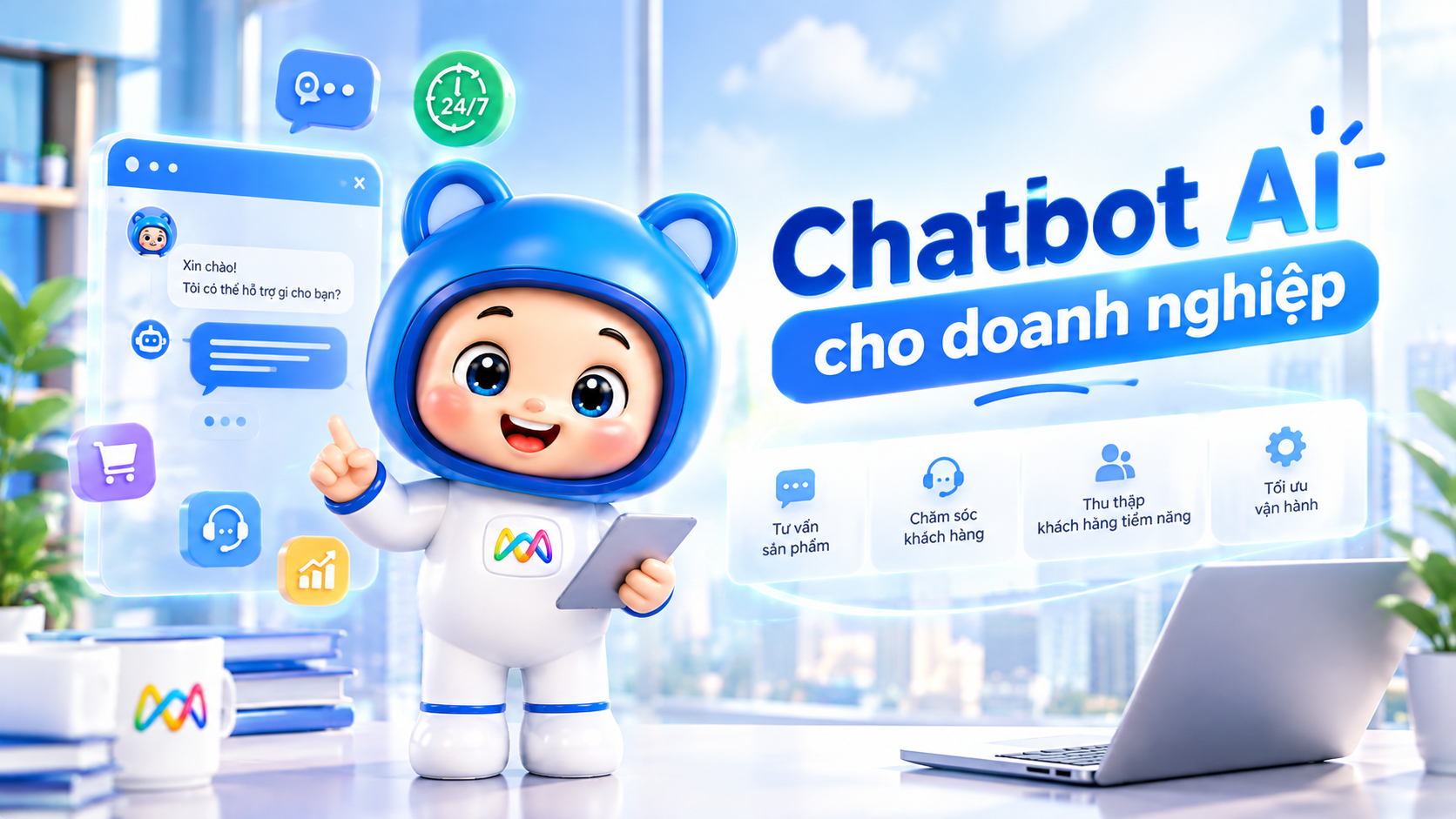
    AI chatbots for businesses are systems that use artificial intelligence to communicate with customers automatically through online platforms. Unlike traditional chatbots that only recognize specific keywords or require users to select predefined options, AI chatbots can analyze conversations and provide responses that are more relevant to the context.

    Businesses can provide chatbots with information such as products, services, pricing, policies, frequently asked questions, or website content. Based on this data, the chatbot can answer common questions and guide customers toward the next step.

    Why Should Businesses Adopt This Technology?

    An automated response system can provide significant benefits for both operations and sales, turning customer interactions into potential business opportunities.
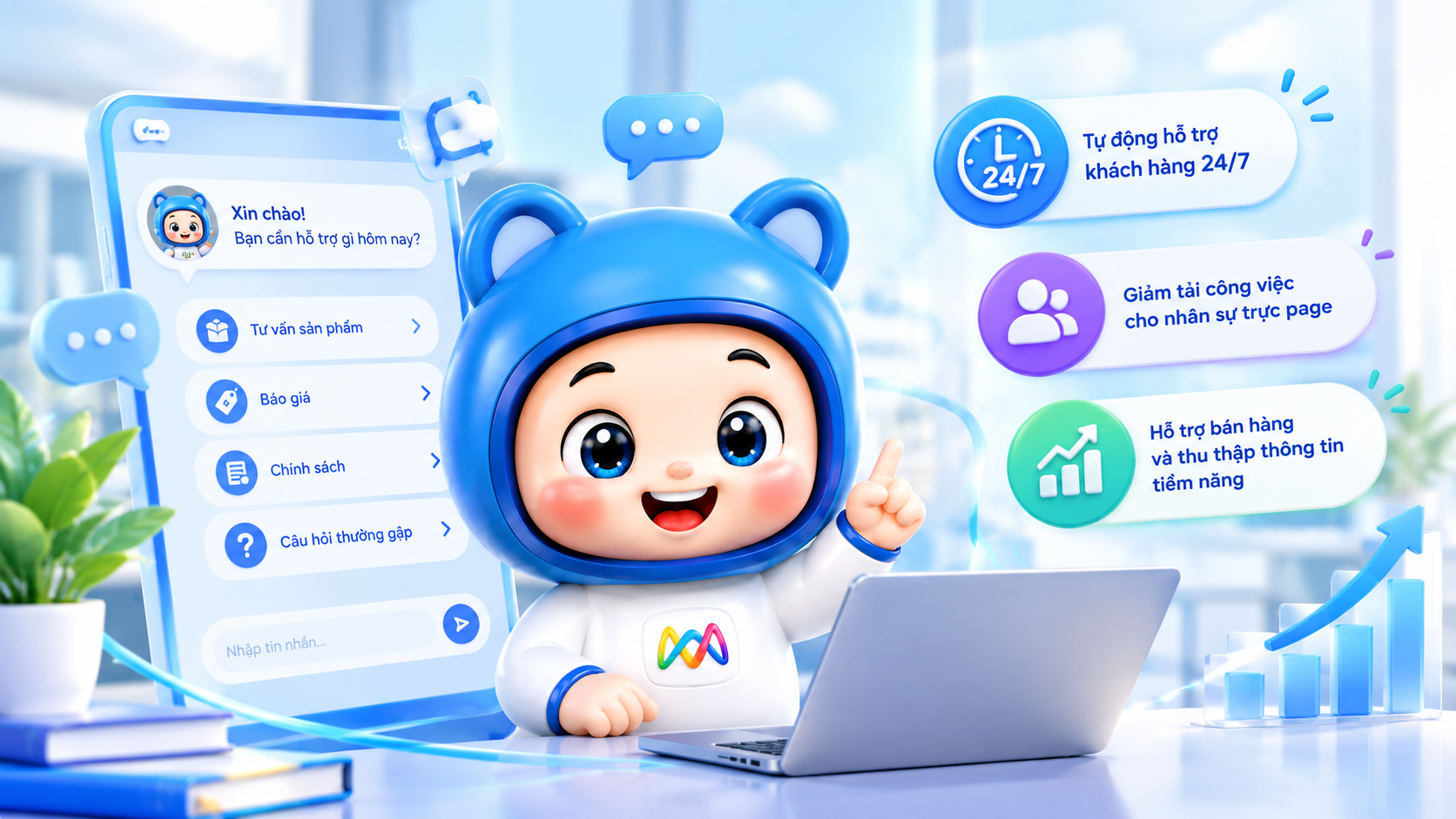
    24/7 Automated Customer Support

    Online customers do not follow a fixed schedule. When a customer sends a message about a warranty policy late at night, an AI assistant can provide an immediate response, helping keep the customer engaged from the first point of contact. This is particularly valuable for businesses that receive a high volume of inquiries or frequently receive messages outside business hours.

    Reduce the Workload for Customer Service Staff

    Customer service teams often spend hours every day answering repetitive questions about prices, product sizes, or business locations. An automated solution can handle these recurring inquiries, allowing employees to focus on more complex cases that require specialized assistance.

    Support Sales and Lead Generation

    Based on each customer’s needs, the AI assistant can proactively recommend suitable products and collect information such as phone numbers and delivery addresses. When customer questions are answered promptly, businesses can create a smoother purchasing journey and support their sales process.

    Practical Capabilities of an Intelligent AI Assistant

    Modern automation solutions can support multiple stages of the customer journey:
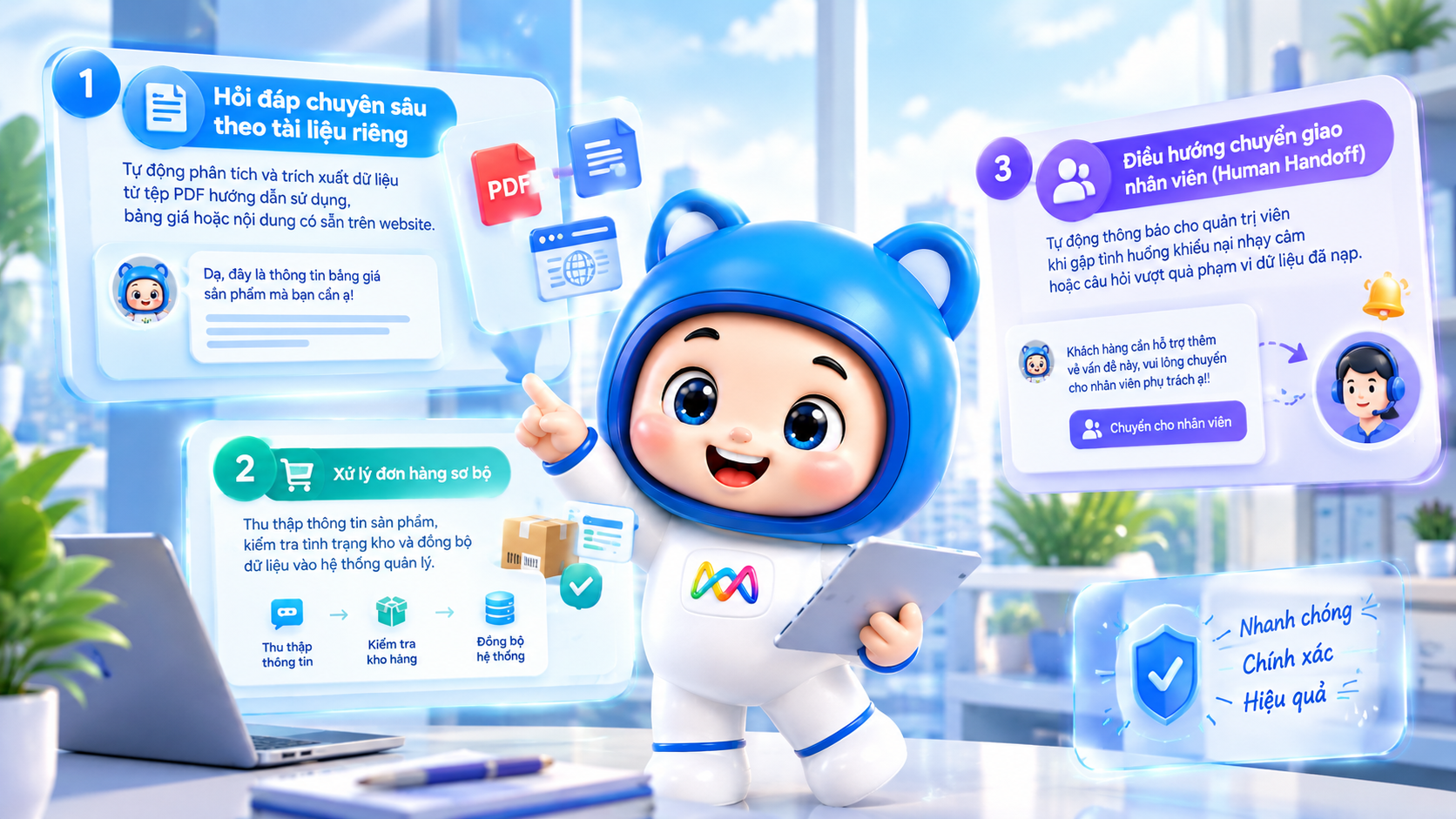
    khả năng vận hành của trợ lý AI

    • In-depth answers based on business-specific data: Automatically analyze and extract information from PDF user guides, price lists, or content available on a website.
    • Preliminary order processing: Collect product information, check inventory availability, and synchronize data with management systems.
    • Human handoff: Automatically notify administrators when handling sensitive complaints or questions that fall outside the chatbot’s available knowledge base.

    Practical Applications Across Industries

    Businesses across different industries can leverage AI assistants to standardize and streamline customer service processes:

    • Retail and E-commerce: Help customers choose product sizes, track orders, and submit return or exchange requests automatically.
    • Services and Education: Provide guidance on learning pathways, schedule appointments, or send reminders for spa and service appointments.
    • Finance and Real Estate: Conduct preliminary qualification of customer needs, provide basic cost estimates, and collect information from potential investors or property buyers.

    Criteria for Choosing the Right Solution
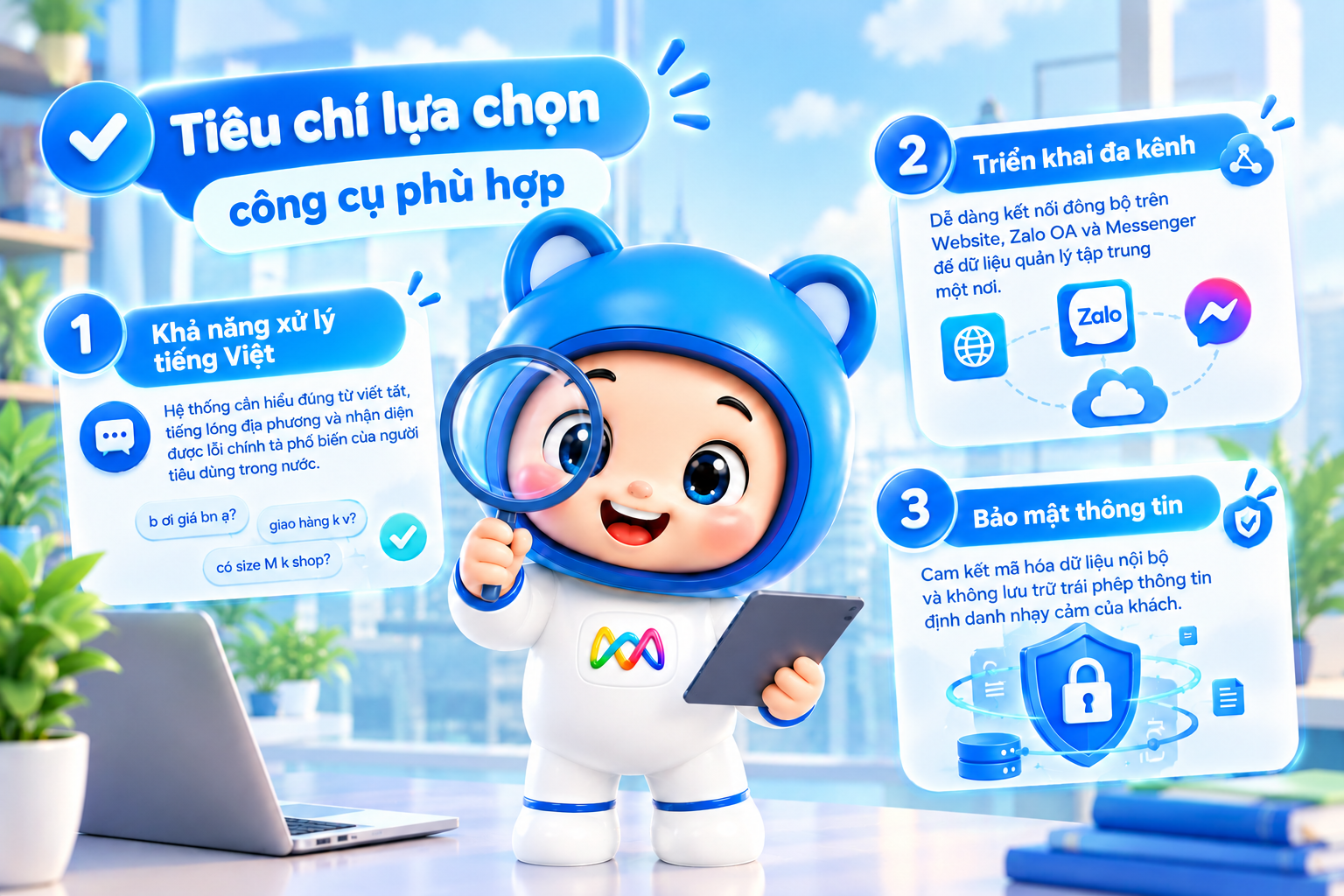
    To achieve effective results while maintaining streamlined operations, businesses should consider the following key factors:

    • Vietnamese language processing: The system should understand abbreviations, local slang, and common spelling mistakes used by Vietnamese consumers.
    • Multichannel deployment: The chatbot should be easy to integrate across websites, Zalo OA, and Messenger, allowing data to be managed centrally.
    • Data security: The solution should provide appropriate protection for internal data and prevent unauthorized storage or use of customers’ sensitive personal information.

    How Is It Different from Traditional Response Solutions?

    Traditional rule-based chatbot systems require users to click predefined buttons or enter specific keywords configured in advance. If a customer makes a spelling mistake or asks a question outside the predefined flow, the system may fail to provide an appropriate response.

    In contrast, AI-powered assistants can understand the intent behind a customer’s message, recognize conversational context, and respond using more natural language.

    Conclusion

    Investing in AI chatbots for businesses can support long-term improvements in customer service and operational efficiency. By organizing product and service information into a structured knowledge base, businesses can prepare to integrate an AI assistant into their sales and customer service teams, helping automate repetitive tasks while maintaining responsive customer interactions.
  • How to Write an Effective Chatbot Script: An A-Z Guide

    How to Write an Effective Chatbot Script: An A-Z Guide

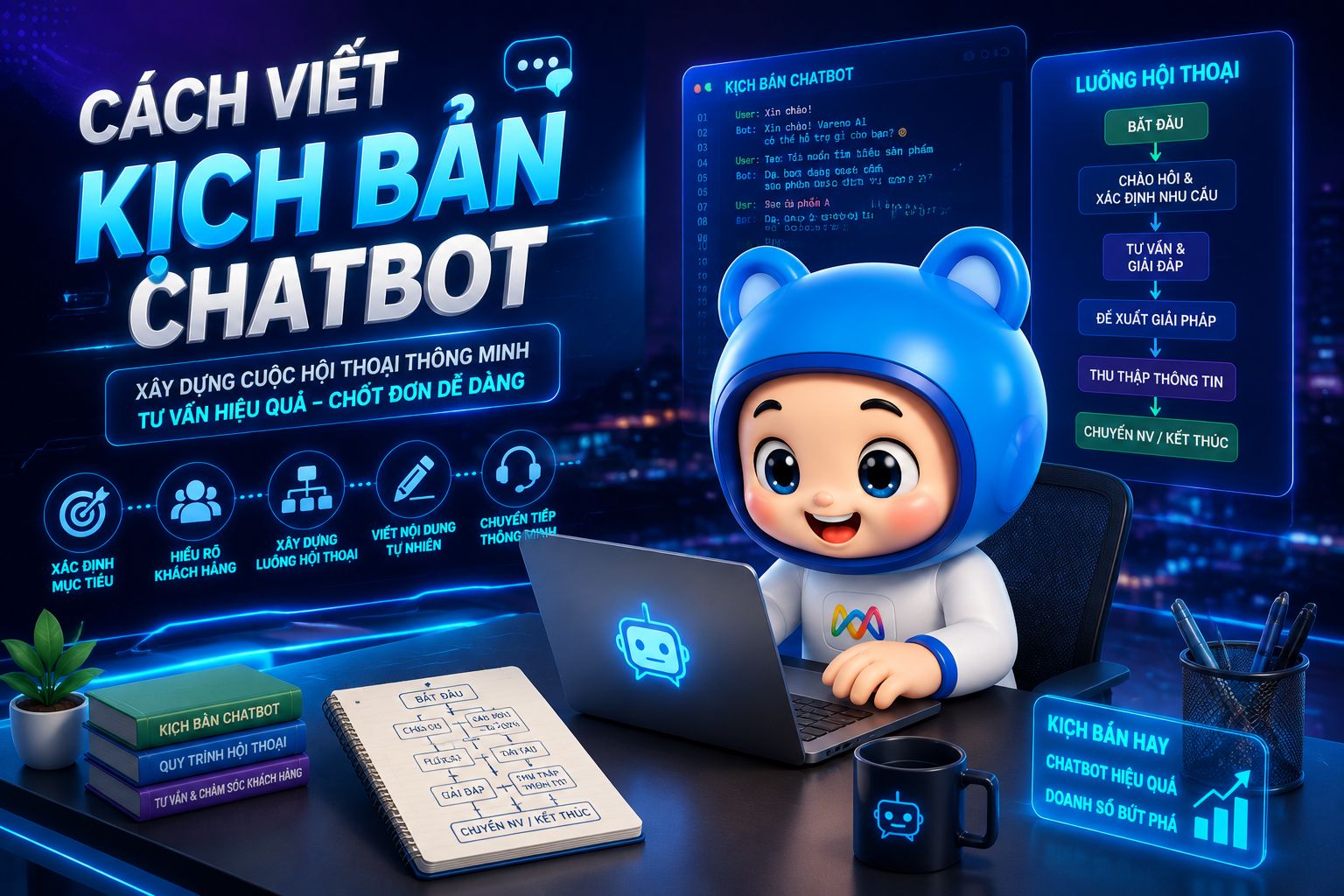
    How to Write an Effective Chatbot Script: An A-Z Guide helps businesses build smarter, more natural chatbot conversations that meet customer needs and support business goals. From defining chatbot objectives to creating logical conversation flows and optimizing responses, a well-designed script can improve customer service, automate consultations, and deliver a better overall customer experience.

    What Is a Chatbot Script?

    Kịch bản chatbot và luồng hội thoại với khách hàng

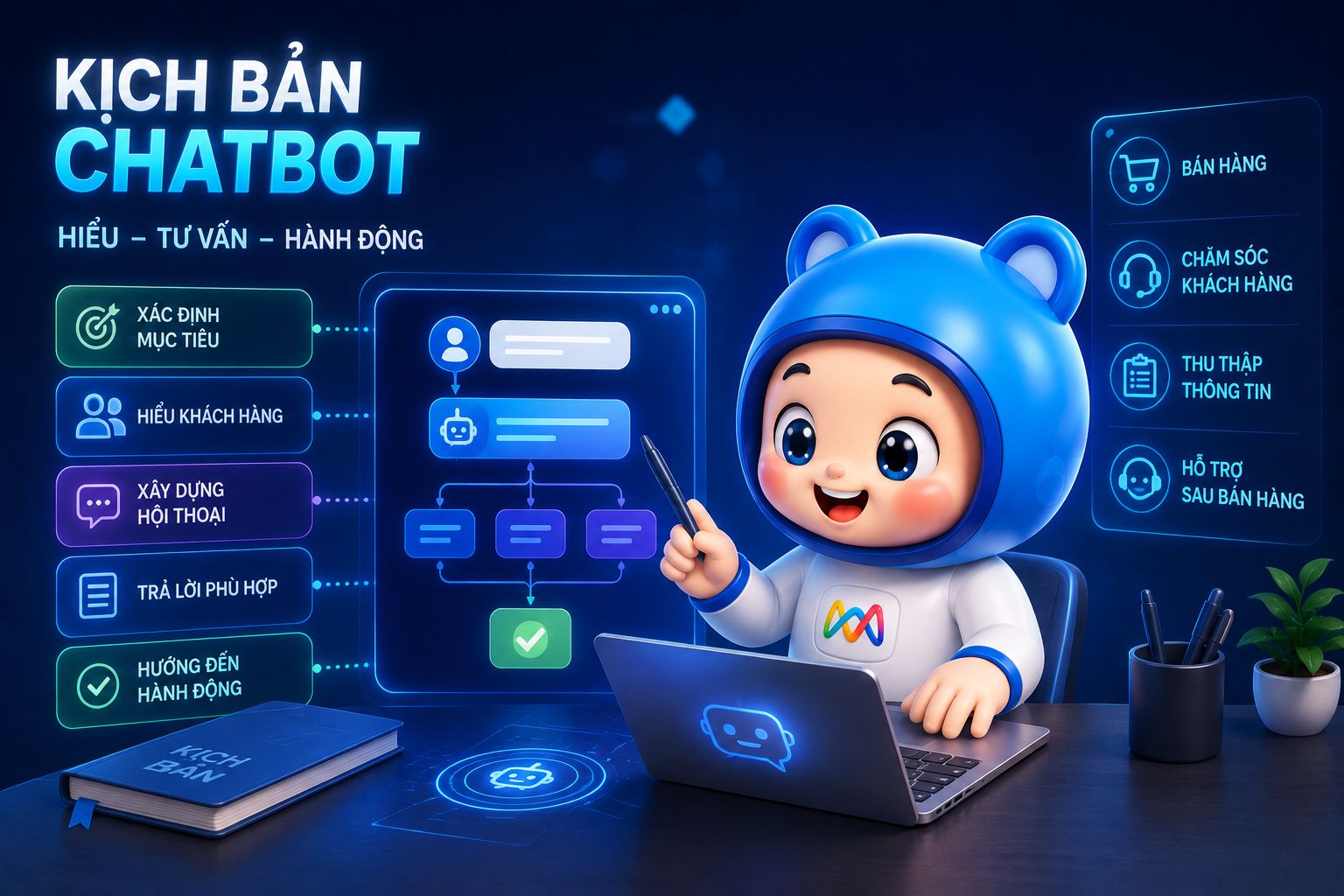
    A chatbot script is a collection of content, questions, answers, and response flows designed for different conversation scenarios between the chatbot and customers. A well-designed script helps the chatbot understand what customers want, provide relevant information, and guide users toward the next action.

    Depending on their specific goals, businesses can create sales chatbot scripts, product consultation scripts, customer service scripts, lead collection flows, or post-purchase support scenarios.

    Why Is It Important to Build a Well-Structured Chatbot Script?

    A carefully prepared messaging flow provides several practical benefits for business operations:

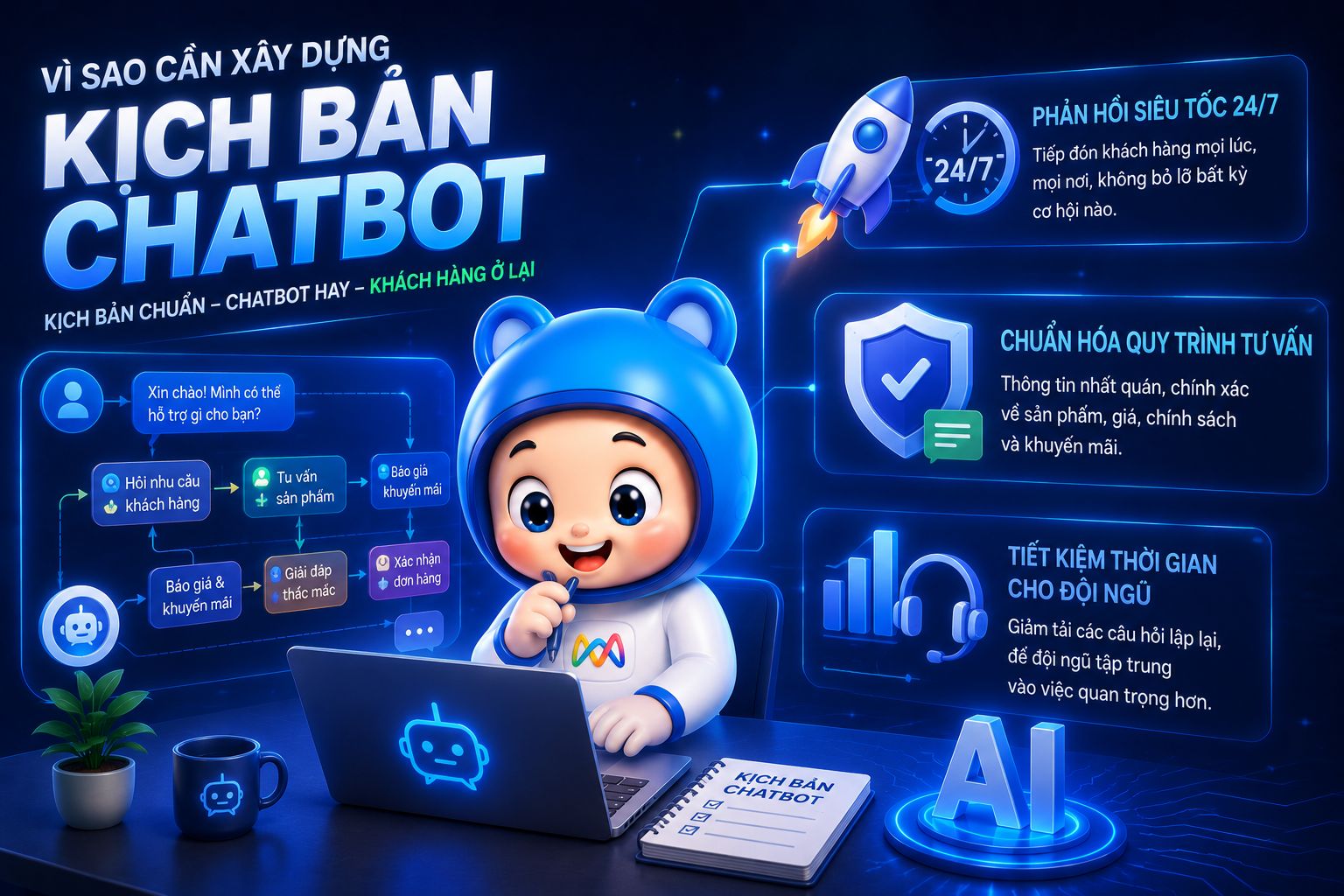
    Lợi ích xây dựng kịch bản chatbot bài bản

    • Instant 24/7 responses: Welcome and assist customers immediately on websites, Zalo OA, or Messenger, minimizing the risk of customers turning to competitors because they have to wait.
    • Standardized consultation processes: Ensure that information about prices, return policies, promotions, and other details remains consistent and accurate according to the brand’s guidelines.
    • Save time for chat support teams: Reduce repetitive questions such as requests for price lists, store locations, or delivery times.

    How to Write an Effective Chatbot Script Step by Step

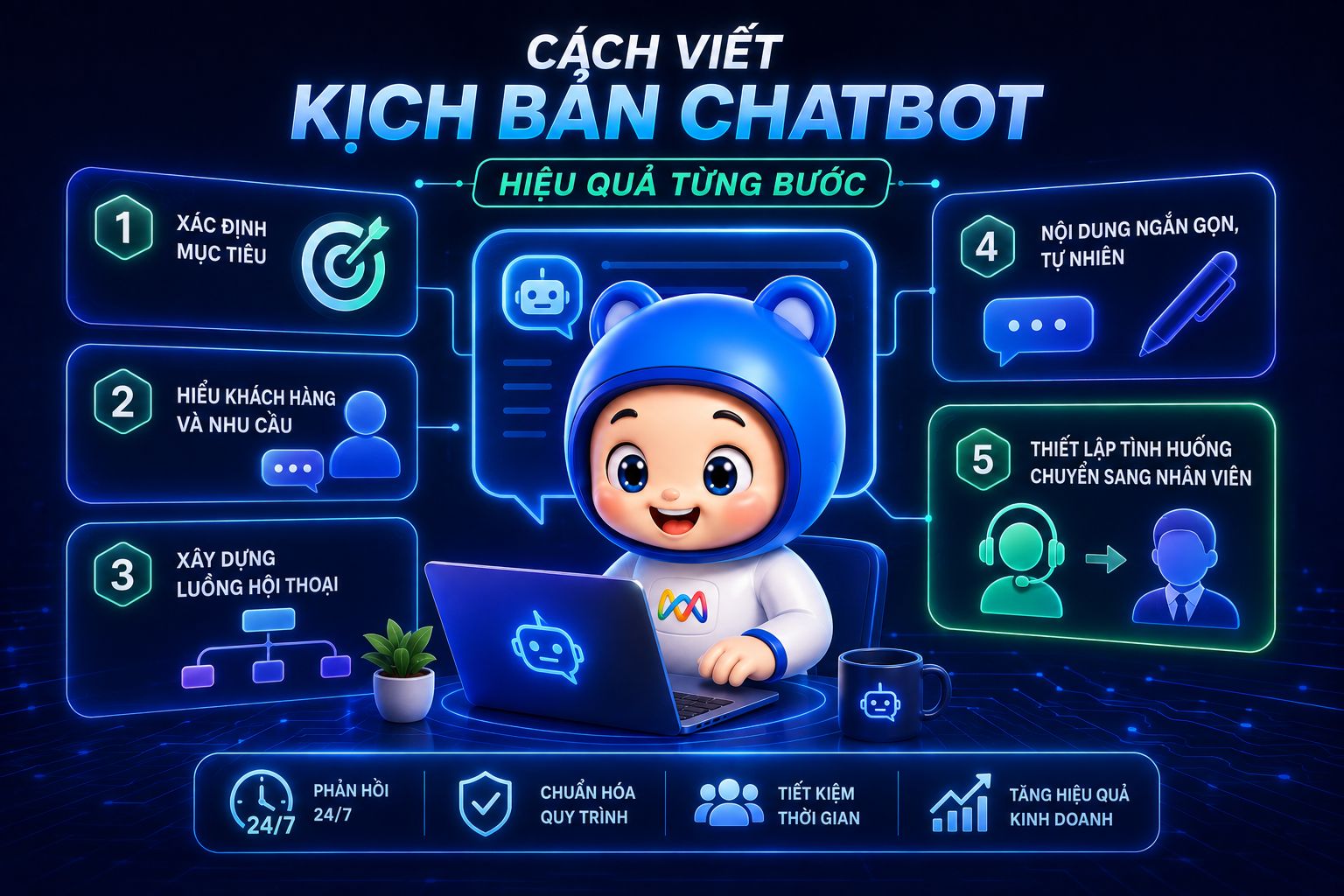
    Các bước viết kịch bản chatbot hiệu quả

    Define the Chatbot’s Goal

    Before starting how to create a chatbot script, businesses need to determine what the chatbot is designed to accomplish. Its goals may include increasing orders, providing product consultations, supporting customers, scheduling appointments, or collecting leads.

    Each goal requires a different conversation flow. Clearly defining the objective from the beginning helps keep the chatbot’s content focused and prevents unnecessarily long conversations.

    Identify Customer Needs and Behavior

    List the questions customers commonly ask when researching a product or service. For example:

    • How much does the product cost?
    • What models are available?
    • Do you offer delivery?
    • How long does delivery take?
    • What is your return policy?

    These questions provide the foundation for creating a customer consultation chatbot script that closely matches real customer needs.

    Build a Logical Conversation Flow

    A chatbot script should be divided into multiple branches instead of creating one long conversation. For example:

    Customer: I want to learn more about your products.

    Chatbot: Sure! Which product category are you interested in?

    → Product A
    → Product B
    → Product C

    After the customer makes a selection, the chatbot can provide relevant information and guide them toward the next action, such as viewing a product, requesting a quotation, or contacting a sales representative.

    This structure makes the conversation easier for customers to navigate and easier for businesses to manage.

    Keep the Content Short and Natural

    One of the most important principles of how to write a chatbot script is avoiding long blocks of information. The content should be concise, clear, and written in a natural conversational style.

    Instead of writing:

    “Dear customer, please select one of the product categories listed below.”

    A more natural version would be:

    “Which product are you interested in?”

    Natural wording makes the conversation more friendly and engaging.

    Set Up Human Handoff Scenarios

    Not every customer question can be handled by a chatbot. Therefore, the script should include a Human Handoff option when customers have complex issues or want to speak directly with a staff member.

    For example:

    “I don’t have enough information to provide an accurate answer to this case. Let me connect you with a consultant who can assist you right away!”

    This helps prevent incorrect chatbot responses and reduces customer frustration.

    Sample Chatbot Script for Businesses

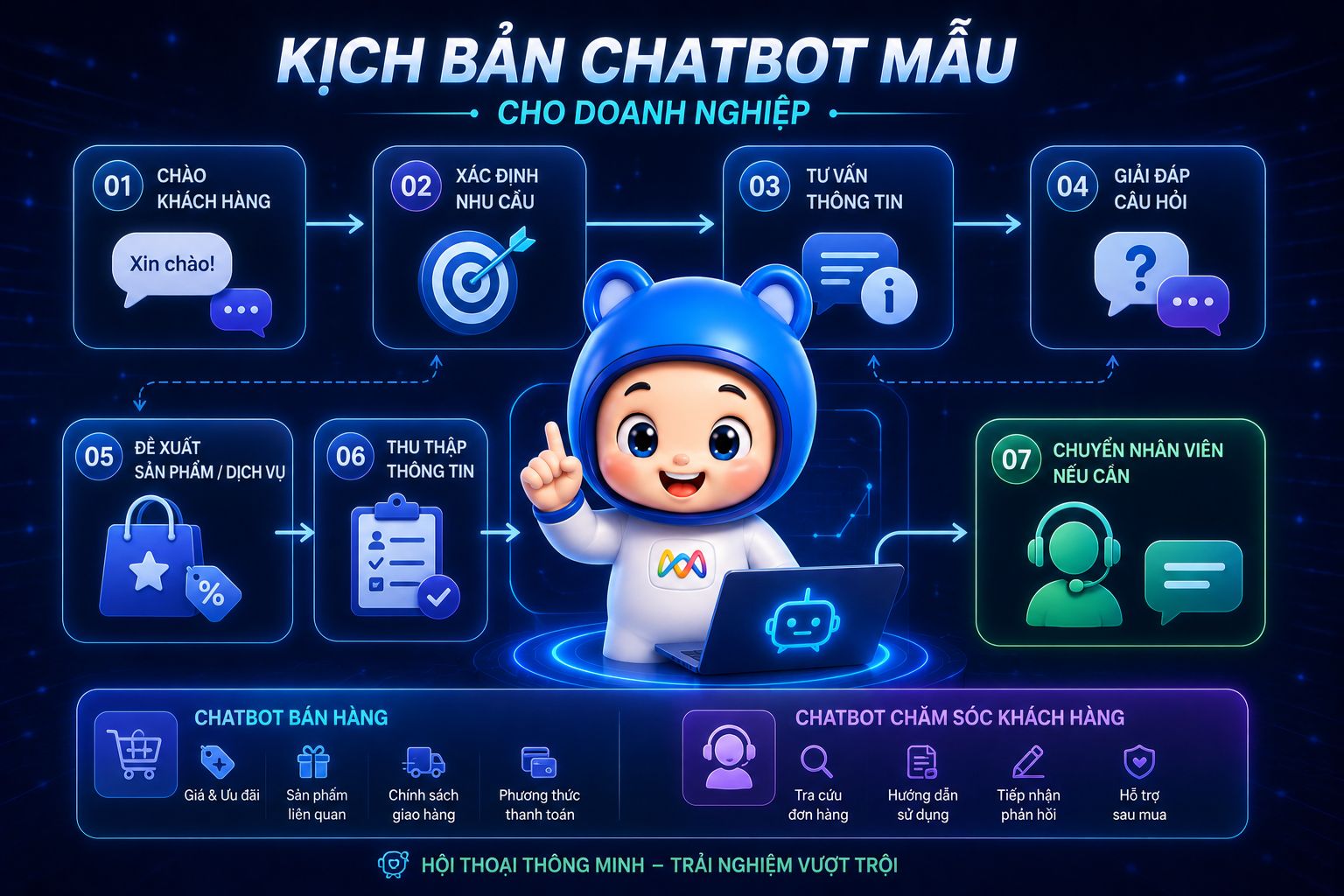
    A basic chatbot script example can follow this process:

    Greet the customer → Identify their needs → Provide information → Answer questions → Recommend products/services → Collect customer information → Transfer to a staff member if needed.

    For sales chatbots, businesses can add branches covering pricing, promotions, related products, delivery policies, and payment methods. For customer service chatbots, the focus should be on order tracking, usage instructions, feedback collection, and post-purchase support.

    Kịch bản chatbot mẫu cho doanh nghiệp

    Common Mistakes to Avoid When Writing a Chatbot Script

    Many businesses experience customers leaving immediately after the first message because of the following common mistakes:

    • Forcing customers to read too much: Sending 4–5 long, text-heavy messages in a row can overwhelm users.
    • Creating endless loops: No matter which option customers select, they are redirected back to the main menu without receiving a specific answer.
    • Making the script too rigid: If customers make a spelling mistake or phrase their question slightly differently from the predefined keywords, the bot immediately reports that it cannot understand the request.

    Optimizing Chatbot Scripts with AI

    With an AI chatbot, businesses do not necessarily have to build the entire conversation using fixed questions and answers. AI can be trained on business data to understand context, identify customer needs, and generate more relevant responses.

    By combining a structured script with natural language processing capabilities, a chatbot can maintain accurate information while delivering a more natural conversational experience.

    Therefore, instead of simply building an automated response bot, businesses should invest in a system capable of learning from business data, consulting customers, and collaborating with human agents when necessary. This provides a foundation for AI chatbots to become powerful tools for business growth and customer service.

    Conclusion

    Applying the right approach to writing chatbot scripts helps businesses optimize operational resources and respond to customers quickly, around the clock. Start by standardizing frequently asked questions, establishing basic consultation flows, and gradually upgrading to intelligent AI solutions to deliver a better shopping experience today.