Category: News

  • How to Write an Effective Chatbot Script: An A-Z Guide

    How to Write an Effective Chatbot Script: An A-Z Guide

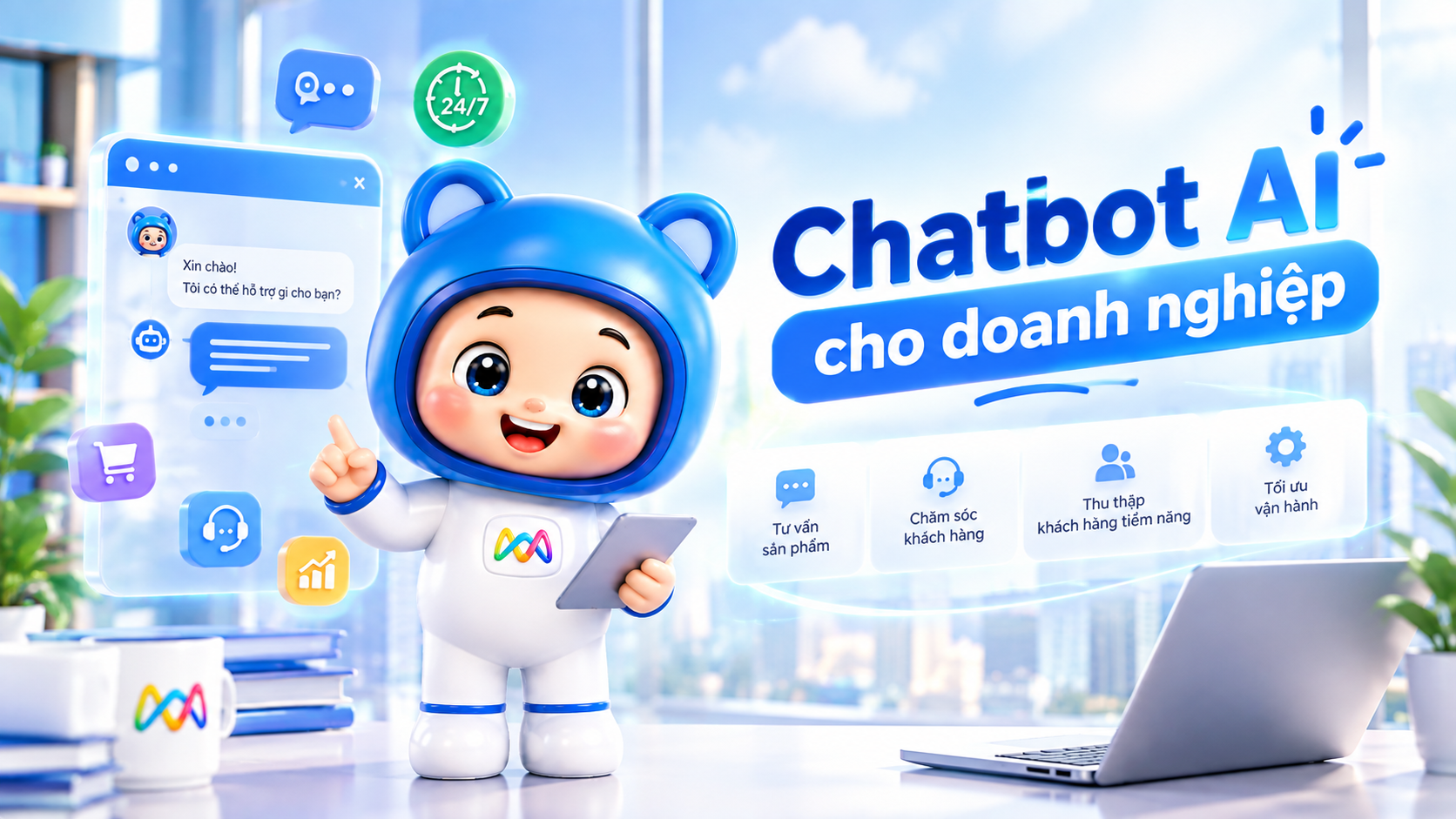
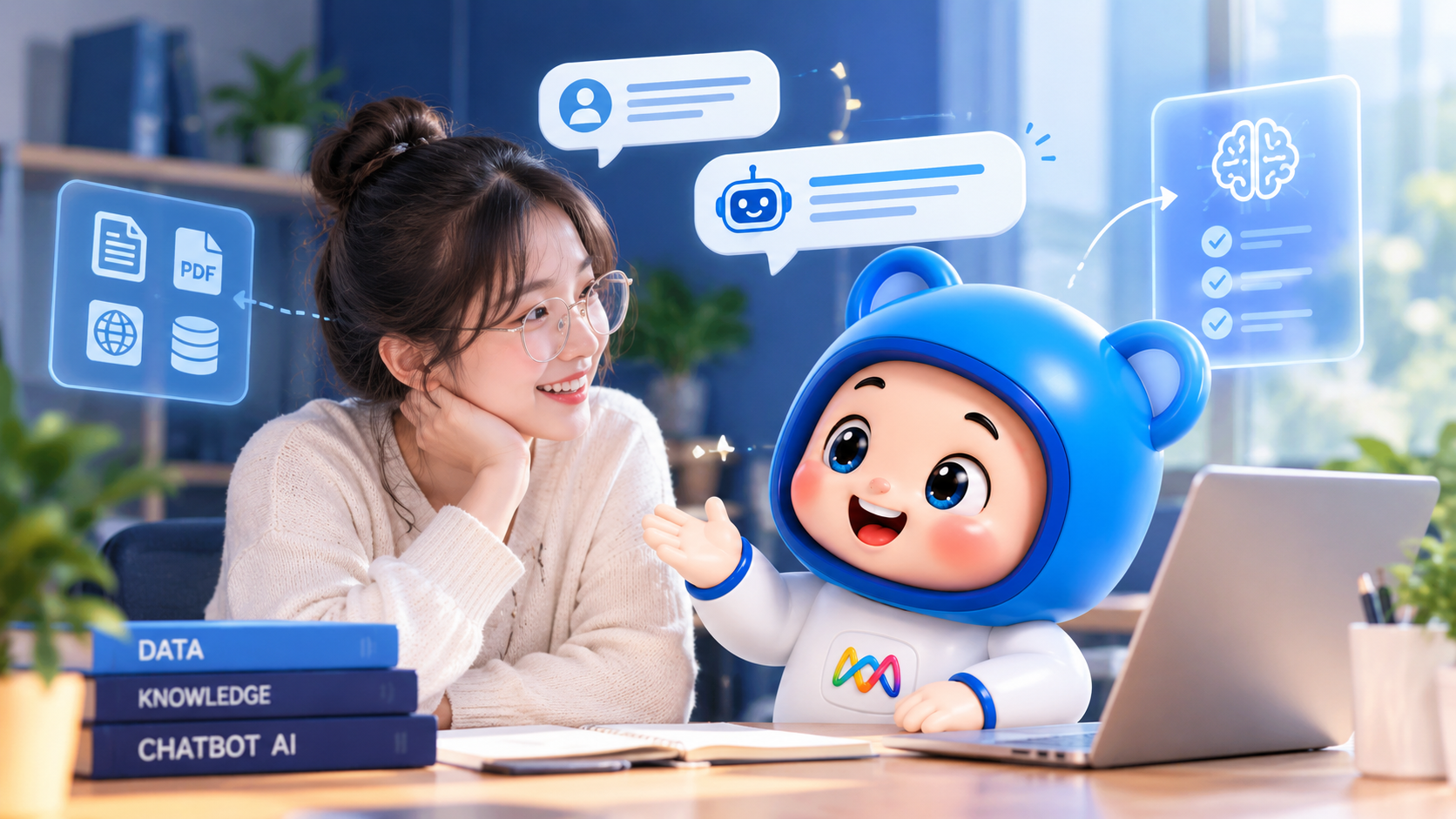
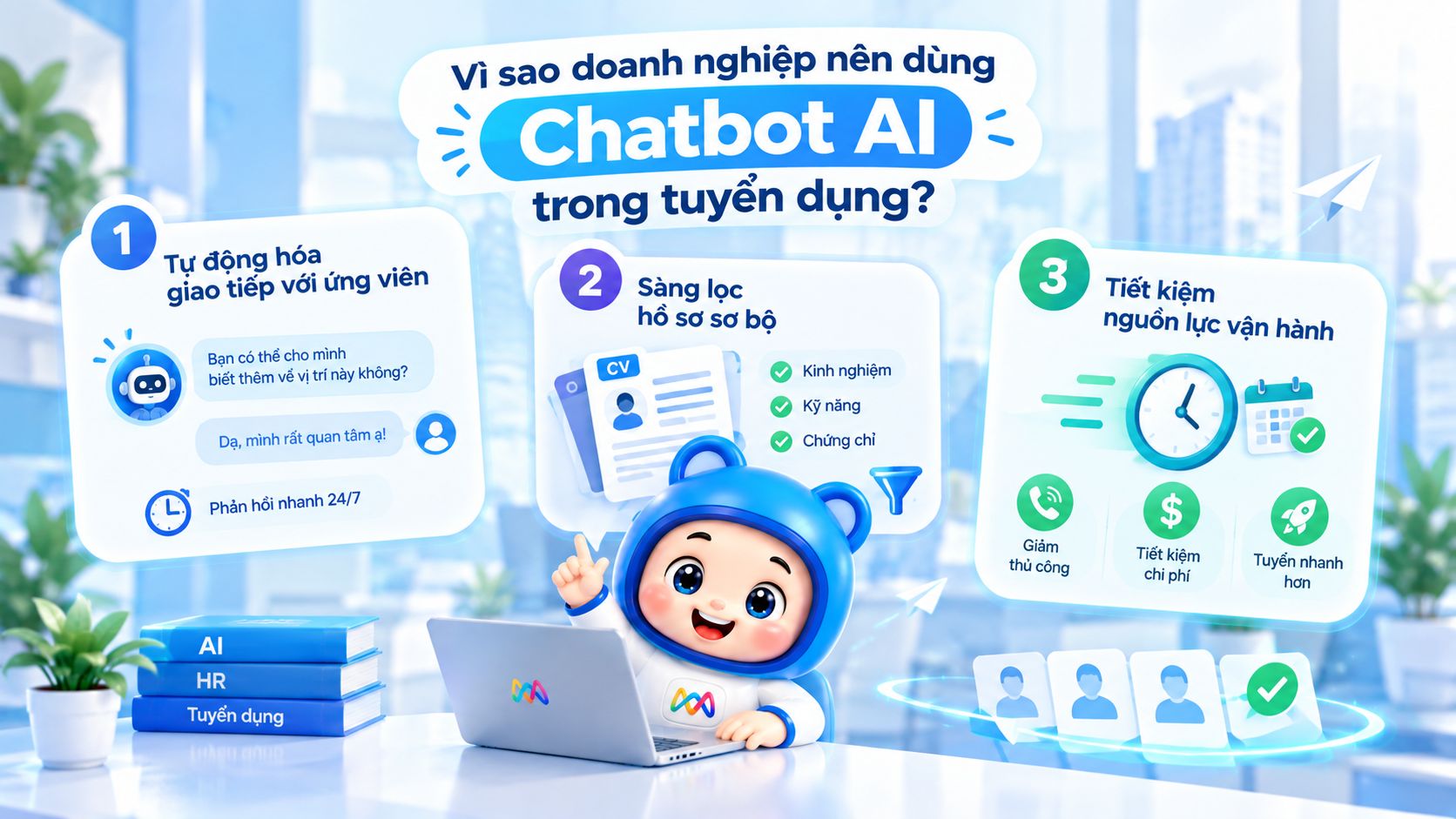
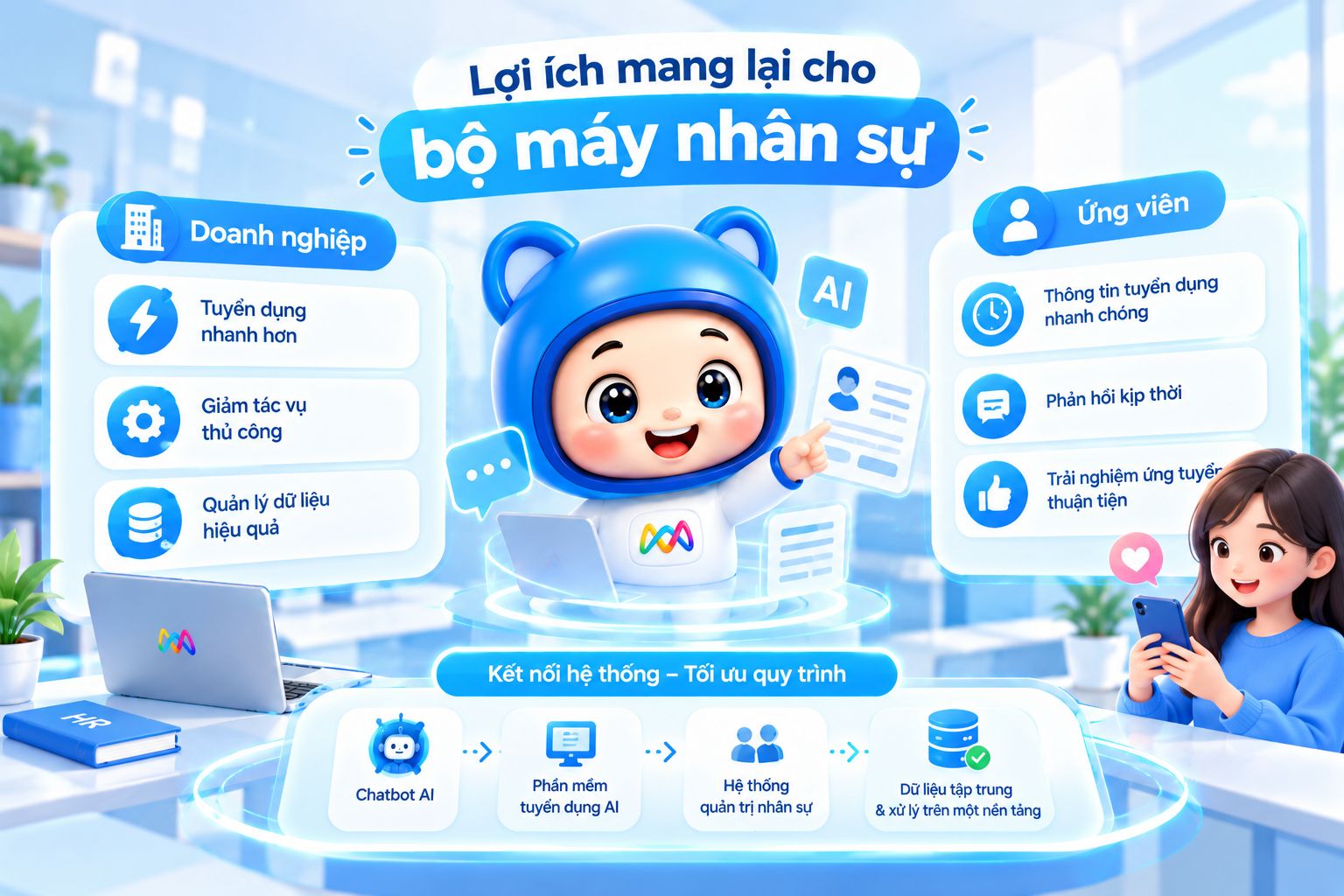
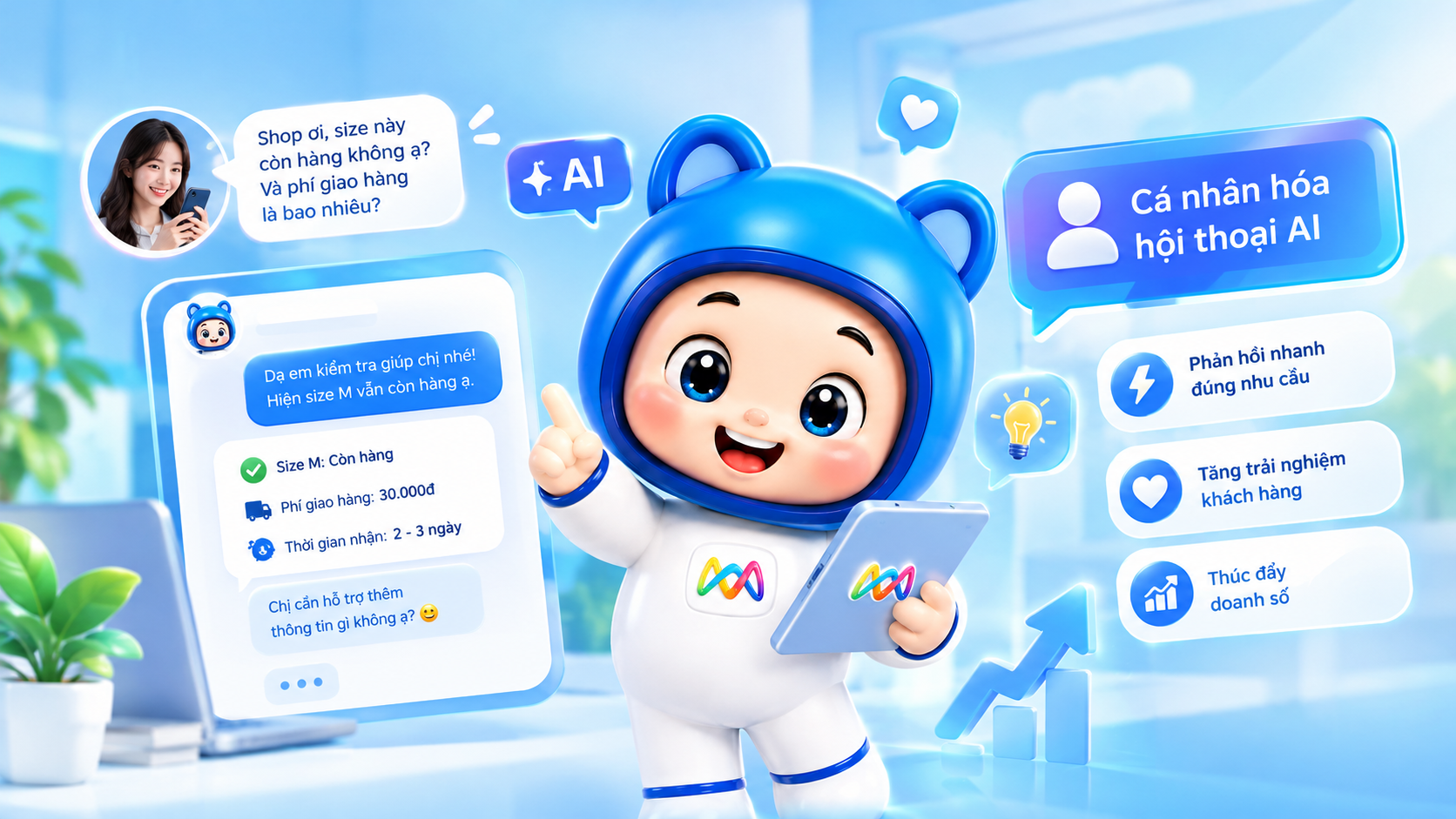
    How to Write an Effective Chatbot Script: An A-Z Guide helps businesses build smarter, more natural chatbot conversations that meet customer needs and support business goals. From defining chatbot objectives to creating logical conversation flows and optimizing responses, a well-designed script can improve customer service, automate consultations, and deliver a better overall customer experience.

    What Is a Chatbot Script?

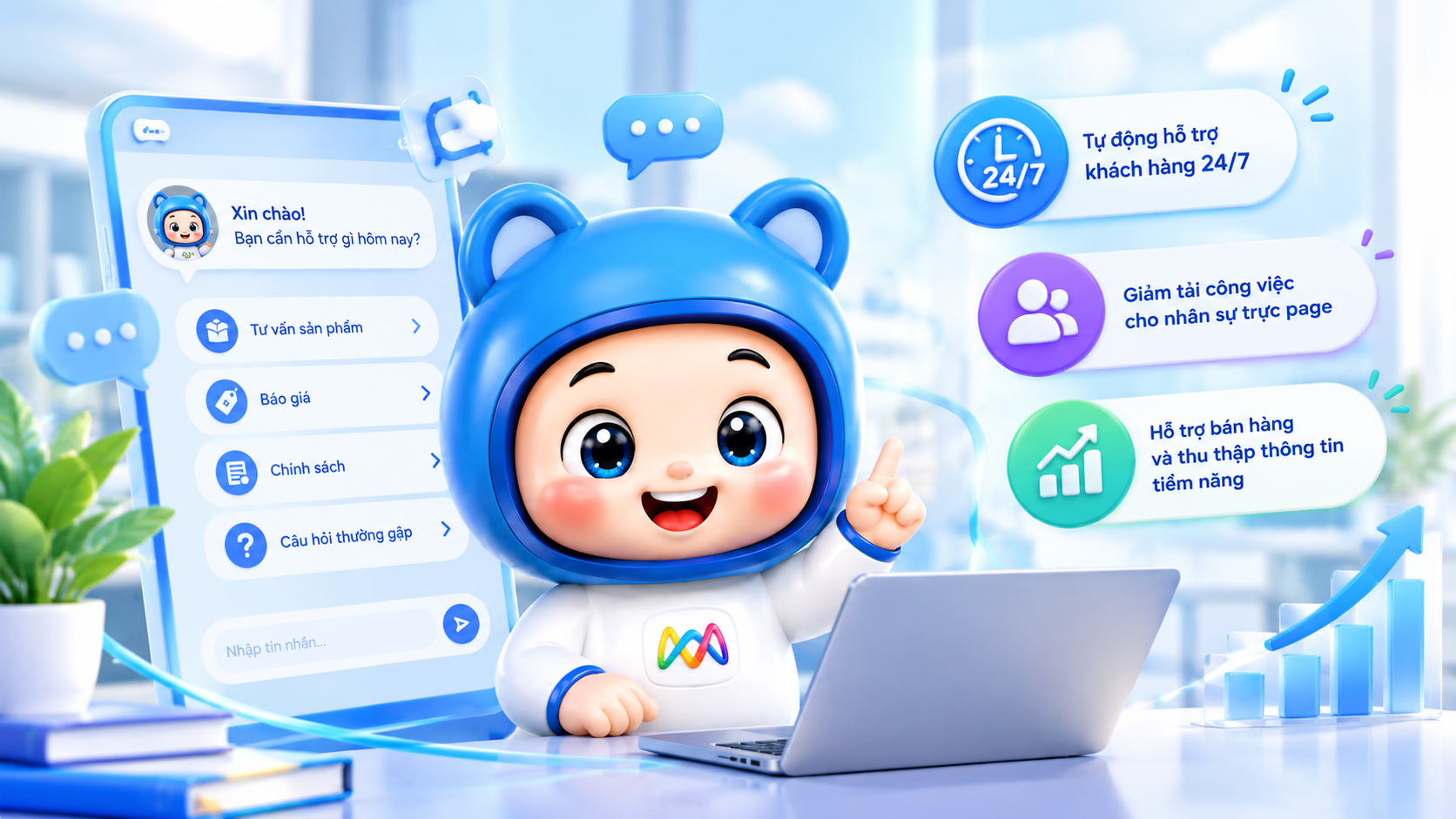
    Kịch bản chatbot và luồng hội thoại với khách hàng

    A chatbot script is a collection of content, questions, answers, and response flows designed for different conversation scenarios between the chatbot and customers. A well-designed script helps the chatbot understand what customers want, provide relevant information, and guide users toward the next action.

    Depending on their specific goals, businesses can create sales chatbot scripts, product consultation scripts, customer service scripts, lead collection flows, or post-purchase support scenarios.

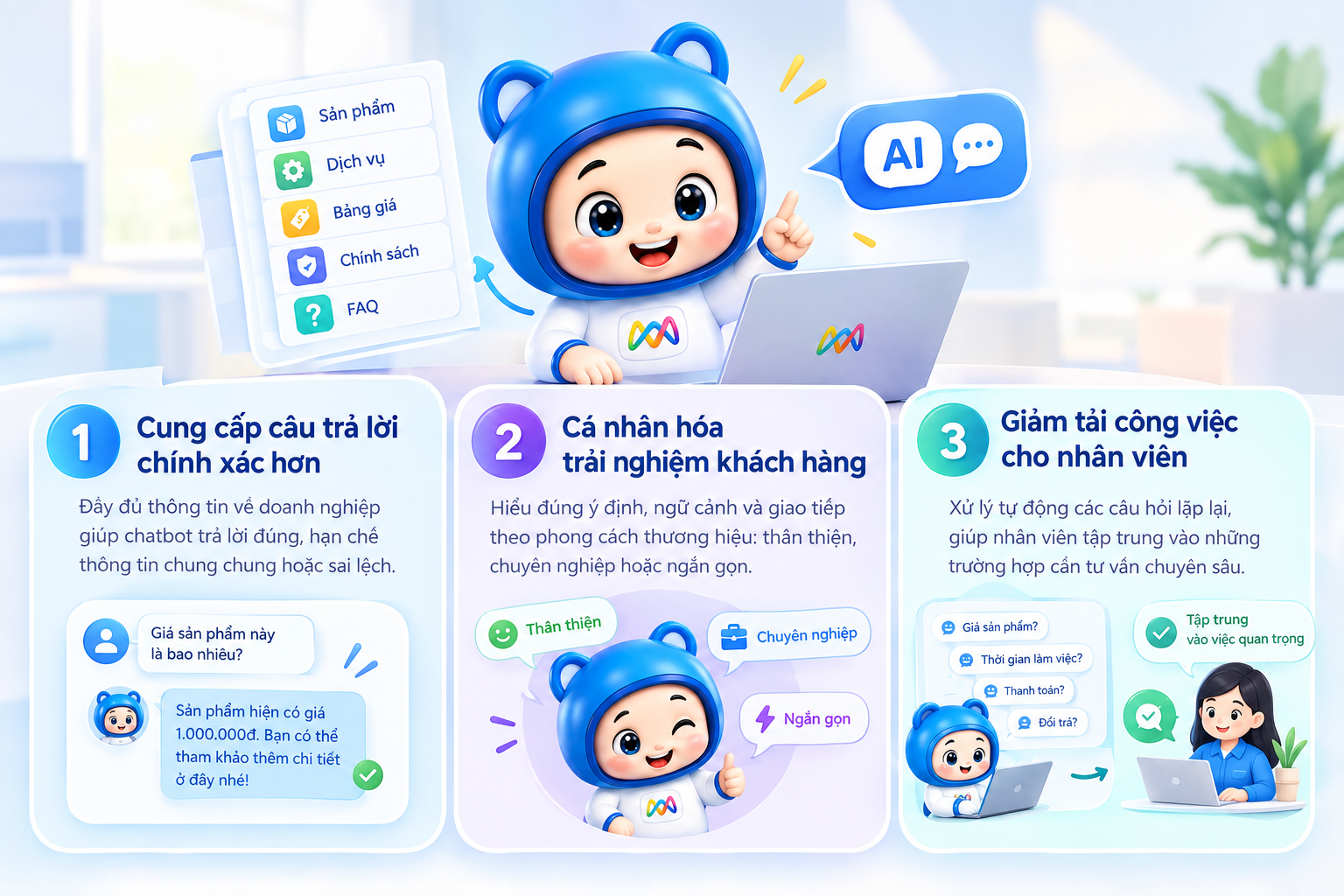
    Why Is It Important to Build a Well-Structured Chatbot Script?

    A carefully prepared messaging flow provides several practical benefits for business operations:

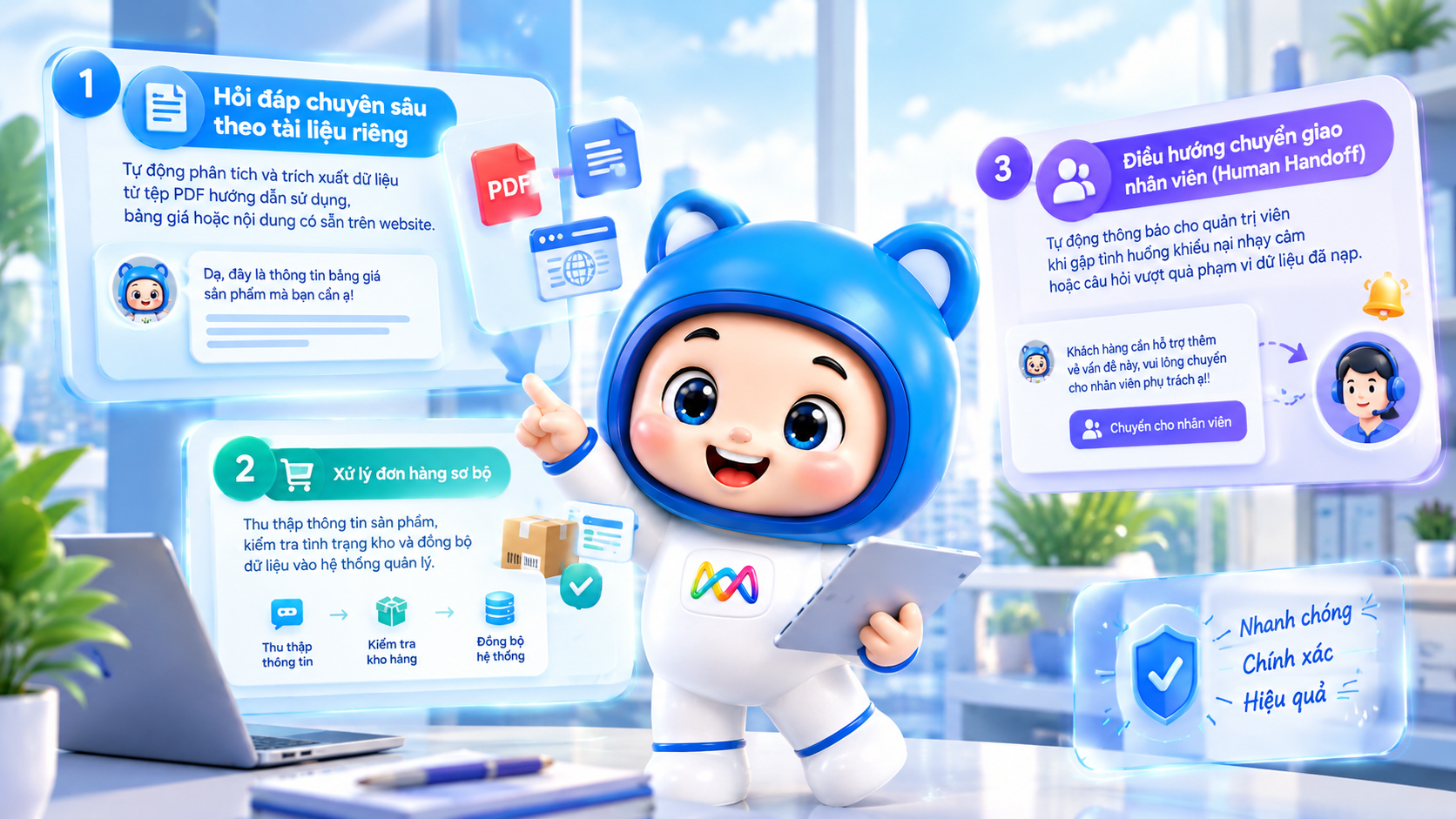
    Lợi ích xây dựng kịch bản chatbot bài bản

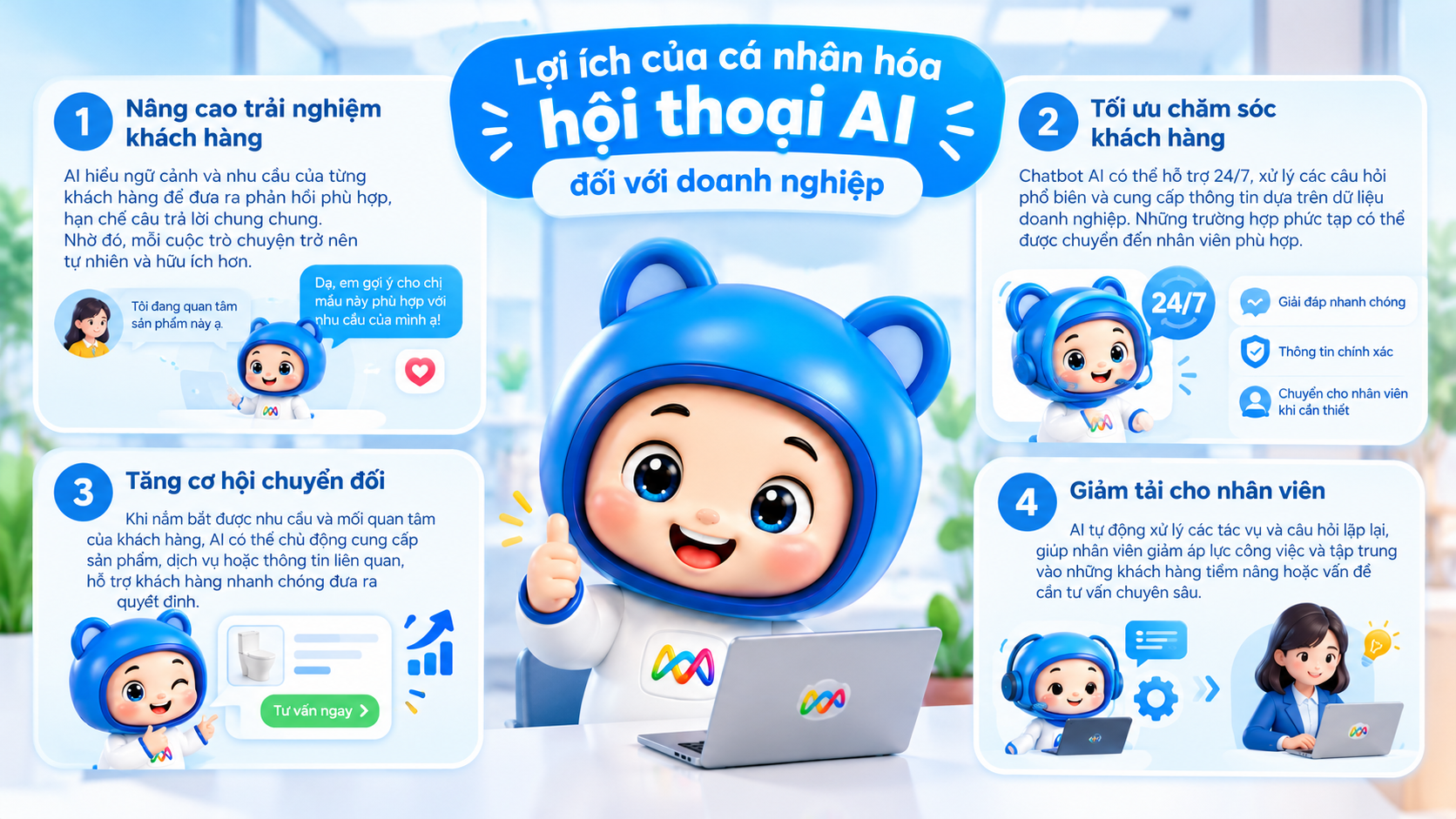
    • Instant 24/7 responses: Welcome and assist customers immediately on websites, Zalo OA, or Messenger, minimizing the risk of customers turning to competitors because they have to wait.
    • Standardized consultation processes: Ensure that information about prices, return policies, promotions, and other details remains consistent and accurate according to the brand’s guidelines.
    • Save time for chat support teams: Reduce repetitive questions such as requests for price lists, store locations, or delivery times.

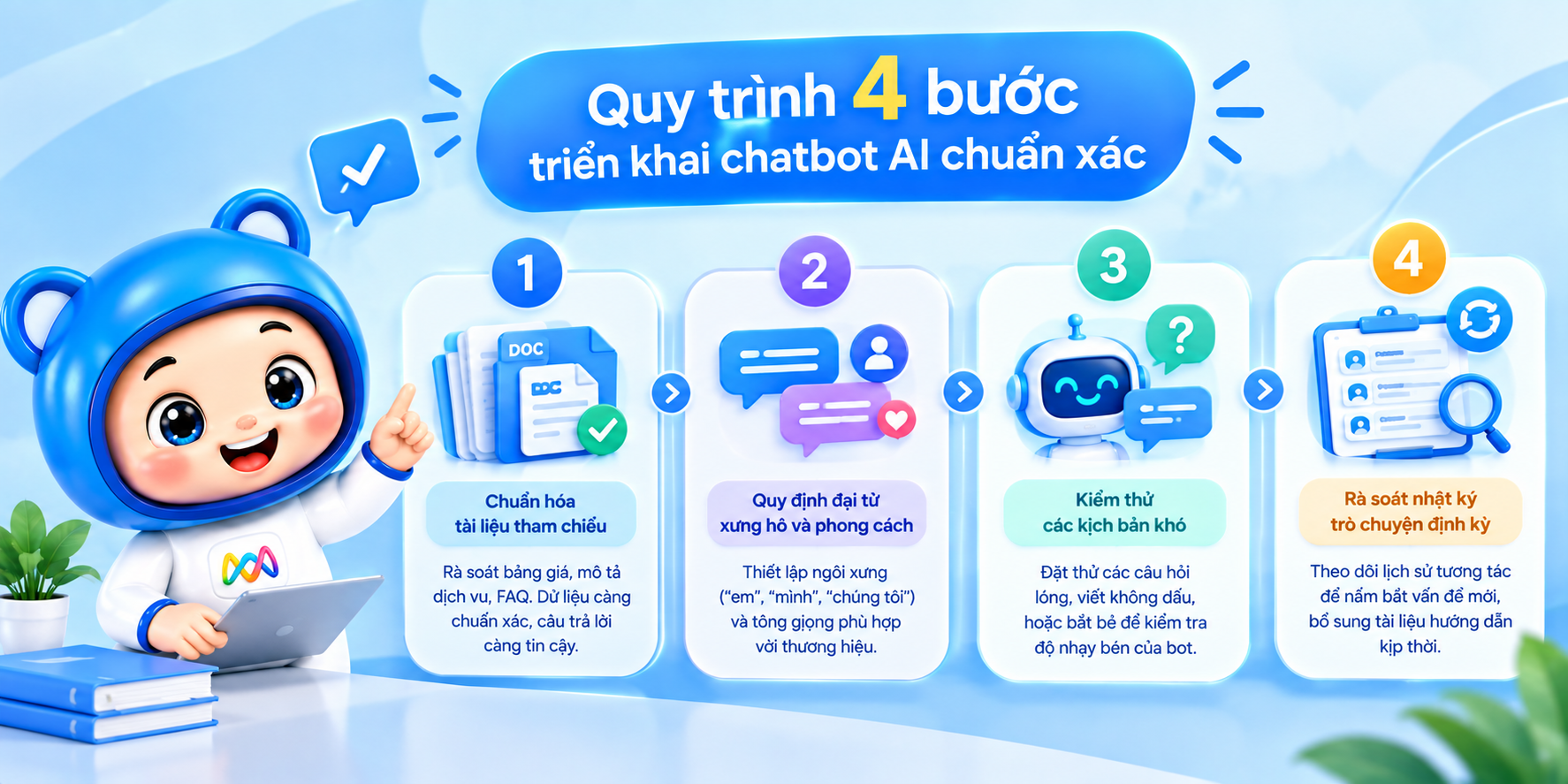
    How to Write an Effective Chatbot Script Step by Step

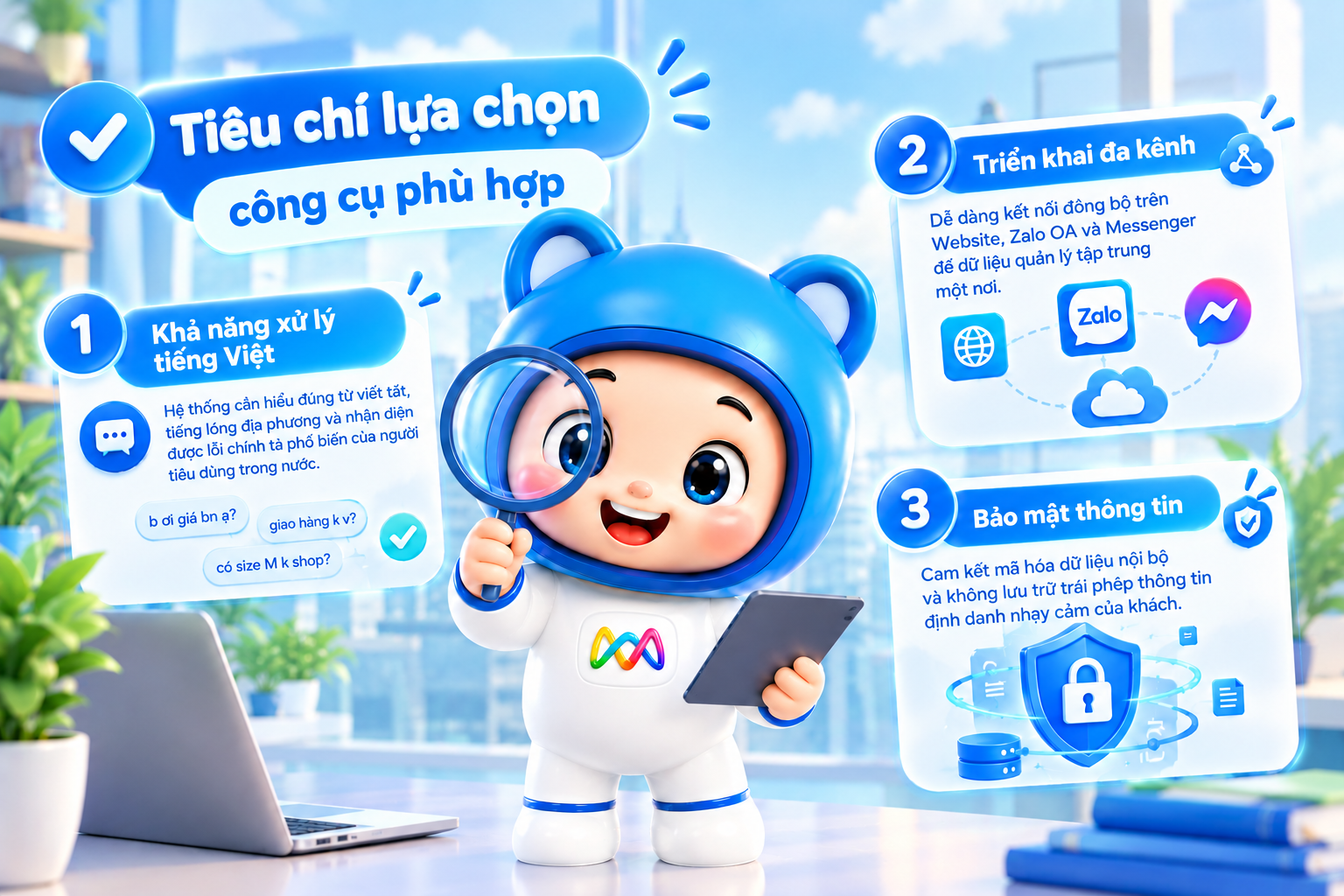
    Các bước viết kịch bản chatbot hiệu quả

    Define the Chatbot’s Goal

    Before starting how to create a chatbot script, businesses need to determine what the chatbot is designed to accomplish. Its goals may include increasing orders, providing product consultations, supporting customers, scheduling appointments, or collecting leads.

    Each goal requires a different conversation flow. Clearly defining the objective from the beginning helps keep the chatbot’s content focused and prevents unnecessarily long conversations.

    Identify Customer Needs and Behavior

    List the questions customers commonly ask when researching a product or service. For example:

    • How much does the product cost?
    • What models are available?
    • Do you offer delivery?
    • How long does delivery take?
    • What is your return policy?

    These questions provide the foundation for creating a customer consultation chatbot script that closely matches real customer needs.

    Build a Logical Conversation Flow

    A chatbot script should be divided into multiple branches instead of creating one long conversation. For example:

    Customer: I want to learn more about your products.

    Chatbot: Sure! Which product category are you interested in?

    → Product A
    → Product B
    → Product C

    After the customer makes a selection, the chatbot can provide relevant information and guide them toward the next action, such as viewing a product, requesting a quotation, or contacting a sales representative.

    This structure makes the conversation easier for customers to navigate and easier for businesses to manage.

    Keep the Content Short and Natural

    One of the most important principles of how to write a chatbot script is avoiding long blocks of information. The content should be concise, clear, and written in a natural conversational style.

    Instead of writing:

    “Dear customer, please select one of the product categories listed below.”

    A more natural version would be:

    “Which product are you interested in?”

    Natural wording makes the conversation more friendly and engaging.

    Set Up Human Handoff Scenarios

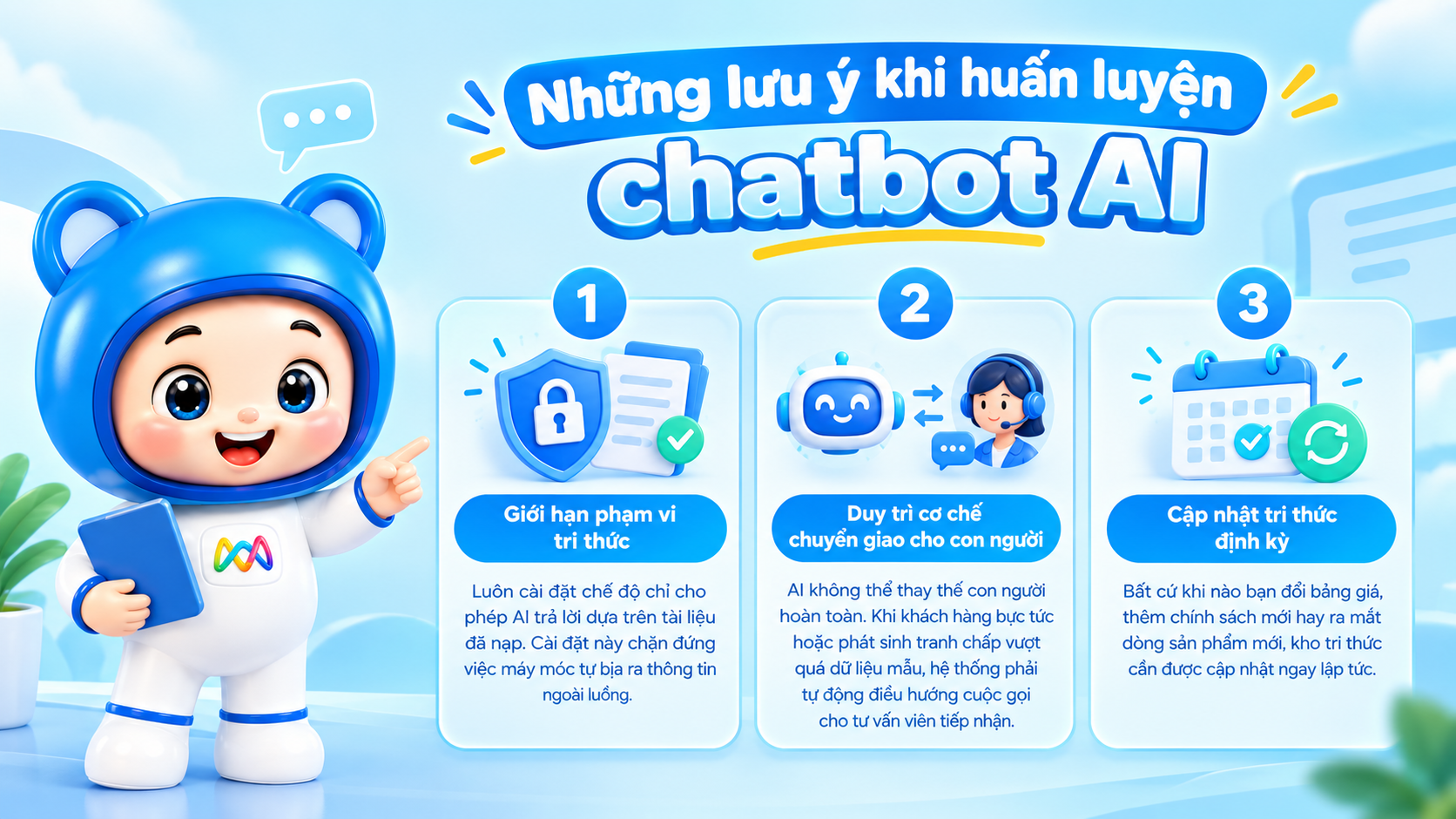
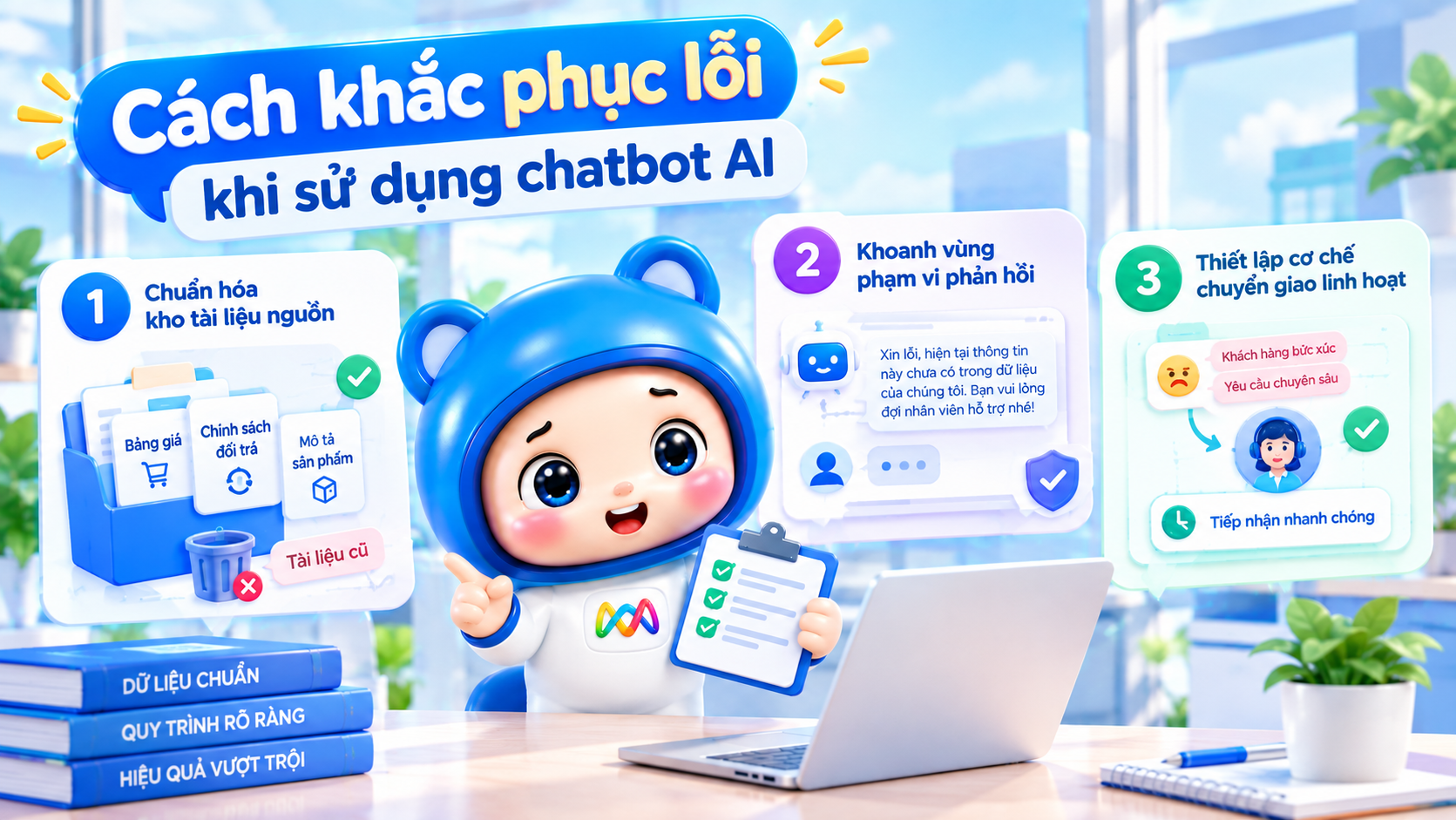
    Not every customer question can be handled by a chatbot. Therefore, the script should include a Human Handoff option when customers have complex issues or want to speak directly with a staff member.

    For example:

    “I don’t have enough information to provide an accurate answer to this case. Let me connect you with a consultant who can assist you right away!”

    This helps prevent incorrect chatbot responses and reduces customer frustration.

    Sample Chatbot Script for Businesses

    A basic chatbot script example can follow this process:

    Greet the customer → Identify their needs → Provide information → Answer questions → Recommend products/services → Collect customer information → Transfer to a staff member if needed.

    For sales chatbots, businesses can add branches covering pricing, promotions, related products, delivery policies, and payment methods. For customer service chatbots, the focus should be on order tracking, usage instructions, feedback collection, and post-purchase support.

    Kịch bản chatbot mẫu cho doanh nghiệp

    Common Mistakes to Avoid When Writing a Chatbot Script

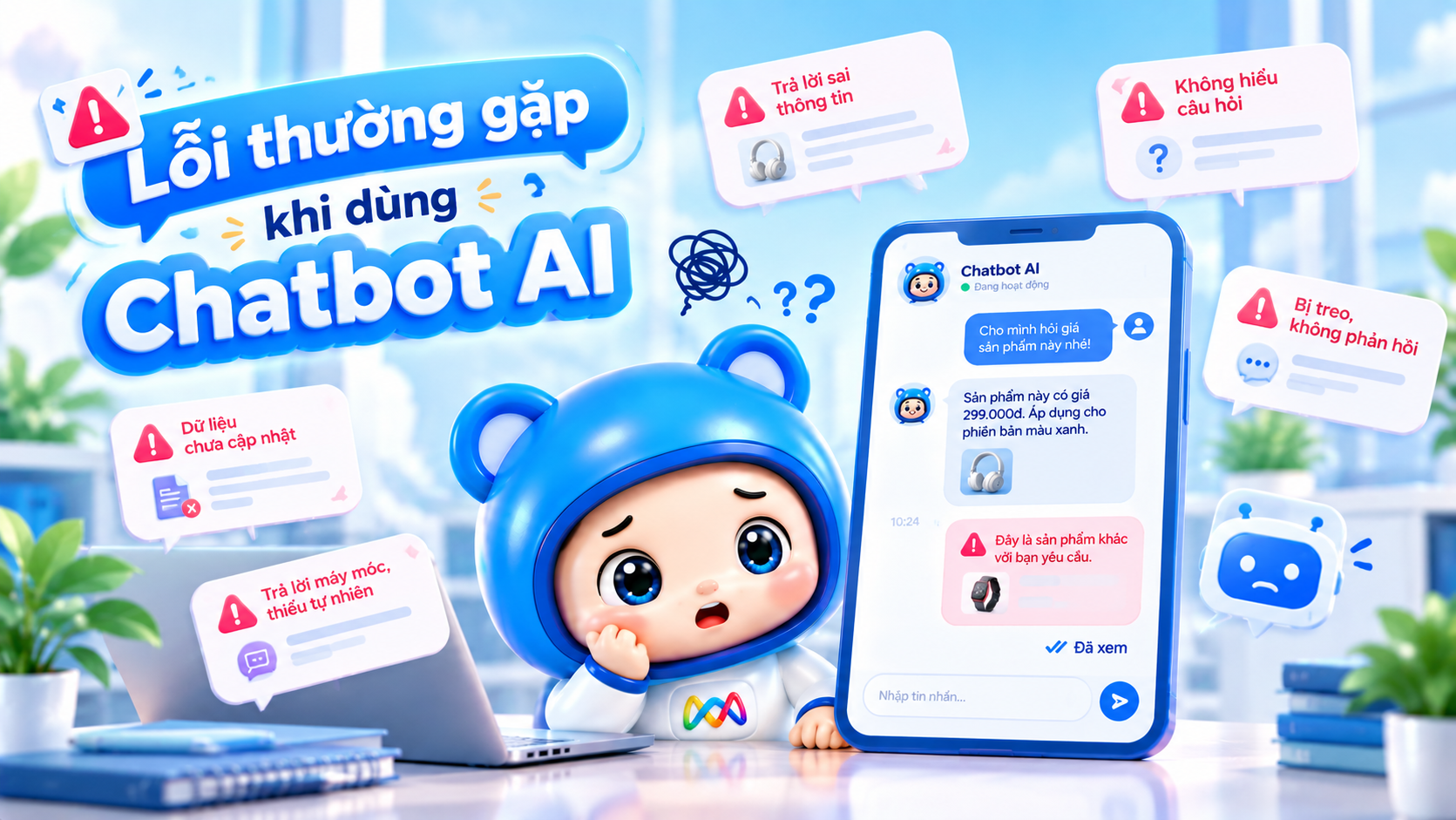
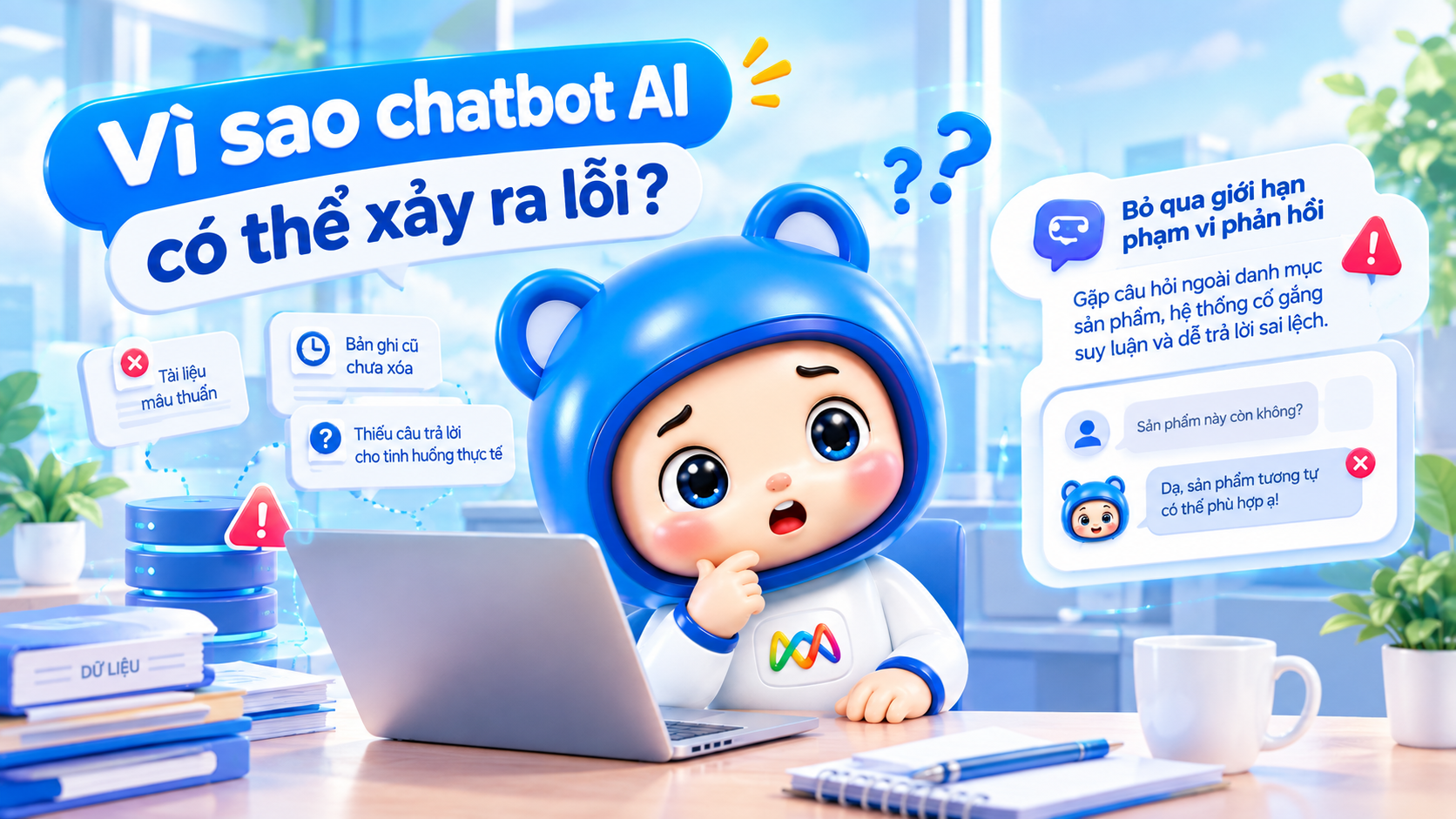
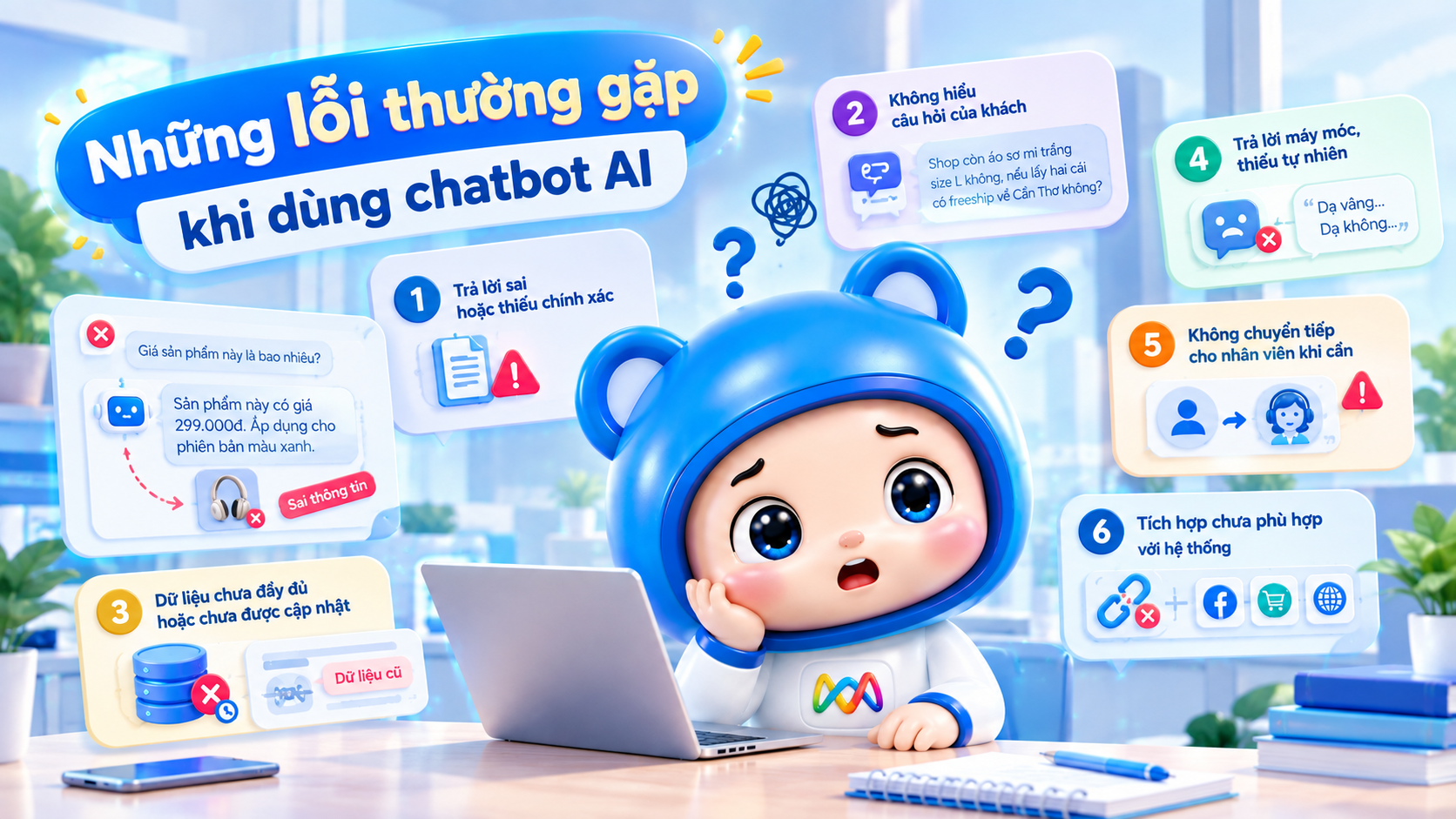
    Many businesses experience customers leaving immediately after the first message because of the following common mistakes:

    • Forcing customers to read too much: Sending 4–5 long, text-heavy messages in a row can overwhelm users.
    • Creating endless loops: No matter which option customers select, they are redirected back to the main menu without receiving a specific answer.
    • Making the script too rigid: If customers make a spelling mistake or phrase their question slightly differently from the predefined keywords, the bot immediately reports that it cannot understand the request.

    Optimizing Chatbot Scripts with AI

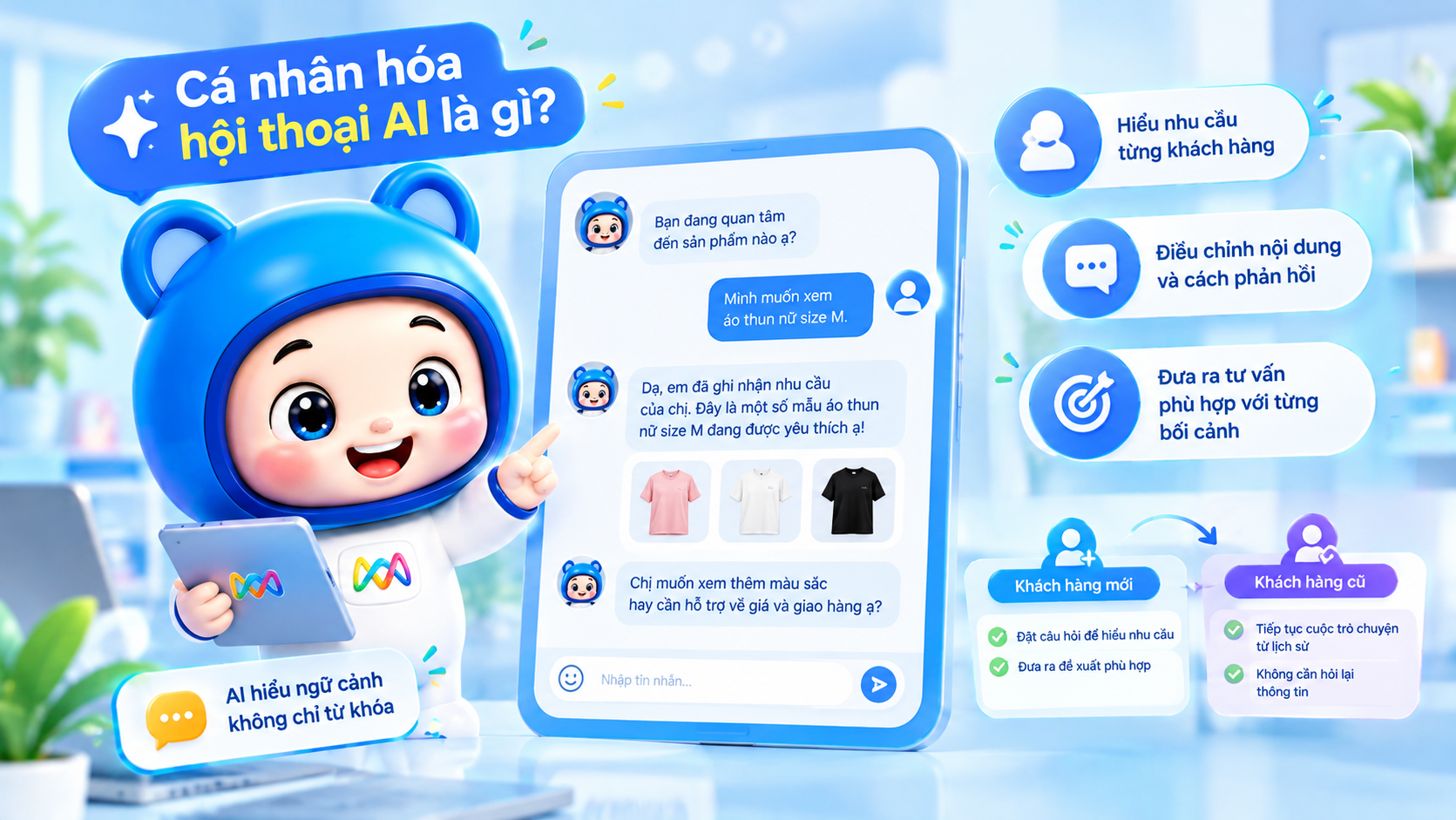
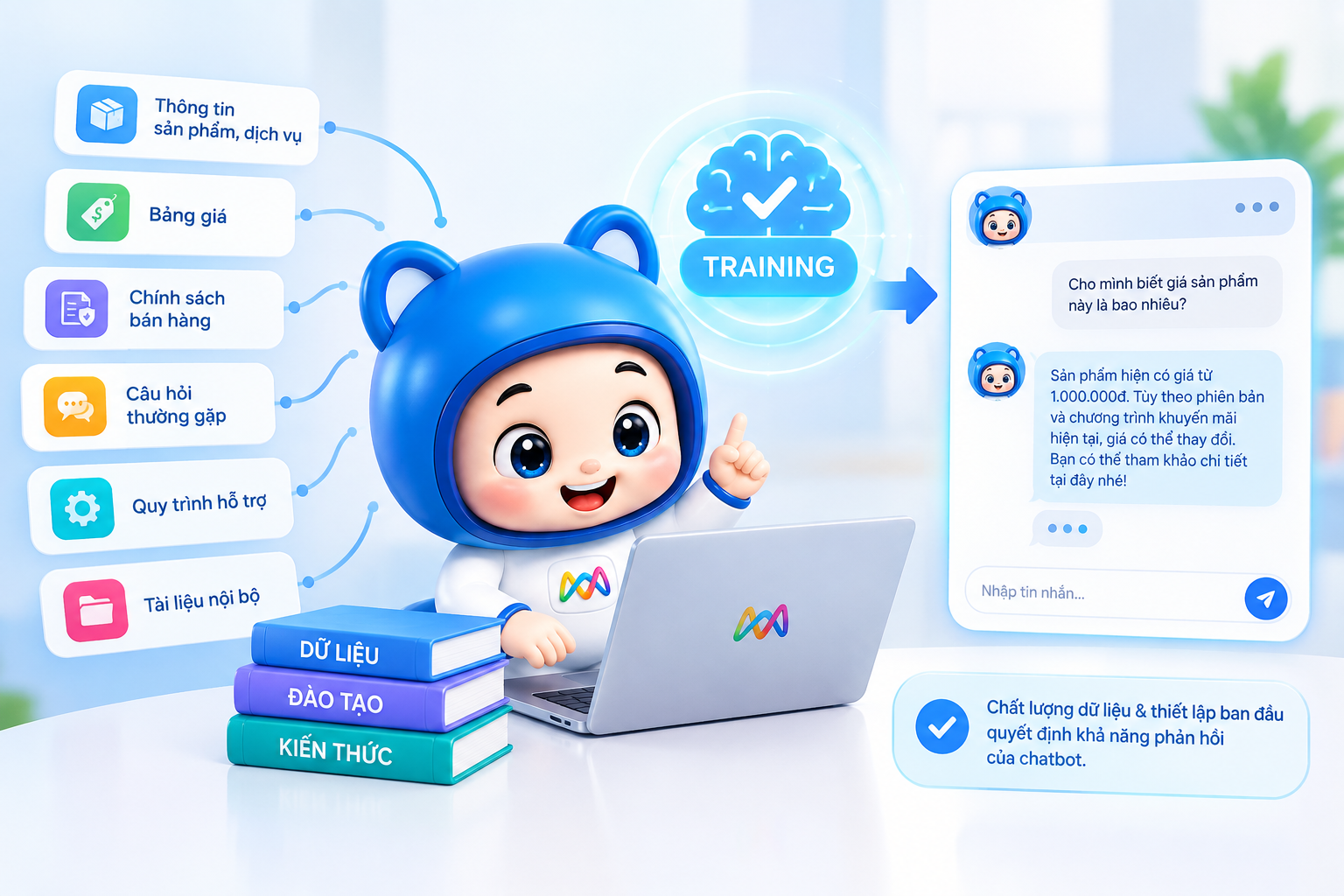
    With an AI chatbot, businesses do not necessarily have to build the entire conversation using fixed questions and answers. AI can be trained on business data to understand context, identify customer needs, and generate more relevant responses.

    By combining a structured script with natural language processing capabilities, a chatbot can maintain accurate information while delivering a more natural conversational experience.

    Therefore, instead of simply building an automated response bot, businesses should invest in a system capable of learning from business data, consulting customers, and collaborating with human agents when necessary. This provides a foundation for AI chatbots to become powerful tools for business growth and customer service.

    Conclusion

    Applying the right approach to writing chatbot scripts helps businesses optimize operational resources and respond to customers quickly, around the clock. Start by standardizing frequently asked questions, establishing basic consultation flows, and gradually upgrading to intelligent AI solutions to deliver a better shopping experience today.

  • AI Chatbot for Customer Demand Forecasting – Optimize Your Business with AI

    AI Chatbot for Customer Demand Forecasting – Optimize Your Business with AI

    In a competitive business environment, understanding what customers need and which products they are likely to purchase is essential for improving sales performance. Instead of simply responding when customers ask questions, an AI chatbot for customer demand forecasting can analyze data and interaction behavior to identify customer needs, helping businesses develop more effective customer service and sales strategies.

    What Is an AI Chatbot for Customer Demand Forecasting?

    Chatbot AI phân tích hành vi và dự báo nhu cầu khách hàng

    An AI chatbot for customer demand forecasting is a solution that combines chatbot technology with artificial intelligence to analyze customer information, interaction history, and user behavior in order to predict future needs.

    Rather than functioning only as a question-answering tool, the chatbot can identify signals indicating that a customer is interested in a particular product, has purchase intent, or may need further consultation. These insights enable businesses to take a more proactive approach to customer engagement.

    How Does an AI Chatbot for Customer Demand Forecasting Work?

    Ứng dụng chatbot AI trong dự báo nhu cầu và hỗ trợ bán hàng

    Collecting Customer Data

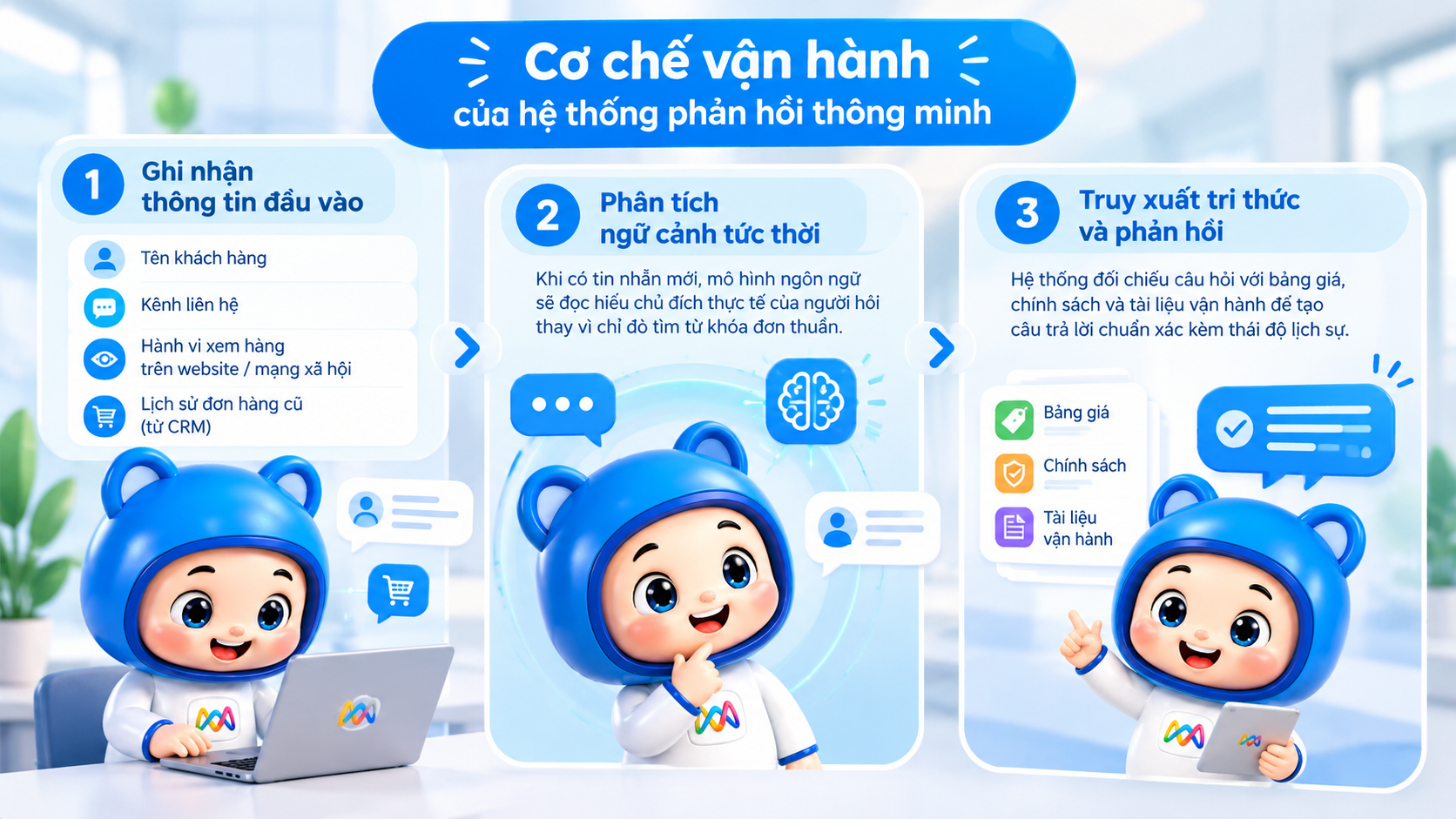
    The chatbot can record information generated during customer interactions, including questions, products of interest, conversation history, and customer feedback. When combined with data from websites, CRM systems, or sales channels, businesses can build a more comprehensive customer data source.

    Analyzing Customer Behavior and Needs

    AI uses collected data to identify patterns and signals in customer behavior. For example, a customer who repeatedly views information about the same product category or asks multiple questions about pricing and features may be in the consideration stage of the buying journey.

    Providing Predictions and Relevant Responses

    Based on the analysis, the chatbot can help classify customer needs and provide responses tailored to each customer segment. This allows businesses to avoid using the same customer service script for every user.

    Practical Benefits for Businesses

    Applying conversational AI technology can create several competitive advantages:

    Lợi ích chatbot AI trong thấu hiểu và cá nhân hóa khách hàng

    • Gain deeper customer insights: The system can record and categorize preferences, budgets, and purchasing habits across different customer segments without missing valuable data.
    • Personalize the customer experience: Each customer receives responses and product recommendations tailored to their specific needs at the time of interaction.
    • Increase sales opportunities: Accurate recommendations delivered at the right moment can improve conversion rates and reduce the risk of customers leaving because they cannot find a suitable product.
    • Optimize operational resources: Automated 24/7 responses reduce the workload for customer service teams, allowing employees to focus on higher-value sales opportunities.

    Applications of AI Chatbot for Customer Demand Forecasting

    Predicting Purchasing Demand

    Businesses can use chatbot data to identify product categories that customers are most interested in, supporting sales planning and inventory preparation.

    Supporting Consultation and Sales

    The chatbot can identify purchase intent through conversations and provide relevant recommendations. When a customer shows strong purchase intent, the system can transfer the conversation to a sales representative for further consultation.

    Customer Service

    After a purchase, the chatbot can continue to answer questions, provide product usage guidance, and collect customer feedback. This data can also provide valuable insights into customer needs after the sale.

    Supporting Marketing Activities

    Information about customer behavior and needs helps businesses develop more relevant content, promotional programs, and marketing campaigns for different target segments.

    Chatbot AI dự báo nhu cầu khách hàng hỗ trợ doanh nghiệp bán hàng, chăm sóc khách hàng và marketing.

    What Should Businesses Consider When Implementing AI Chatbots?

    For an AI chatbot for customer demand forecasting to operate effectively, businesses should pay close attention to the quality of input data, integration capabilities with existing systems, and the design of customer interaction scenarios.

    AI should also serve as a support tool rather than completely replacing human employees. For complex cases or customers who require in-depth consultation, connecting them with a human representative can help ensure a better customer experience.

    AI Chatbot for Customer Demand Forecasting with Chat Vareno

    Chat Vareno helps businesses apply AI to customer communication, consultation, and customer service. By combining business data with AI-powered analysis, the chatbot can help identify customer needs, segment customers, and provide more relevant responses throughout each conversation.

    Conclusion

    An AI chatbot for customer demand forecasting helps businesses move from reactive customer support to a more proactive approach to understanding and meeting customer needs. This is a valuable application of AI for personalizing customer experiences, supporting sales activities, and optimizing customer service in the digital era.

  • Multilingual Chatbot – An AI Solution to Connect with Customers Worldwide

    Multilingual Chatbot – An AI Solution to Connect with Customers Worldwide

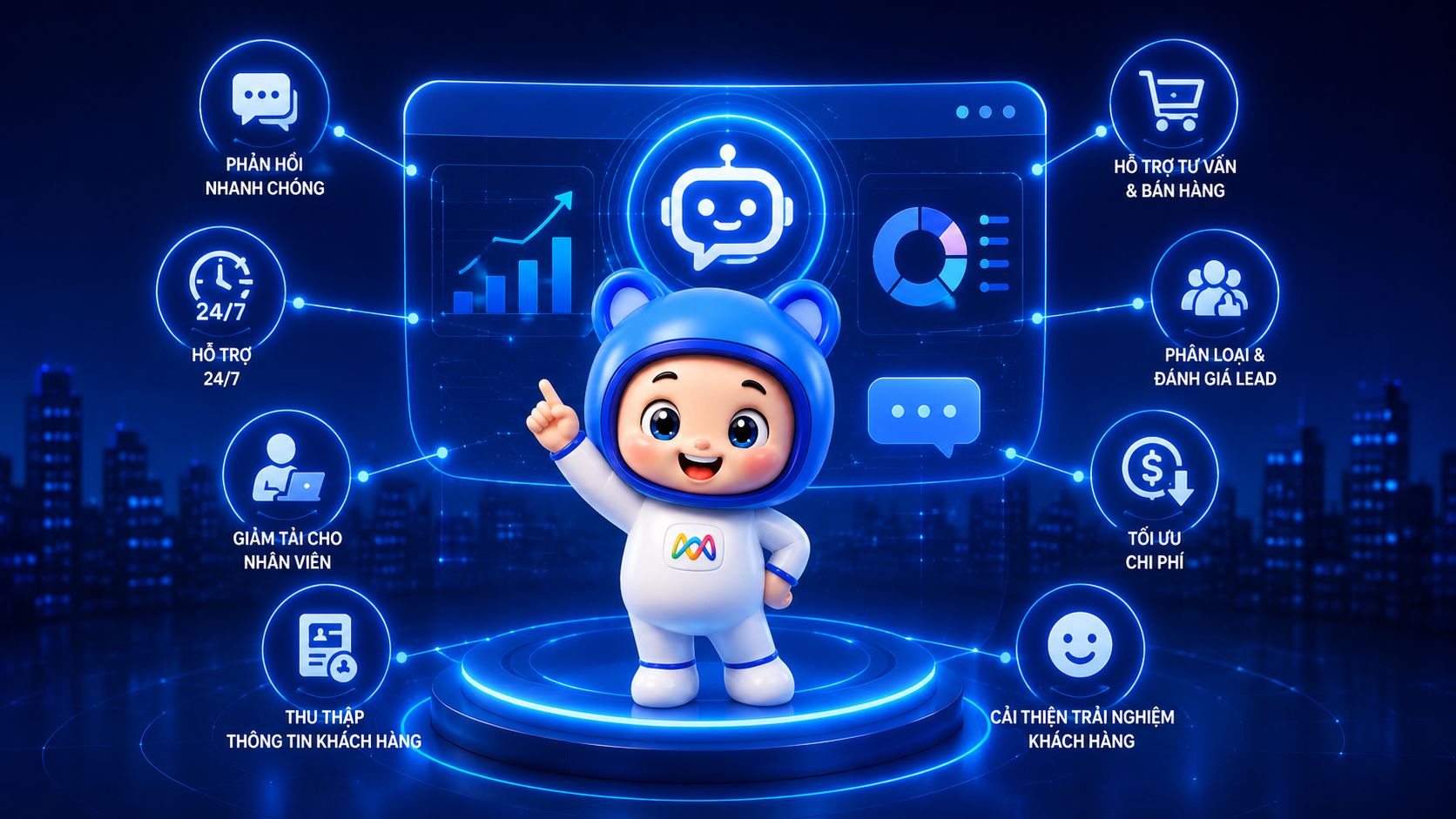
    As businesses continue their digital transformation, they are increasingly looking to reach customers across different markets and countries. However, language differences can become a barrier to customer consultation, support, and sales. A multilingual chatbot provides an AI-powered solution that enables businesses to communicate with customers in multiple languages, delivering a faster, more convenient, and consistent experience.

    What Is a Multilingual Chatbot?

    A multilingual chatbot is a chatbot system designed to recognize and process multiple languages within a single platform. Instead of responding to customers in only one fixed language, the chatbot can identify the language being used and respond accordingly.

    With AI-powered natural language processing capabilities, a multilingual chatbot can help customers find information, answer questions, provide product recommendations, and perform various other tasks without requiring employees to handle every conversation manually.
    Why Should Businesses Use a Multilingual Chatbot?

    As businesses expand internationally, response speed and personalized experiences become key factors influencing conversion rates. Integrating AI technology into customer communication processes can provide significant operational advantages.

    Chatbot đa ngôn ngữ nhận diện và phản hồi khách hàng bằng nhiều ngôn ngữ

    24/7 Customer Support

    One of the key benefits of a multilingual chatbot is its ability to operate continuously. Customers can ask questions at any time and receive automated responses without depending on the company’s business hours.
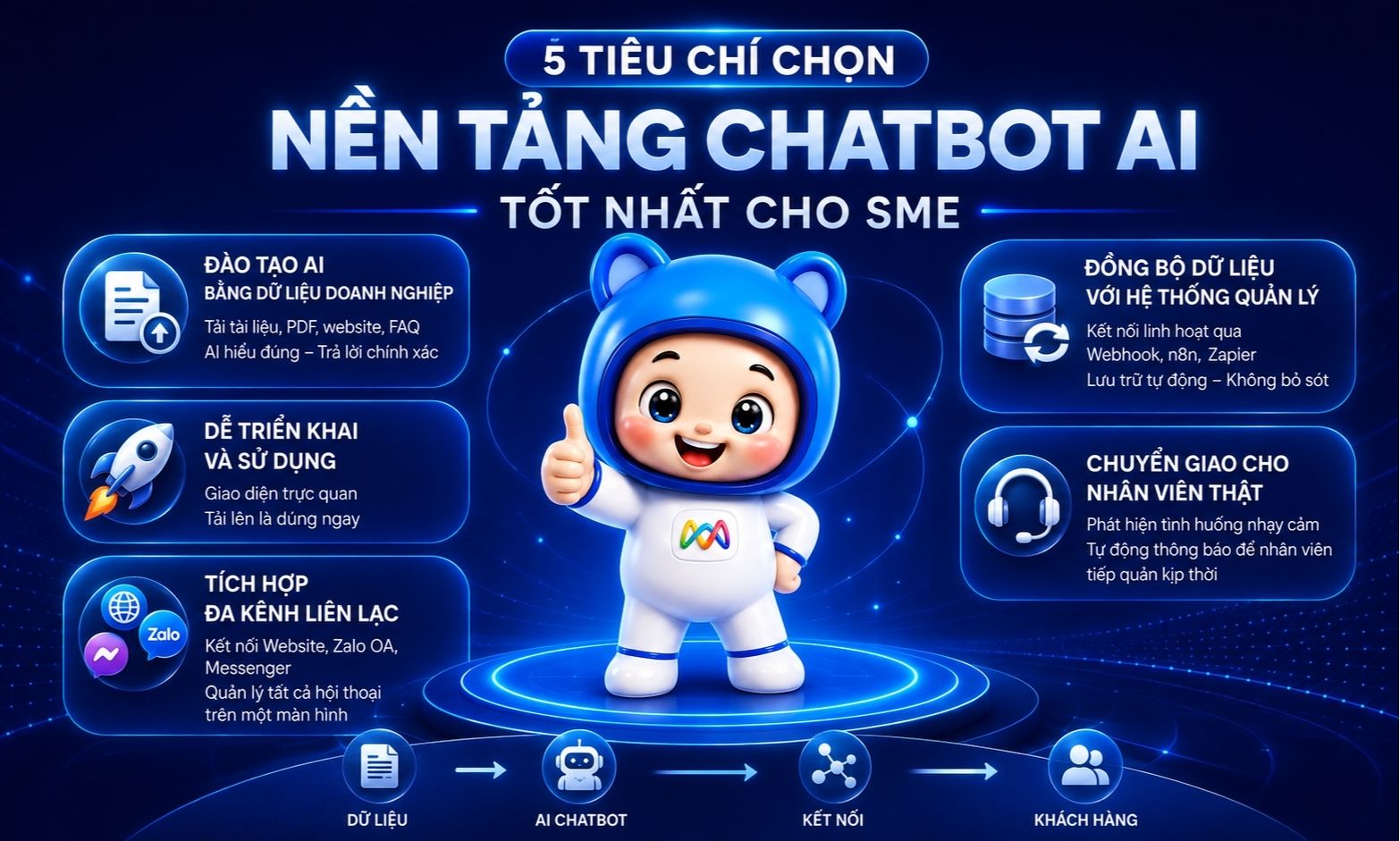
    Time zone differences across continents are no longer a major obstacle. An AI assistant can remain available 24/7 across multiple platforms, including websites, Zalo OA, and Messenger, responding to customer inquiries in just a few seconds.

    Breaking Down Language Barriers

    Language is one of the factors that directly affects the customer experience. When users can communicate in a language they are comfortable with, they can understand information more easily and interact with the business more naturally.
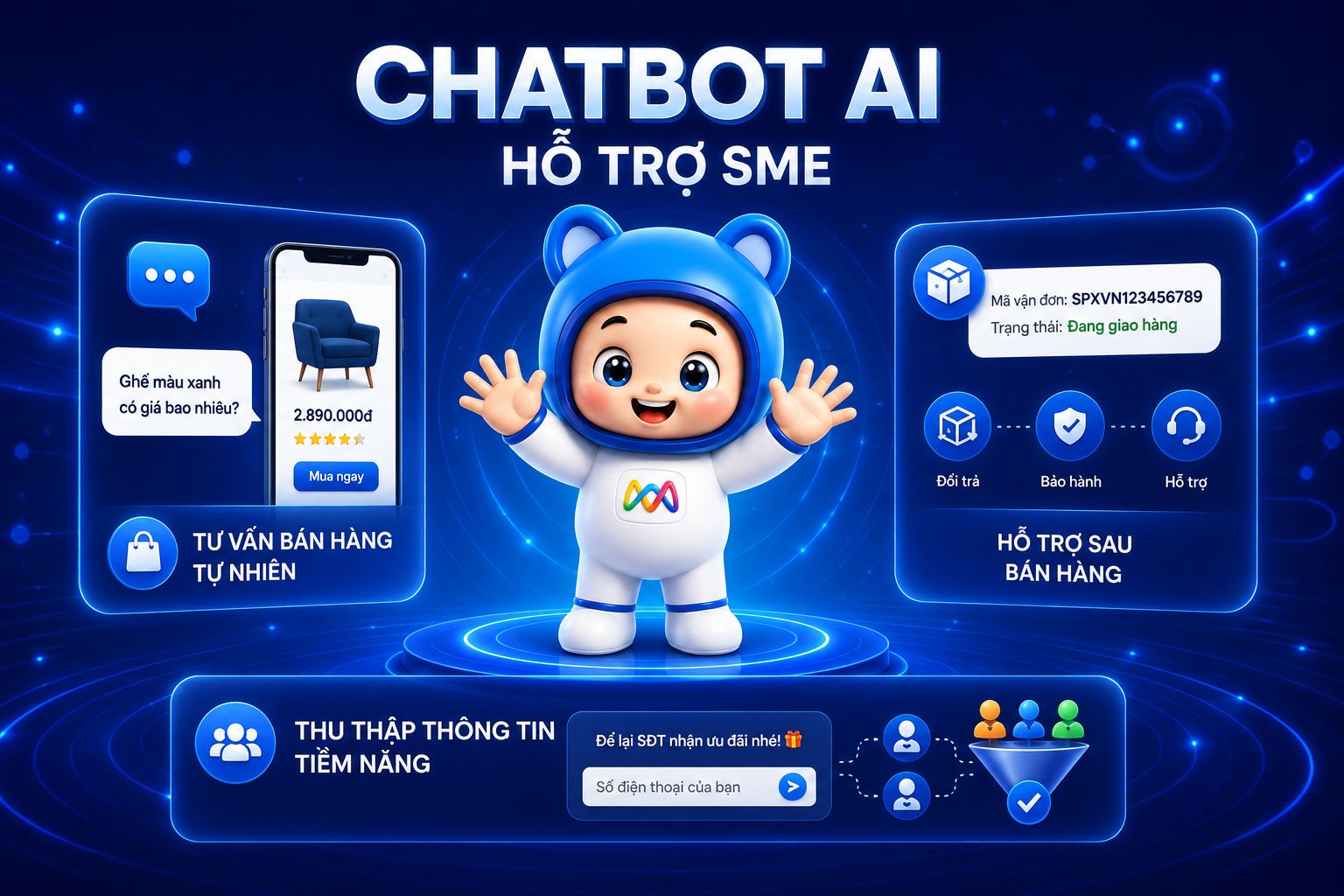
    An AI multilingual chatbot helps businesses reduce their dependence on multilingual customer service staff while creating a consistent communication experience across different markets.
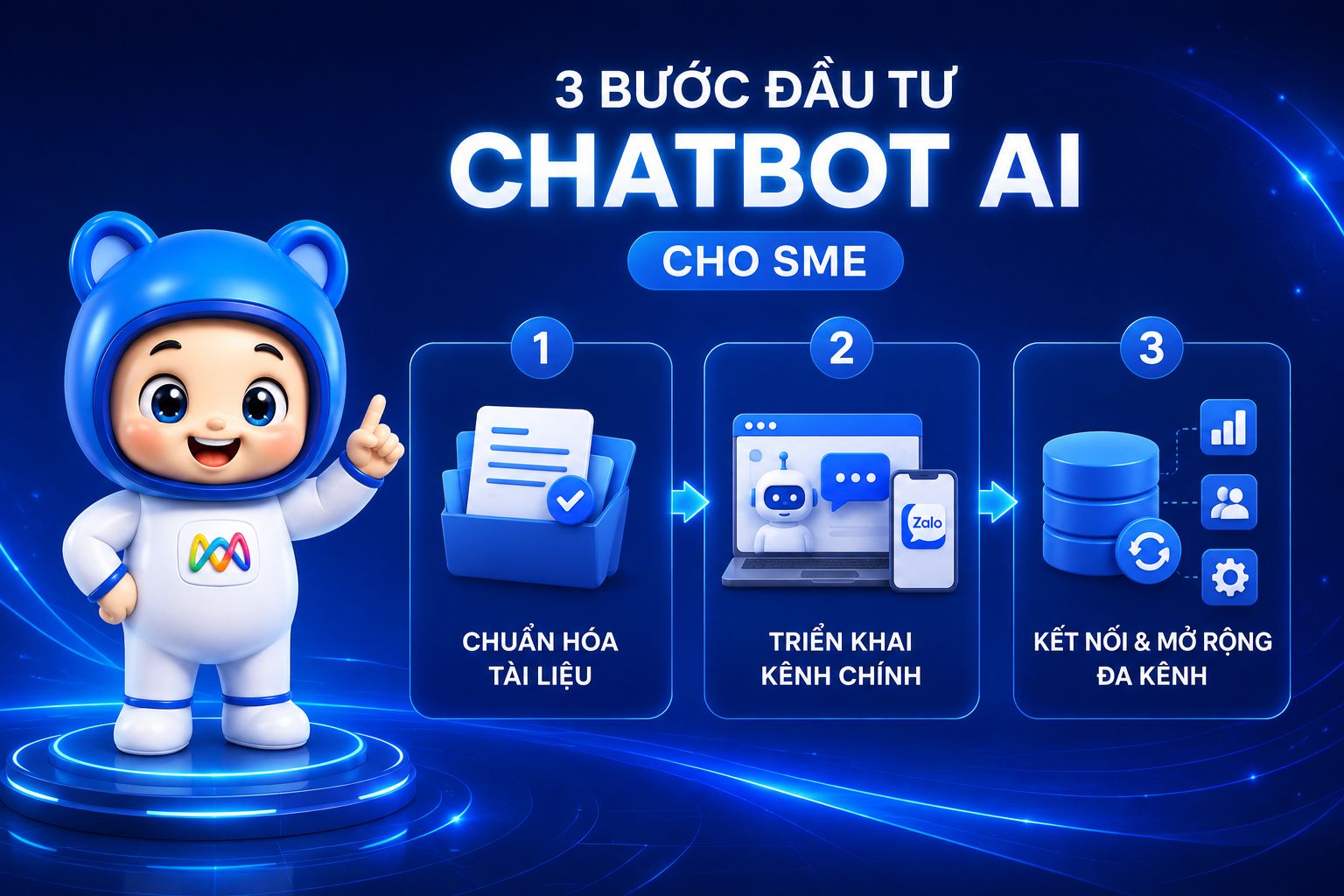
    Expand into International Markets

    When businesses want to reach international customers, deploying a multilingual chatbot can provide significant support during the early stages of expansion. The chatbot can provide product consultations, service information, and receive inquiries from customers around the world.

    This allows businesses to expand their reach without having to build a separate customer service team for every market.

    Reduce Operational Costs

    Instead of hiring and maintaining teams of multilingual employees to work around the clock, businesses can upload their operational and business documents to the system once. Maintaining an AI-powered technology infrastructure can be significantly more cost-effective than relying entirely on traditional staffing models.

    Which Languages Can a Multilingual Chatbot Support?

    Powered by advanced LLM technology, modern AI Agent solutions can process more than 100 languages and local language variations. Supported languages can generally be divided into several groups:

    Chatbot AI hỗ trợ tiếng Việt tiếng Anh tiếng Trung tiếng Nhật và nhiều ngôn ngữ

    • Major global languages: English, Chinese (Simplified and Traditional), Spanish, French, and German.
    • Asia-Pacific languages: Vietnamese, Japanese, Korean, Thai, and Bahasa Indonesia.
    • Less common languages and local variations: Automatically adapt industry-specific terminology, slang, and cultural nuances according to different regions.

    Applications of Multilingual Chatbots in Business

    AI assistants can automate many important stages throughout the customer journey.

    Customer Service and Consultation

    A multilingual customer service chatbot can answer frequently asked questions, guide customers on product usage, provide service information, and support customers before and after a purchase.

    When a more complex issue arises, the chatbot can transfer the conversation to a human employee for further assistance, creating an effective AI-human collaboration process.

    Sales and Lead Generation

    A chatbot is not limited to answering questions. It can also support sales activities by identifying customer needs, recommending suitable products, collecting contact information, and recording customer requirements.

    For businesses serving international customers, multilingual sales consultations can reduce communication barriers during the purchasing process and increase conversion opportunities.

    Supporting International Businesses

    Businesses operating in e-commerce, tourism, education, logistics, import and export, and other international industries can use multilingual chatbots to support customers and partners from different countries.

    The chatbot can serve as the first point of contact, helping customers quickly find the information they need before being connected with the appropriate specialist.

    How to Choose the Right Multilingual Chatbot

    When choosing a multilingual chatbot solution, businesses should consider its ability to understand context, the number of supported languages, response accuracy, and integration capabilities with websites, social media platforms, and CRM systems.

    The ability to customize the chatbot using business-specific data is also essential. An effective chatbot should not only understand different languages but also understand the company’s products, services, policies, and brand communication style.

    Conclusion

    A multilingual chatbot helps businesses break down language barriers, automate 24/7 customer support, and expand into international markets more effectively. With Chat Vareno, businesses can leverage AI to provide customer consultation and support in multiple languages while optimizing resources and improving the overall user experience.

  • E-commerce AI Chatbot: Automate Sales and Customer Support with an AI Agent

    E-commerce AI Chatbot: Automate Sales and Customer Support with an AI Agent

    E-commerce AI Chatbot: Automate Sales and Customer Support with an AI Agent is a powerful AI solution that helps businesses automate sales, provide 24/7 customer support, and deliver personalized shopping experiences. Today’s customers expect instant assistance instead of waiting for email replies or phone calls. They want accurate product and service information immediately on the website they are visiting. Integrating an intelligent AI chatbot is no longer just a trend—it is a strategic investment that improves customer engagement, streamlines sales processes, and increases conversion rates.

    A smart AI Agent operates around the clock to answer customer questions, recommend products, guide shoppers through the purchasing journey, and personalize every interaction. By automating repetitive customer service tasks, businesses can reduce operational costs while ensuring fast, accurate, and consistent responses. This helps improve customer satisfaction, build trust, and create more opportunities to convert visitors into loyal customers.

    Benefits and Role of AI Chatbots in Modern E-commerce

    Lợi ích của Chatbot AI trong E-commerce hiện đại: phản hồi tức thì 24/7, tăng hiệu suất làm việc, giảm chi phí vận hành, thúc đẩy doanh số, tăng tỷ lệ chốt đơn và cá nhân hóa trải nghiệm mua sắm.

    In today’s competitive e-commerce landscape, an AI Agent is much more than an automation tool. It acts as a virtual sales assistant trained to support customers throughout the entire shopping journey while helping businesses improve operational efficiency.

    An AI Sales Chatbot uses Artificial Intelligence (AI) and Natural Language Processing (NLP) to understand customer intent, analyze context, and provide accurate, conversational responses. Unlike traditional rule-based chatbots, our AI Agent continuously learns from your business data, creating natural, human-like conversations that keep customers engaged and encourage them to stay on your website longer.

    Key Benefits of an E-commerce AI Chatbot

    Instant Responses, 24/7 Customer Support

    An AI Agent works around the clock, ensuring every customer inquiry is answered immediately—whether it’s during business hours, late at night, weekends, or holidays. This creates a seamless shopping experience without long waiting times.

    Improve Productivity and Reduce Operating Costs

    By automating repetitive tasks such as answering frequently asked questions, providing product information, and guiding customers through the purchasing process, AI chatbots significantly reduce the workload of customer service teams. Employees can then focus on more complex cases that require human expertise.

    Increase Sales and Conversion Rates

    An AI Agent automatically recommends products based on customer preferences and browsing behavior. When customers require advanced assistance, the Human Handoff feature instantly notifies your support team, ensuring valuable sales opportunities are never missed.

    Personalize the Shopping Experience

    AI chatbots remember customer interactions and purchase history to deliver personalized product recommendations, promotions, and exclusive offers. Personalized experiences increase customer satisfaction, encourage repeat purchases, and strengthen brand loyalty.

    Key Applications and Strategies for Successful Chatbot Deployment

    Các ứng dụng chính và chiến lược triển khai Chatbot AI thương mại điện tử giúp huấn luyện AI từ dữ liệu doanh nghiệp, triển khai đa kênh và tự động hóa quy trình bán hàng.

    Successfully integrating an E-commerce AI Chatbot requires choosing the right platform and deployment strategy. Chat Vareno AI Agent is more than just a chatbot—it is an intelligent AI sales assistant that can be trained using your own business knowledge.

    Train AI with Your Business Data

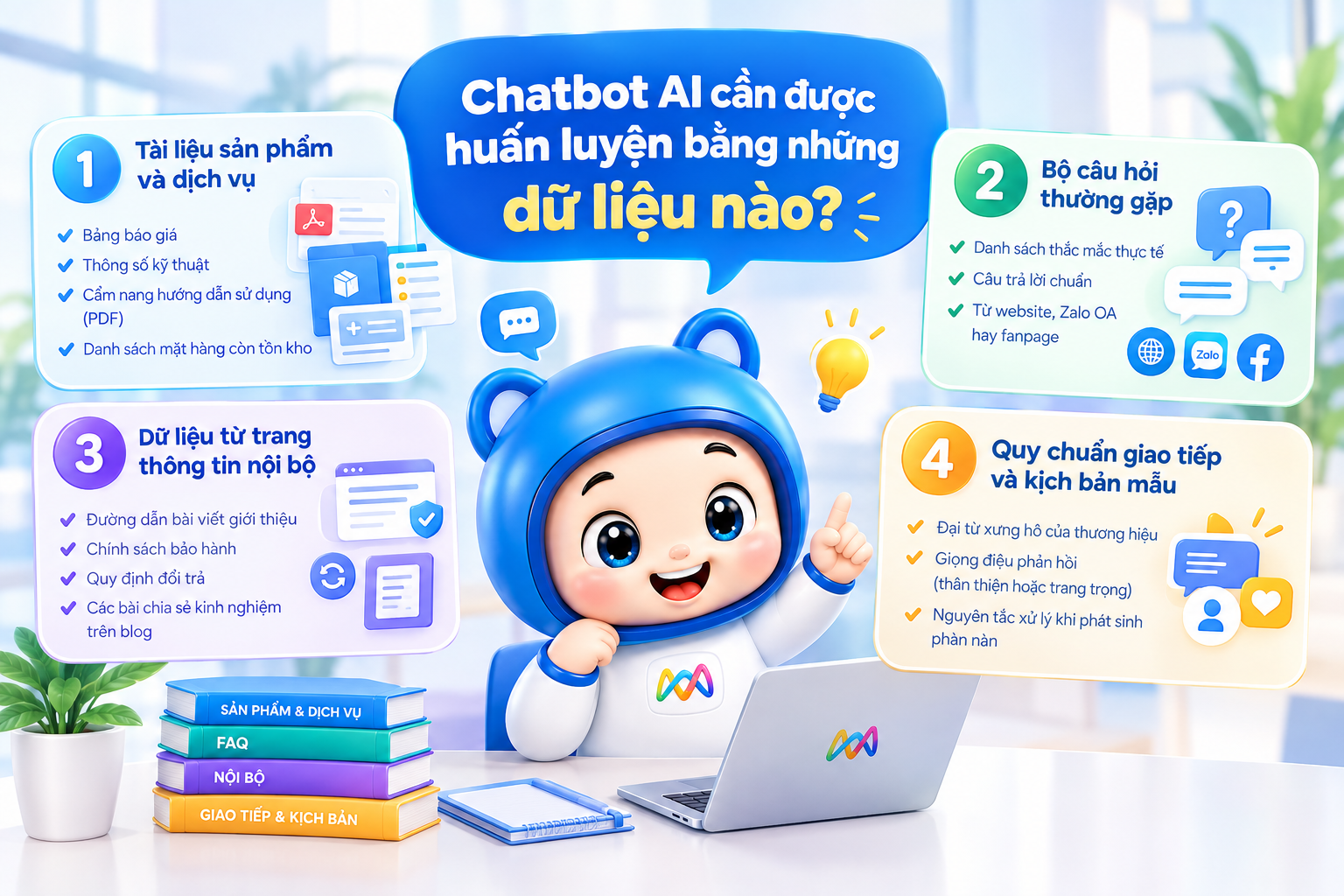
    Our platform allows you to train AI using multiple data sources, including:

    • Website content (product pages, FAQs, policies)
    • PDF documents
    • Internal knowledge bases
    • Existing question-and-answer datasets

    Powered by leading Large Language Models (LLMs) such as Google Gemini and GPT-4, the AI understands your business context and provides highly accurate, brand-consistent responses.

    This eliminates the need for complex rule-based scripts. Instead, the AI continuously learns and delivers flexible, intelligent conversations tailored to your customers.

    Multi-Channel Deployment and Workflow Automation

    An effective chatbot strategy should support customers across every communication channel. With Vareno AI, you can deploy your AI Agent on:

    • Website
    • Zalo Official Account
    • Facebook Messenger
    • Telegram
    • WhatsApp

    Our platform also integrates with automation tools such as n8n and Zapier, enabling seamless connections with CRM systems, Email Marketing platforms, and Google Sheets. This allows customer data to flow automatically into your existing systems, streamlining the entire process from customer inquiries to order management.

    Guided by our philosophy of “The Power of Less,” Vareno AI delivers powerful technology through a simple, intuitive interface. No technical expertise is required, making it easy to manage, monitor, and optimize your AI Agent.

    Conclusion

    Integrating an E-commerce AI Chatbot has become essential for businesses looking to improve customer experience and maximize operational efficiency in the digital era. A smart AI Agent like Chat Vareno AI Agent not only provides 24/7 customer support but also personalizes shopping experiences, increases sales, and frees your team to focus on high-value tasks.

    By leveraging advanced Large Language Models (LLMs) and custom AI training based on your business data, Vareno AI helps companies automate workflows, improve customer engagement, and drive sustainable revenue growth.

    Start transforming your customer experience today by trying Chat Vareno AI Agent for free.

  • Telegram Chatbots for Business: Optimizing Communication and Business Efficiency

    Telegram Chatbots for Business: Optimizing Communication and Business Efficiency

    In today’s fast-paced digital era, speed and convenience have become the defining factors of business success. Modern consumers no longer just expect answers – they want them instantly and on the messaging platforms they use every day. To keep up with these evolving demands, leveraging Telegram Chatbots for Business has emerged as a game-changing strategy for companies looking to modernize their operations and elevate the customer experience.

    Far beyond basic automated auto-responders, AI-powered Telegram chatbots act as tireless, 24/7 virtual assistants. From handling thousands of inquiries simultaneously and capturing valuable lead data to streamlining sales conversions, this solution empowers organizations to optimize resources, reduce operational costs and drive revenue growth.

    Let’s explore how integrating an AI Telegram chatbot can transform this popular messaging platform into a powerful automation engine for your business.

    Benefits and the Role of Telegram Chatbots in Modern Business

    Chatbot Telegram cho doanh nghiệp giúp tự động hóa giao tiếp, chăm sóc khách hàng và tối ưu hiệu quả kinh doanh bằng AI.

    In today’s competitive business landscape, delivering fast responses and personalized customer experiences is more important than ever. A Telegram chatbot is more than just a communication tool – it serves as a bridge that helps businesses engage, support and retain customers more effectively.

    Save Time and Reduce Operating Costs

    Telegram chatbots automatically handle repetitive questions and routine customer inquiries, allowing employees to focus on more complex tasks. Businesses no longer need additional staff to respond to messages outside business hours.

    24/7 Customer Support

    Whether it’s late at night or during holidays, an AI assistant on Telegram is always available to respond instantly. Customers receive the information they need without waiting, improving service quality and customer satisfaction.

    Marketing and Sales Automation

    Telegram bots can automatically send promotional messages, introduce new products, deliver discount codes, and remind customers about upcoming events. Intelligent AI-powered consultations also help nurture leads and increase sales conversions.

    Improve Internal Operations

    Telegram chatbots are not limited to customer support. They can also assist with internal tasks such as reminders, project progress tracking and information retrieval, helping teams work more efficiently and collaboratively.

    Key Features and Practical Business Applications

    A well-trained Telegram chatbot – especially an AI Agent like Vareno AI – goes far beyond traditional rule-based chatbots. Instead of simply following predefined scripts, it understands context and continuously learns from your business data.

    Các tính năng nổi bật của Chatbot Telegram cho Doanh nghiệp hỗ trợ chăm sóc khách hàng và tự động hóa vận hành.

    Intelligent Responses Powered by Advanced LLM Technology

    Vareno AI leverages world-leading Large Language Models (LLMs) such as Gemini and GPT-4, optimized specifically for the Vietnamese language and consumer behavior. The AI Agent can read and understand information from websites, PDF documents, FAQs and proprietary business knowledge to generate accurate, natural responses.

    Omnichannel Integration and Workflow Automation

    In addition to Telegram, the AI Agent can operate on websites, Zalo OA and Facebook Messenger. It also integrates seamlessly with CRM systems, email marketing platforms, and automation tools such as n8n and Zapier, enabling synchronized data and smoother business workflows – from order management to appointment scheduling.

    Human Handoff

    When customers ask complex questions or require personalized consultation, the AI automatically transfers the conversation to the appropriate staff member. This ensures that no valuable customer opportunity is missed while increasing conversion rates.

    AI Analytics

    Analyze customer conversations to gain deeper insights into customer behavior, preferences and needs. These analytics help businesses optimize marketing strategies, customer service and overall business performance.

    How to Deploy and Choose the Right Telegram Chatbot Solution

    Building a Telegram bot for business is no longer a complicated task. While you can create a basic bot using BotFather, businesses seeking a truly intelligent AI assistant should consider a professional Telegram chatbot solution.

    quy trình triển khai Chatbot Telegram cho doanh nghiệp từ xác định mục tiêu, huấn luyện AI, tích hợp hệ thống đến tối ưu vận hành.

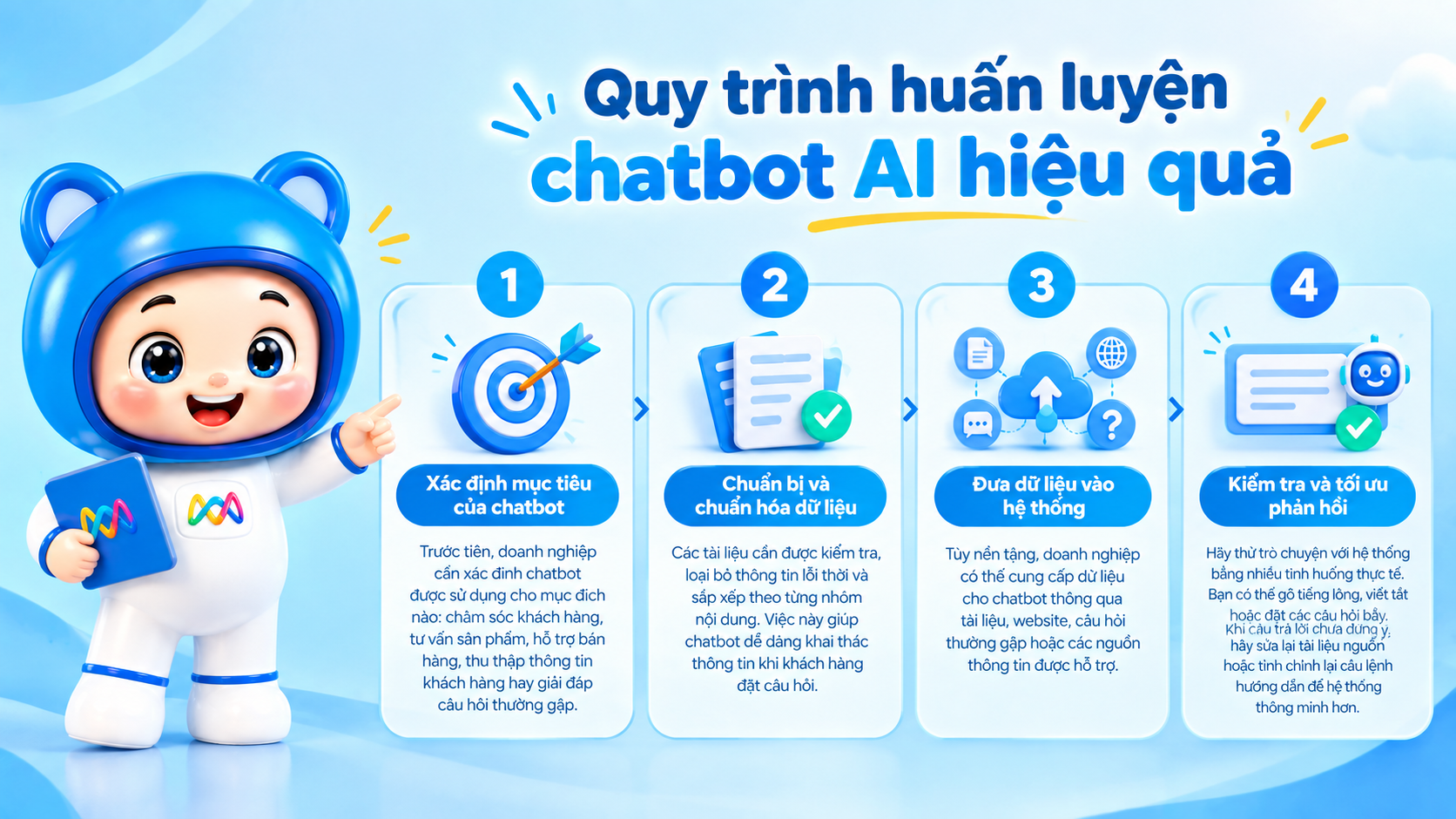
    Define Clear Objectives

    Determine exactly what your chatbot should accomplish – customer support, sales automation or internal management. Clear objectives lead to more effective AI training and better business outcomes.

    Prepare High-Quality Training Data

    This is one of the most important steps. Vareno AI enables businesses to train AI using proprietary resources such as websites, PDF documents, FAQs and internal workflows. Better data results in a smarter AI assistant.

    Integrate and Customize

    After training, integrate the chatbot into your company’s Telegram channel. Customize responses and conversation flows to match your brand voice and business requirements.

    Monitor and Continuously Optimize

    AI continuously improves through learning. Monitor chatbot performance, analyze conversations and refine responses to provide an even better customer experience over time.

    From our perspective, building a Telegram bot from scratch can become expensive and difficult to maintain without technical expertise. A professional platform such as Chat Vareno AI Agent makes AI deployment significantly easier while maximizing efficiency. Guided by our “The Power of Less” philosophy, we focus on simplicity, cleanliness and streamlined automation that minimizes human intervention while maximizing business results.

    Frequently Asked Questions

    Is a Telegram chatbot secure for customer data?

    Yes. Professional platforms like Vareno AI prioritize data security through end-to-end encryption and secure processing practices. Customer information is protected to ensure privacy and reliability.

    How does Telegram AI personalize customer interactions?

    The AI Agent is trained using your business data and can retain relevant customer information throughout conversations. It uses interaction history to deliver personalized recommendations, offers, and responses, creating a more engaging customer experience.

    Should small businesses use a Telegram chatbot?

    Absolutely. Small businesses can significantly benefit from automation by reducing staffing costs while providing 24/7 customer support. Vareno AI offers flexible pricing plans suitable for businesses of all sizes, including a free trial so you can experience the platform before making a commitment.

    Conclusion

    Implementing a Telegram Chatbot for Business is no longer just a trend—it has become a key competitive advantage in today’s digital marketplace. By choosing the right AI solution, businesses can automate customer support, sales, and communication around the clock while improving operational efficiency and customer satisfaction. Start exploring the power of AI today and take your business communication to the next level with Chat Vareno AI.

  • AI Chatbot Deployment Costs: A Complete Guide to Investing Effectively

    AI Chatbot Deployment Costs: A Complete Guide to Investing Effectively

    AI Chatbot Deployment Costs play a critical role in determining the success of an AI implementation project. Many businesses are eager to adopt AI Agent Assistants but remain concerned about deployment expenses and return on investment. By understanding the key cost components, organizations can make smarter budgeting decisions and optimize every stage of deployment. At Chat Vareno AI, we provide scalable AI solutions that help businesses improve customer experience, streamline operations, and achieve sustainable growth while maintaining cost efficiency.

    Core Cost Components of AI Chatbot Deployment

    Các thành phần chi phí cốt lõi khi triển khai Chatbot AI cho doanh nghiệp

    When businesses decide to implement an AI Agent Assistant, the costs extend far beyond the initial setup fee. Modern AI chatbots, especially those powered by advanced Large Language Models (LLMs) like Vareno AI, follow a flexible pricing structure that differs significantly from traditional rule-based chatbots. The main cost components include:

    Platform License / Subscription Fee

    This is the basic cost of using an AI chatbot platform. Service plans typically vary based on the number of interaction credits, website crawl pages, and advanced features. For example, an entry-level package may include 50 credits per month, making it suitable for small businesses starting their AI journey.

    AI Training and Data Integration

    To deliver accurate responses, an AI Agent must be trained using your company’s proprietary data, including websites, PDFs, FAQs, and internal documents. The cost depends on the volume and complexity of the data. Well-trained AI provides significantly higher response accuracy from day one.

    Omnichannel and System Integration

    Deploying AI across multiple channels such as Websites, Zalo OA, Messenger, or integrating with existing CRM and ERP systems will incur additional costs. These integrations automate workflows, improve conversion rates, and ensure seamless data synchronization.

    Advanced Features and Customization

    Premium capabilities such as Human Handoff, sentiment analysis, multilingual support, and customized interface design increase the overall chatbot development cost. These features provide a more personalized customer experience and improve operational efficiency.

    Maintenance and Technical Support

    To ensure the AI Agent operates reliably 24/7, businesses should budget for regular maintenance, software updates, and technical support. These services are typically charged as a fixed monthly fee, providing long-term operational stability.

    Factors That Influence AI Chatbot Deployment Costs

    Các yếu tố ảnh hưởng đến chi phí triển khai Chatbot AI cho doanh nghiệp

    AI chatbot pricing is not fixed. It varies depending on each business’s specific requirements. Understanding these factors allows organizations to estimate their budgets more accurately. Three key elements determine the final deployment cost.

    Functionality and Complexity

    A simple chatbot with around ten predefined conversation flows is considerably less expensive than an AI Agent capable of self-learning, understanding natural language (NLP), and handling unlimited conversation scenarios. Businesses requiring advanced AI-powered data analysis and strategic insights should expect higher development costs.

    Deployment Platforms and Channels

    Deploying an AI Agent exclusively on a website is generally more affordable than implementing an omnichannel solution across Websites, Zalo OA, Messenger, and Telegram. Every additional platform requires separate configuration, testing, and maintenance.

    Self-Learning and Personalization

    Vareno AI Agent features powerful self-learning capabilities instead of relying on rigid scripted conversations. It continuously improves response quality based on user interactions. More intelligent and highly personalized AI solutions require stronger infrastructure and advanced technologies, resulting in higher implementation costs.

    Chat Vareno AI offers flexible service plans ranging from a Free package for first-time users to Standard, Pro, and Enterprise plans designed to meet the needs of businesses of all sizes.

    Strategies to Reduce and Manage AI Chatbot Costs Effectively

    To maximize the return on your AI investment, businesses need a well-defined cost management strategy. At Vareno AI, we help customers achieve outstanding results through our “The Power of Less” philosophy.

    Chiến lược giảm thiểu và quản lý chi phí triển khai Chatbot AI cho doanh nghiệp

    Start with Core Features

    Instead of implementing every feature at once, focus on the capabilities that solve your most urgent business challenges. For example, begin with 24/7 AI customer support on your website, then gradually expand to Zalo OA and Messenger.

    Choose a Platform with Fixed Pricing

    Select an AI chatbot platform that offers predictable monthly pricing rather than charging based on conversation scenarios or use cases, as traditional chatbots often do. This approach makes budgeting easier while allowing AI capabilities to scale without unexpected expenses.

    Train AI Using Existing Business Data

    Leverage your existing knowledge base—including FAQs, product documentation (PDFs), and website content—to train your AI. This significantly reduces the time and effort required to build an effective AI knowledge base.

    Monitor and Optimize Performance

    Utilize AI Analytics to analyze customer behavior and conversation data. These insights help refine your AI strategy, improve issue resolution rates, and maximize long-term ROI.

    Take Advantage of Free Trials

    Many AI platforms, including Chat Vareno AI Agent, offer free trials or limited-feature plans. These options allow businesses to evaluate the solution before committing to a larger investment.

    Conclusion

    Investing in an AI Agent Assistant is a strategic decision that delivers significant business value—from streamlining operations to increasing sales conversion rates. Understanding the core cost components and the factors affecting AI chatbot deployment costs enables businesses to make smarter investment decisions.

    With Chat Vareno AI, you gain more than a powerful AI solution—you gain a trusted technology partner dedicated to making AI deployment simple, efficient, and cost-effective. Contact us today to discover the AI chatbot solution that best fits your business goals and budget.

  • CRM Chatbot Integration: Optimize Customer Interaction

    CRM Chatbot Integration: Optimize Customer Interaction

    In today’s digital transformation era, businesses need intelligent solutions to improve customer service and optimize sales processes. Integrating a CRM system with an AI Chatbot enables automated communication, centralized customer data management, and instant 24/7 responses. This combination provides a strong foundation for enhancing customer experience and increasing conversion rates.

    With advanced data analysis, personalized conversations, and efficient customer information management, CRM Chatbot Integration: Optimize Customer Interaction has become an essential solution for businesses looking to reduce manual workloads, improve team productivity, and build long-term customer relationships.

    What Is CRM Chatbot Integration?

    Simply put, CRM Chatbot Integration is the synchronization of a Customer Relationship Management (CRM) system with an AI-powered chatbot. A CRM stores customer data, purchase history, and detailed customer profiles, while an AI chatbot serves as a virtual assistant that interacts with customers 24/7.

    When these two systems are connected, data flows seamlessly in both directions. The chatbot can access CRM information to provide personalized, context-aware responses. At the same time, every new interaction is automatically captured and updated in the CRM, eliminating manual data entry. This creates a fully automated workflow, from the first customer interaction to long-term relationship management.

    Key Benefits for Businesses and Customers

    Lợi ích tích hợp CRM Chatbot: cá nhân hóa khách hàng, thu thập lead tự động, hỗ trợ 24/7 và đồng bộ dữ liệu CRM.

    Integrating CRM with an AI chatbot offers significant strategic advantages that improve operational efficiency and strengthen customer relationships. Here are the core benefits:

    Personalized Customer Experience

    Instead of using generic greetings, a CRM-connected chatbot can address customers by name, reference previous purchases, and remember past interactions. For example, an AI Chat Agent can say:

    “Hello, Mr. Nam. Your six-month service plan is about to expire. Would you like to renew today and enjoy a 10% discount?”

    This personalized approach helps customers feel valued and understood.

    Automatic Lead Collection and CRM Synchronization

    When customers interact through a website or Zalo Official Account, the chatbot automatically collects essential information such as names, phone numbers, email addresses, and customer inquiries. This data is instantly transferred into the CRM, tagged as a new lead, categorized accurately, and assigned to the appropriate sales representative. As a result, no potential customer is overlooked.

    24/7 Customer Support

    Unlike human agents, AI chatbots never need breaks. With CRM chatbot software, businesses can instantly answer common questions such as order tracking, product pricing, or return policies at any time of day.

    Reduced Workload and Lower Operating Costs

    The chatbot acts as the first layer of customer support, handling approximately 80% of repetitive inquiries. More complex issues are automatically transferred to human agents through the Human Handoff feature. This allows employees to focus on higher-value tasks while significantly reducing operational costs.

    Real-Time Data Synchronization and Reporting

    Every conversation is automatically stored and synchronized with the CRM in real time. This valuable data supports business reporting, customer behavior analysis, and highly targeted remarketing campaigns.

    Key Features and Implementation Guide

    Hướng dẫn triển khai Chat AI Agent tích hợp CRM với AI, API, Webhook, đa kênh và tự động hóa quy trình.

    At Vareno AI, we focus on providing core features that help businesses integrate chatbots with CRM systems efficiently. Our AI Chat Agent not only automates conversations but also streamlines the entire customer service process.

    Train AI with Your Business Data

    Upload content from your website, PDF documents, FAQs, and internal knowledge bases. This enables the AI Assistant to deliver highly accurate responses based on your organization’s official information.

    Easy Multi-Channel Deployment

    Deploy your AI Chat Agent across your website, Zalo Official Account, Facebook Messenger, and other communication channels to engage customers wherever they are.

    Instant 24/7 Automated Responses

    The AI Assistant delivers responses in less than two seconds, ensuring customers receive immediate support whenever they need it.

    Intelligent Human Handoff

    When the AI encounters complex inquiries or requests requiring expert assistance, the system automatically notifies the appropriate staff member or administrator. This ensures every customer request is handled effectively without missing any sales opportunities.

    Workflow Automation with n8n & Zapier

    Connect your AI Assistant with CRM platforms, email marketing tools, warehouse management systems, and other business applications. This enables complete automation workflows, from lead generation to post-sales customer engagement.

    Implementing CRM chatbot integration with Vareno AI is straightforward. Simply upload your business data and use our APIs or Webhooks to connect the AI Chat Agent with your existing CRM platform. Guided by our philosophy, “The Power of Less,” we prioritize simplicity, efficiency, and minimal manual intervention, allowing your business to become productive immediately. Start your free trial today and experience the difference.

    Conclusion

    CRM Chatbot Integration is a strategic solution that helps businesses optimize customer interactions, automate workflows, and deliver exceptional customer experiences. From personalized communication and automated lead generation to 24/7 customer support, this integration drives measurable business growth and operational efficiency.

    With the Vareno AI Chat Agent, implementing an intelligent CRM chatbot solution is simple and effective. Empower your team, streamline operations, and unlock new growth opportunities by embracing AI technology today.

  • How Does an AI Chatbot Work? A Complete Guide to Intelligent AI Agents

    How Does an AI Chatbot Work? A Complete Guide to Intelligent AI Agents

    Have you ever interacted with an intelligent virtual assistant that answered your questions instantly, accurately, and almost like a real person? That’s the experience an AI chatbot delivers. But how does an AI chatbot work, and what enables it to understand user intent and respond naturally?

    Unlike traditional rule-based chatbots that rely on predefined scripts, Vareno AI’s AI Agents leverage advanced artificial intelligence technologies to understand context, interpret user intent, and generate human-like responses. Our solution helps businesses automate customer support, sales, and consulting 24/7, improving operational efficiency while increasing customer satisfaction and conversion rates.

    How Does an AI Chatbot Work?

    An AI chatbot operates through three essential stages: data collection, language understanding, and intelligent response generation. Powered by Natural Language Processing (NLP) and Large Language Models (LLMs), modern AI chatbots can engage in meaningful conversations instead of simply matching keywords. Rather than relying on predefined scripts, they analyze context, interpret user intent, and generate responses that are relevant to each conversation. This enables AI chatbots to answer complex questions, provide personalized recommendations, and support users across a wide range of scenarios. As they process more interactions, AI chatbots continuously improve their accuracy and adaptability, delivering faster, smarter, and more human-like communication that enhances both customer experience and business efficiency.

    1. Data Collection and Input Processing

    Chatbot AI hoạt động như thế nào – Hình minh họa Trợ lý AI Agent Vareno AI ứng dụng NLP và LLM trong chăm sóc khách hàng.

    Every interaction begins when a user submits a message or question. The AI chatbot receives this input and processes it as the foundation for generating an appropriate response.

    At Vareno AI, our AI Agents are trained using each business’s proprietary knowledge base, including:

    • Company websites
    • PDF documents
    • Frequently Asked Questions (FAQs)
    • Internal documents and workflows
    • Product catalogs and service information

    This enables the AI to provide responses that are accurate, business-specific, and always aligned with your company’s knowledge.

    2. Natural Language Processing and Data Analysis

    Quá trình phân tích ngôn ngữ và dữ liệu trong Chatbot AI sử dụng NLP và LLM để hiểu ý định người dùng và phản hồi thông minh.

    After receiving user input, the chatbot analyzes the message using Natural Language Processing (NLP).

    Instead of simply identifying keywords, NLP helps the AI understand:

    • Context
    • Sentence structure
    • User intent
    • Semantic meaning
    • Conversation history

    Vareno AI integrates advanced Large Language Models (LLMs) such as Google Gemini and OpenAI GPT-4 to deliver highly intelligent conversations.

    For example, if a customer asks:

    “Does this shirt come in my size?”

    The AI doesn’t just recognize the words shirt and size. It understands that the customer is asking about product availability and sizing, then retrieves the most relevant information before generating an appropriate response.

    3. Intelligent Response Generation and Continuous Learning

    Once the user’s intent has been identified, the AI Agent generates a response based on reasoning from its trained knowledge base rather than relying on rigid scripted replies.

    The AI can:

    • Answer customer questions
    • Recommend products or services
    • Guide users through specific tasks
    • Provide personalized suggestions
    • Assist with sales and customer support

    One of the greatest strengths of modern AI Agents is their ability to continuously improve. Every interaction provides valuable learning opportunities that help increase response accuracy over time.

    If the AI encounters a question beyond its capabilities, Human Handoff automatically transfers the conversation to a human agent or notifies administrators, ensuring customers always receive timely and professional support.

    Hình minh họa Chatbot AI tạo phản hồi thông minh, tự học liên tục và Human Handoff trong Trợ lý AI Agent của Vareno AI.

    Conclusion

    Understanding how an AI chatbot works helps businesses recognize why modern AI Agents outperform traditional rule-based chatbots. Through intelligent data processing, Natural Language Processing (NLP), Large Language Models (LLMs), and continuous learning, AI chatbots deliver faster, smarter, and more personalized customer interactions.

    At Vareno AI, we continuously enhance our AI Agent technology by leveraging cutting-edge LLMs and training models on your company’s unique knowledge base. The result is an intelligent virtual assistant that becomes more accurate over time and helps your business automate customer engagement with confidence.

    Start transforming your customer experience today with Vareno AI’s AI Agent and discover the future of AI-powered business automation.

  • Decoding Natural Language Processing (NLP): The Ultimate Key to Elevating Customer Experience in the AI Era

    Decoding Natural Language Processing (NLP): The Ultimate Key to Elevating Customer Experience in the AI Era

    Have you ever wondered how Siri understands your voice commands, how Google Translate is becoming flawlessly smooth, or how customer service chatbots can now converse as naturally as real humans? The magic behind all these technological breakthroughs is Natural Language Processing (NLP).

    In an era where text and voice data are generated every second, NLP is no longer just an academic concept—it has become the core competitive “weapon” for businesses. Let’s dive deeper into this game-changing technology with Chatvareno!

    1. What exactly is Natural Language Processing (NLP)?

    Simply put, Natural Language Processing (NLP) is the intersection of computer science, artificial intelligence (AI), and linguistics. Its primary mission is to break down the communication barrier between humans and machines.

    Minh họa khái niệm xử lý ngôn ngữ tự nhiên NLP và các ứng dụng.
    Xử lý ngôn ngữ tự nhiên (NLP) phá bỏ rào cản giao tiếp giữa con người và máy móc.

    Instead of forcing humans to write complex lines of code, NLP enables computers to “read,” “hear,” “understand,” and “respond” using our everyday language. Thanks to the rise of Deep Learning and Generative AI, modern NLP doesn’t just process information; it can creatively generate new text, summarize meetings, and translate in real-time with astonishing accuracy.

    2. 3 Revenue-Generating NLP Applications for Businesses

    Moving beyond theory, tech giants worldwide have successfully applied NLP to solve operational and marketing challenges:

    • Automated Customer Care (Smart Chatbots & Voicebots): Unlike older generations of chatbots that strictly followed rigid “press 1, press 2” decision trees, NLP-integrated chatbots can understand context and analyze user intent to deliver relevant answers. Real-world example: The telecom giant T-Mobile uses NLP to identify specific keywords in customer text messages, allowing them to offer personalized recommendations. It is estimated that these virtual assistants can seamlessly handle up to 80% of common queries, saving businesses a massive amount of human resources.

      Hình ảnh minh họa nền tảng dữ liệu AI và Machine Learning.
      Ứng dụng AI và Machine Learning giúp tối ưu hóa quy trình tự động hóa.
    • Sentiment Analysis & Market Listening: Imagine launching a new product and receiving thousands of comments on social media. Instead of reading each one manually, NLP automatically scans and categorizes them into positive, negative, or neutral sentiments. This allows Marketing Directors to monitor “brand health” in real-time and handle PR crises promptly.

    • Smart Document Processing & Security: In highly regulated industries like finance, insurance, or healthcare, staff must process mountains of paperwork daily. Companies like Chisel AI have leveraged NLP to automatically extract crucial information (like names and policy numbers) while redacting sensitive personal data, simultaneously accelerating workflows and ensuring robust data security.

      Đồ họa minh họa giới thiệu về Machine Learning và trí tuệ nhân tạo.
      Machine Learning là nền tảng cốt lõi giúp AI học hỏi và xử lý dữ liệu phức tạp.

    3. Challenges You Can’t Ignore

    Despite its immense power, implementing NLP in the real world isn’t a walk in the park. For machines to fully comprehend human language, we still face several hurdles:

    • Language Diversity and Complexity: Synonyms, local slang, idioms, or sarcastic remarks pose a significant challenge for machines. (For instance, a word might mean one thing literally, but Gen Z might use it as slang for something entirely different).

      Ứng dụng công nghệ xử lý ngôn ngữ tự nhiên NLP trong dịch thuật đa ngôn ngữ.
      Công nghệ NLP là lõi xử lý giúp các phần mềm dịch thuật hiểu và chuyển đổi đa ngôn ngữ theo thời gian thực.
    • Spelling and Grammatical Errors: Real-world data from customers is often filled with typos and inconsistent abbreviations, which can easily confuse the system.

    • Environmental Noise: For voice assistants, background noise or heavy regional accents can drastically reduce recognition performance.

    Conclusion

    Natural Language Processing (NLP) is the bridge connecting the minds of machines and humans. While there are still challenges regarding context and linguistic nuances, it is undeniable that NLP is reshaping how businesses operate, sell, and care for their customers.

    If you are looking for a solution to upgrade your customer interaction system, let the machines handle the repetitive tasks, and leave the creative space to humans.

    Explore the cutting-edge tech solutions at Chatvareno.com today so you don’t get left behind in this AI race!

  • 5 Costly Mistakes in AI Applications for Businesses & How to Fix Them

    5 Costly Mistakes in AI Applications for Businesses & How to Fix Them

    Have you decided to invest heavily in technology, only to find the results falling short of your expectations? In reality, the problem rarely lies within the algorithm itself — it is all about the execution. Implementing AI applications for businesses only drives breakthrough growth when you successfully dodge classic operational traps.

    Here are the 5 most common mistakes and concrete solutions to help your business optimize its return on investment (ROI) in Artificial Intelligence.

    1. Poor Data Quality (Garbage In, Garbage Out)

    An AI system is only as smart as the data you feed it. When launching AI applications for businesses in the form of chatbots or virtual assistants, many companies make the mistake of uploading outdated product descriptions, incorrect pricing, or rushed FAQ sheets. Consequently, the AI provides inaccurate answers, shattering customer trust within the very first week.

    • The Fix: Conduct a comprehensive data audit before deployment. Start small by standardizing information for your top 50 best-selling products. Ensure this data is flawless and precise before scaling up. Additionally, assign a dedicated team member to update this knowledge base at least once a week.


    ứng dụng ai cho doanh nghiệp tối ưu dữ liệu kinh doanh

    2. Expecting AI to Solve Everything

    “Buying an AI chatbot means automated sales and zero need for human staff” — this is the most dangerous misconception when approaching the trend of AI applications for businesses.

    AI technology excels at repetitive, structured tasks: answering FAQs, collecting lead information, or scheduling appointments automatically. However, AI cannot replace humans in complex negotiations, handling sensitive complaints that require deep empathy, or building relationships with VIP clients.

    • The Fix: Before hitting the launch button, map out a clear division of labor: tasks that AI handles best (automation) and tasks that strictly require human intervention (high-level consulting).

    3. Ignoring the Real User Experience (UX)

    Setting up a chatbot on your fanpage or website and leaving it on autopilot is a classic blunder. Rigid, scripted flows routinely fail when facing real-world human behavior—ranging from slang, abbreviations, and typos to questions that completely derail from the pre-defined menu. The result? Frustrated customers leave and never return.

    • The Fix: Interview 10 loyal customers with a simple question: “What is the very first message you usually send us?”. Use their actual responses as the foundation for your conversational scripts.

    💡 Tech Solution: To completely eliminate this friction, look into platforms like ChatVareno. This application enables businesses to dynamically optimize conversation scripts in real time. Crucially, it features a built-in “Talk to a Human” trigger at critical touchpoints, automatically handing off the conversation to a live agent whenever the AI encounters a query outside its scope.

    ứng dụng ai cho doanh nghiệp làm chatbot chăm sóc khách hàng tự động

    4. Failing to Train Staff in Parallel with Technology

    When pushing forward with AI applications for businesses without proper internal communication, you will likely face two toxic workplace reactions: Employees resisting out of fear of losing their jobs, or employees blindly relying on AI, assuming the machine will do all the heavy lifting. Both scenarios disrupt and break the system’s efficiency.

    • The Fix: Align your team’s mindset from day one: AI is here to liberate them from mundane, repetitive tasks, not to replace them. Organize collaborative human-to-machine training sessions and appoint an internal “AI Champion” in each department to monitor and continuously refine the system.

    5. Setting and Forgetting (Lack of Optimization)

    Technology is not like an air conditioner—you cannot just install it once and expect it to run perfectly forever. A lack of measurement and continuous updates will quickly turn your AI solution obsolete without you even realizing it.

    • The Fix: Establish 3 core Key Performance Indicators (KPIs) immediately to measure the effectiveness of your AI applications for businesses:

      1. AI Resolution Rate (Target: >70% of conversations handled autonomously).

      2. Customer Satisfaction (CSAT) score post-chat (Target: >4/5 stars).

      3. Conversion Rate directly generated from the chat interface.

    • Pro Tip: Dedicate 30 minutes every week to review conversation transcripts. If you are utilizing the ChatVareno ecosystem, flawed interactions are smartly grouped together. These edge cases serve as the perfect “building blocks” to update your data and make your AI smarter for the upcoming week.

    • đào tạo nhân sự khi ứng dụng ai cho doanh nghiệp vận hành

    Summary Framework for Business AI Operations

    Common Mistakes SEO-Optimized Solutions
    Poor data quality Audit data first, schedule weekly updates.
    Unrealistic expectations Draw a clear line between AI tasks and human tasks.
    Ignoring UX & behavior Analyze real chat behavior; implement a flexible handoff via ChatVareno.
    Neglecting staff training Maintain transparent internal communication; appoint an AI Champion.
    No measurement or optimization Track the 3 core KPIs; review chat transcripts 30 mins/week.

    Frequently Asked Questions (FAQ)

    Should Small and Medium Enterprises (SMEs) adopt AI applications?

    Yes. The cost of launching AI applications for businesses at a smaller scale is now highly optimized (starting at just a few dollars a month). The benefits are crystal clear: capturing after-hours leads and automating repetitive questions. You only need a lean tool like ChatVareno that fits your budget, without the need for massive enterprise-level infrastructure.

    Which department should start implementing AI first?

    Always start with operational “pain points,” not the technology itself. Look closely at what is draining the most time from your Customer Support or Sales teams. If the answer is: “Answering repetitive questions about pricing, sizing, and store locations” — then that is your ideal starting point for an AI chatbot.

    How long does it take to see results from business AI applications?

    A basic AI chatbot system can go live within 1–2 weeks if your business already has a clean, organized dataset. However, to reach peak performance and fluid execution, the system typically requires 30–60 days of real-world run time to learn and adjust based on actual customer behavior.