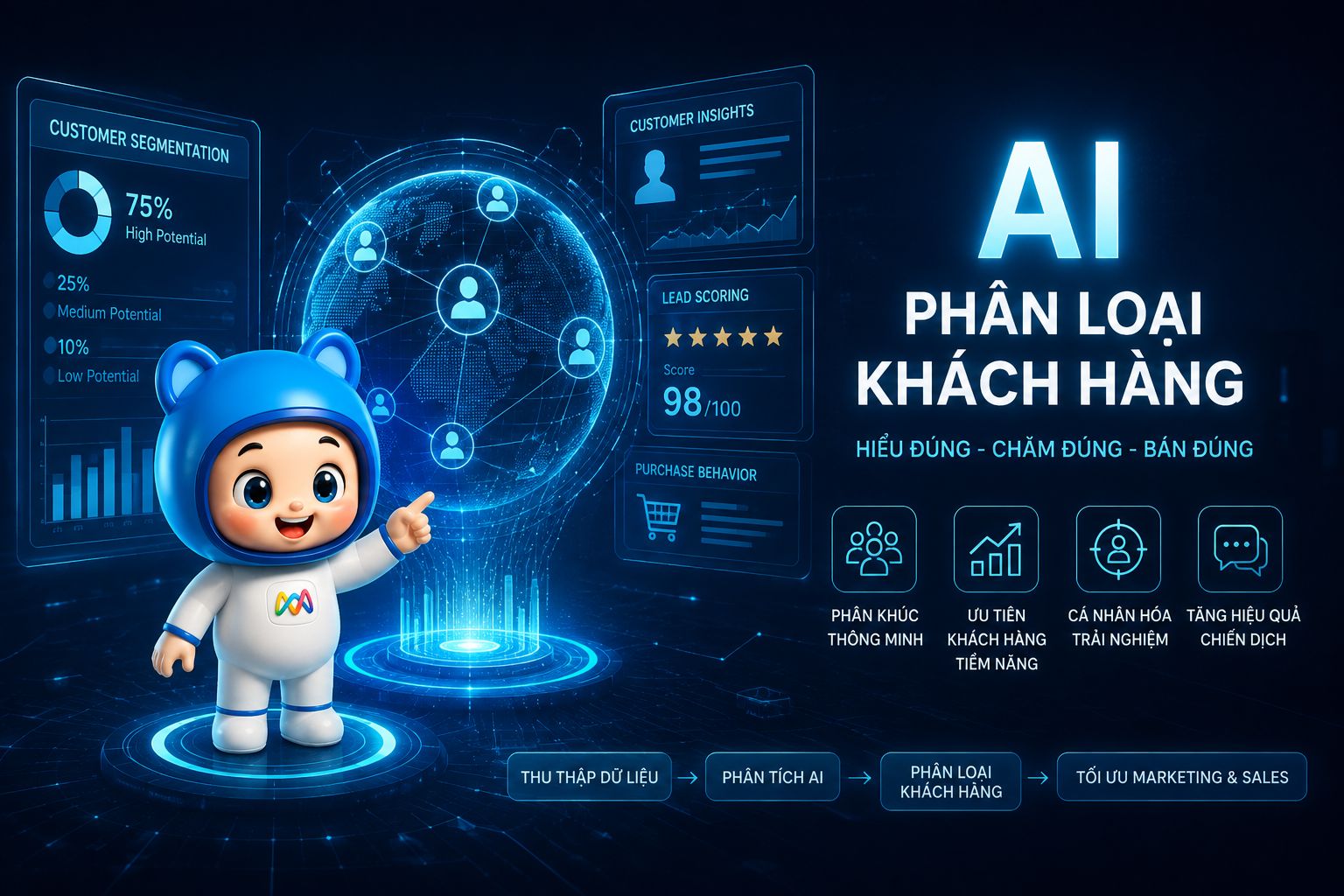
As businesses collect increasingly large amounts of data from websites, social media, CRM systems, and sales channels, understanding different customer groups has become essential for improving business performance. However, relying solely on manual segmentation can be time-consuming and may make it difficult to ensure accuracy.
AI customer segmentation is emerging as a solution that enables businesses to automatically analyze data, identify customer characteristics, and segment customers based on their behavior, needs, and potential value. As a result, businesses can personalize marketing and customer service activities while increasing conversion opportunities.
What Is AI Customer Segmentation?
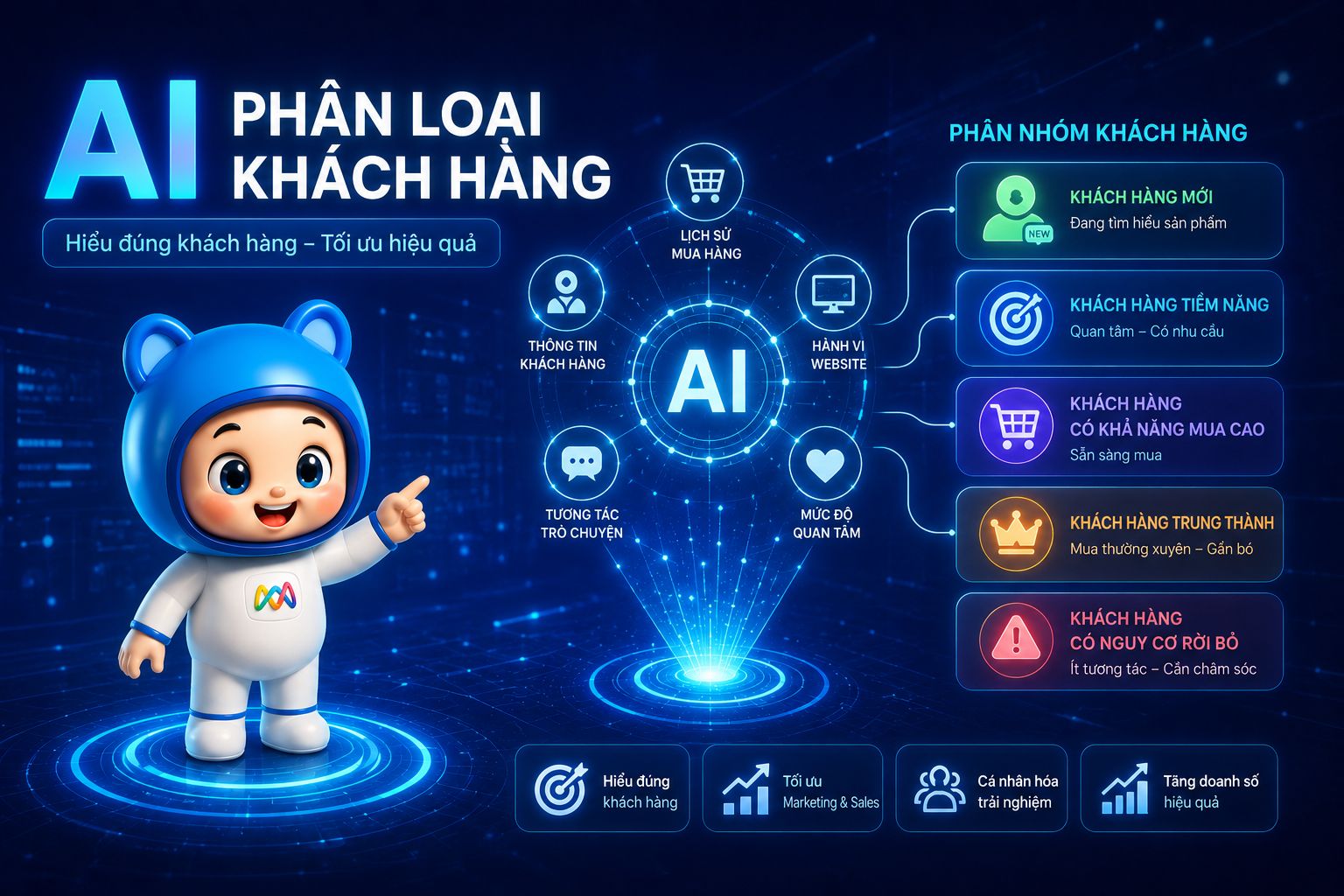
AI customer segmentation refers to the use of artificial intelligence to collect, analyze, and categorize customers based on available data.
Instead of relying only on basic information such as age, gender, or location, AI can analyze various factors, including purchase history, interaction frequency, conversation content, customer needs, website behavior, and product interest.
For example, AI can identify customers based on different stages and characteristics throughout their customer journey, allowing businesses to develop more relevant approaches and engagement strategies.
Why Do Businesses Need AI Customer Segmentation?
Not all customers have the same needs or behaviors. If a business uses the same content and approach for every customer, its messaging may not be relevant to each target group.
AI customer segmentation helps businesses understand where customers are in their purchasing journey. As a result, marketing and sales teams can develop more appropriate approaches for each group.
For example, new customers may need more product information and guidance, while customers with previous purchases may respond better to personalized offers or loyalty programs.
How Does AI Customer Segmentation Work?
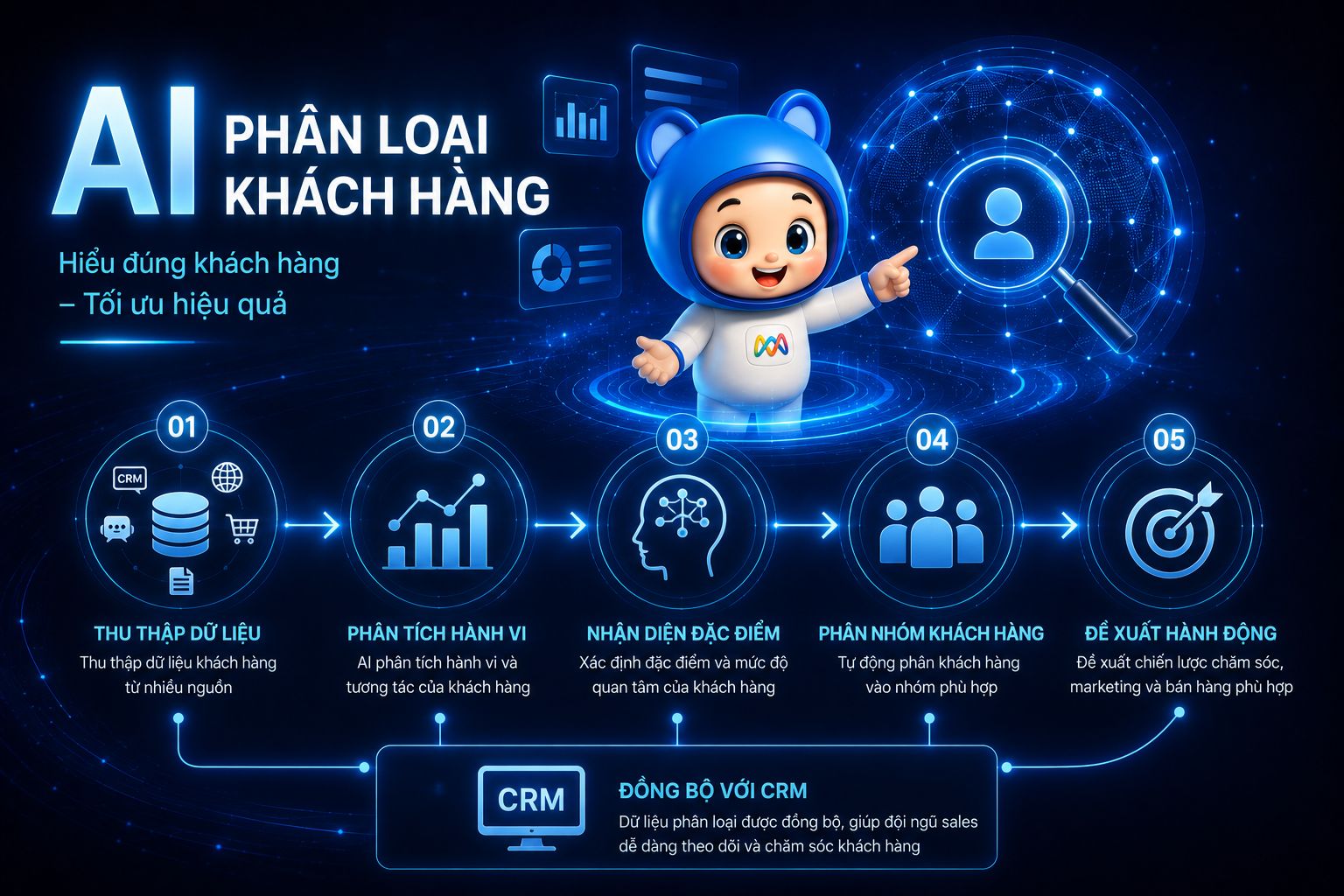
The process typically begins by collecting customer data from multiple sources, such as CRM systems, websites, chatbots, social media, and sales platforms.
AI then analyzes data related to customer behavior and interactions. Based on predefined criteria, the system automatically identifies customer characteristics and assigns them to relevant groups.
The basic process includes:
Data Collection → Behavior Analysis → Characteristic Identification → Customer Segmentation → Action Recommendation
When integrated with a CRM system, segmentation data can also be synchronized so that sales teams can easily track and provide personalized customer support.
Key Criteria AI Uses to Segment Customers
Depending on the industry and business objectives, AI can segment customers based on various criteria.
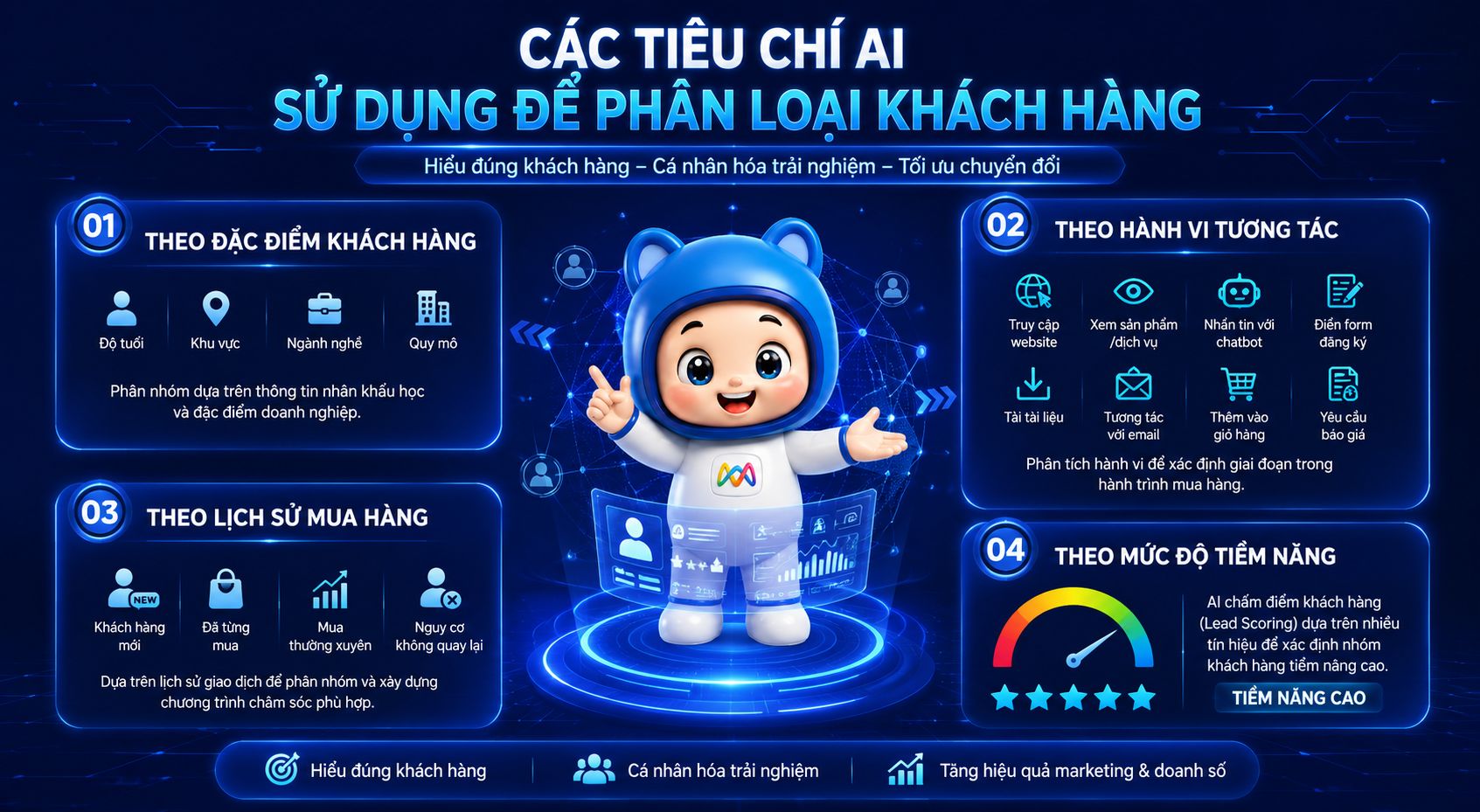
Based on Customer Characteristics
AI can segment customers based on information such as age, location, industry, business size, or whether they are individual or business customers.
This provides a foundation for businesses to develop marketing campaigns tailored to different customer groups.
Based on Interaction Behavior
Customer behavior is one of the most important data sources for evaluating customer interest.
AI can analyze activities such as:
- Visiting a website.
- Viewing products or services.
- Chatting with a chatbot.
- Submitting registration forms.
- Downloading documents.
- Interacting with emails.
- Adding products to the shopping cart.
- Requesting a quote.
These behaviors can help determine where customers are in their purchasing journey.
Based on Purchase History
Based on transaction history, AI can segment customers according to their purchasing patterns, such as first-time buyers, existing customers, frequent buyers, or customers who may not return.
Businesses can then develop more relevant sales and customer retention strategies.
Based on Customer Potential
AI can also support Lead Scoring based on multiple behavioral signals.
For example, customers who frequently visit a website, view pricing information, request consultations, and submit their contact details may be identified as high-interest leads.
Benefits of AI Customer Segmentation
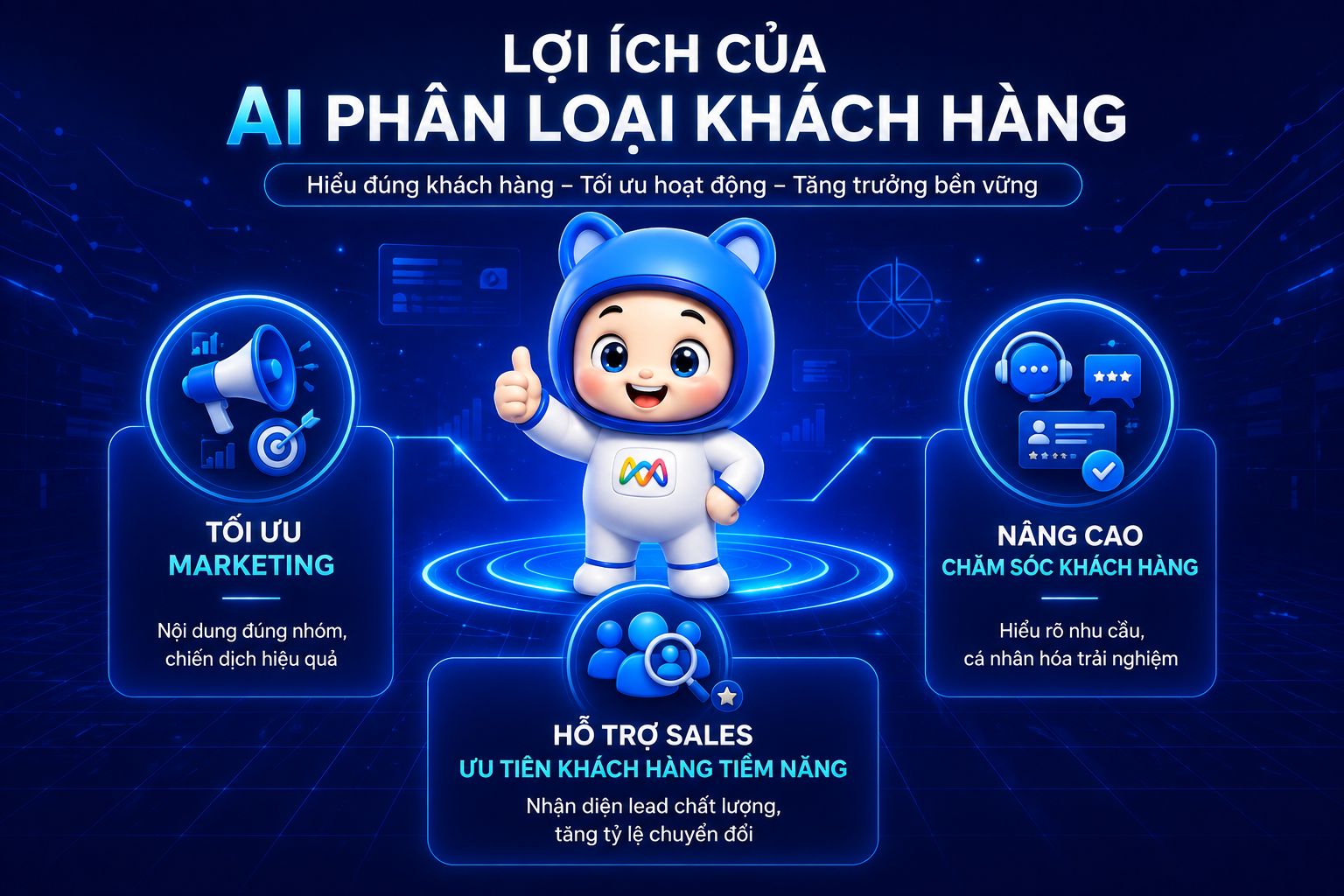
Optimize Marketing Activities
By understanding different customer groups, businesses can create more relevant content and marketing campaigns.
Instead of launching one campaign for everyone, businesses can create different audience segments with tailored messages. This can improve content relevance while reducing unnecessary marketing costs.
Help Sales Teams Prioritize High-Interest Leads
Not every lead has the same conversion potential. AI can help sales teams identify customers with higher levels of interest so they can prioritize follow-ups.
This is particularly useful for businesses handling a large number of leads with limited sales resources.
Improve Customer Service
When customer data is properly segmented, employees can quickly understand each customer’s interaction history and needs.
Combined with CRM AI or AI Chatbots, businesses can automate parts of the customer service process while maintaining a personalized experience.
Applications of AI Customer Segmentation in Business
AI customer segmentation can be applied across various industries, including retail, e-commerce, finance, real estate, education, logistics, and services.
A common application is combining an AI Agent with CRM. When customers interact with a business through its website or online channels, AI can collect information, identify customer needs, and determine the appropriate customer segment.
For example, a customer who repeatedly asks about pricing, payment policies, and implementation timelines may be identified by AI as a highly interested lead. This information can then be transferred to the CRM system so that the sales team can continue the consultation process.
How to Implement AI Customer Segmentation Effectively
To implement AI customer segmentation effectively, businesses should first define clear segmentation objectives. Do they want to identify high-potential leads, increase repeat purchases, or improve customer service?
Next, businesses should standardize data from CRM systems, websites, chatbots, and other interaction channels. The more complete and accurate the data, the more effective AI segmentation can be.
Finally, businesses should integrate AI with CRM systems and customer service workflows. When AI not only segments customers but also recommends the next best action, businesses can unlock greater value from their customer data.
Conclusion
AI customer segmentation helps businesses better understand customers, identify high-potential leads, and personalize their approach, thereby optimizing Marketing, Sales, and customer service.
When combined with AI Chatbots, businesses can automate the entire process from data collection and segmentation to customer engagement. With Chat Vareno AI, businesses can turn customer data into growth opportunities and improve overall business performance.
Leave a Reply